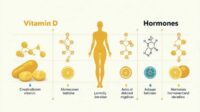
Postpartum depression arrives like an uninvited weather system—quiet at first, then suddenly oppressive. Families often notice the emotional fog, but the physiological “weather” beneath it can be harder to see. One nutrient keeps resurfacing in conversations that connect biology with mood: vitamin D. The common observation is straightforward—many postpartum parents are vitamin D–insufficient. The deeper fascination lies in why this deficiency might plausibly nudge the brain’s affective circuits toward dysphoria, and what “dose” could mean when the stakes involve both caregiver wellbeing and infant safety.
Why vitamin D feels relevant to mood after birth
Vitamin D is frequently labeled a “bone vitamin,” yet its influence extends well past calcium metabolism. The hormone-like form of vitamin D participates in immune modulation, neuroprotection, and inflammatory signaling. Mood regulation is not simply an emotional phenomenon; it is also a neurochemical orchestration that depends on neurotransmitters, immune tone, and the integrity of neuronal signaling.
After childbirth, the body undergoes dramatic shifts: estrogen and progesterone drop sharply, sleep becomes fragmented, stress hormones rise, and immune responses recalibrate. In that context, vitamin D may act as a biochemical moderator. Think of it less as a single switch for happiness and more as a background regulator. When levels are low, the “regulatory” capacity may be diminished, allowing inflammatory and stress pathways to exert a stronger influence on affect.
Another reason the topic is so compelling is that vitamin D insufficiency is common in many populations—especially where sunlight exposure is limited, skin pigmentation reduces ultraviolet synthesis, or dietary intake is inconsistent. That prevalence makes postpartum depression a particularly relevant target for investigation: there is a widely shared condition (low vitamin D) that may intersect with a vulnerable life stage (postpartum hormonal transition).
What evidence suggests: cord levels, prenatal status, and postpartum risk
Interest often begins with an upstream clue. Studies have examined vitamin D levels during pregnancy and even vitamin D present in cord blood at delivery. The rationale is elegant: if vitamin D status during fetal development and pregnancy reflects maternal physiology and placental function, it might also signal maternal metabolic and inflammatory milieus that correlate with postpartum mood outcomes.
When researchers explore postpartum depression risk, they do not only ask whether vitamin D is low. They look for patterns—associations between vitamin D metrics and subsequent depressive symptoms. In some findings, lower vitamin D measures during gestation or at delivery align with a higher likelihood of postpartum depression. In others, the relationship appears more nuanced, depending on timing, measurement method, and the analytic strategy used.
Even when causality is not definitively established, the consistency of biological plausibility matters. Vitamin D intersects with pathways that are frequently implicated in depression: inflammation, oxidative stress, and neurotrophic signaling. That convergence transforms a correlation into a hypothesis worth pursuing more rigorously.
The “dose” question: what dosing tries to accomplish
In everyday conversations, “dose” sounds like a single number. In clinical reality, dose is a moving target shaped by baseline level, body mass, absorption variability, sunlight exposure, diet, and individual metabolic differences. For vitamin D, the aim often becomes twofold: correct deficiency and maintain sufficiency across the vulnerable postpartum period.
When clinicians consider supplementation, they typically think in terms of:
1) Repletion—bringing an insufficient or deficient level up into a target range.
2) Maintenance—preventing levels from slipping again as lifestyle constraints (indoor time, reduced sun exposure) persist.
3) Safety—avoiding excessive dosing that could lead to hypercalcemia or other adverse effects.
Because postpartum parents may also be breastfeeding, dosing decisions require an additional layer of practicality. Vitamin D is transferred through milk, and ensuring adequate maternal levels can be beneficial for both mother and infant. Still, supplementation choices should remain individualized, ideally guided by vitamin D testing and clinical judgment.
How supplementation might work biologically (beyond the headlines)
It is tempting to reduce vitamin D to a simple “mood chemical,” but the mechanistic story is more labyrinthine—and therefore more interesting. Vitamin D receptors are present in many tissues, including immune cells and brain regions involved in affect regulation. When vitamin D signaling is robust, it can influence cytokines—small molecular messengers that shape inflammatory tone.
Depression, especially in vulnerable physiological windows, often coexists with altered immune signaling. Vitamin D may help tilt the immune environment away from a more inflammatory bias. It can also support cellular processes related to neuroplasticity, including pathways that contribute to neuronal resilience and synaptic function.
Sleep disruption and stress further complicate the picture. Vitamin D status could modulate stress-response systems, potentially affecting how the body copes with cortisol fluctuations and prolonged fatigue. These connections are not guaranteed, but they explain why vitamin D attracts attention as more than a nutritional afterthought.
Timing matters: prenatal, delivery, and the postpartum window
A common observation is that postpartum depression is “triggered” after birth, yet the biological groundwork can be laid earlier. Prenatal vitamin D status may matter because pregnancy is a period of immune calibration, placental transfer, and developmental programming. If maternal vitamin D is low during gestation, the maternal system may be running with fewer biochemical reserves during the postpartum upheaval.
Delivery and cord blood measures add another layer. They hint that vitamin D status at the moment of birth reflects a broader physiological state. That state may include inflammatory activity, metabolic factors, and endocrine interactions—all of which could influence postpartum mood trajectory.
Then there is the postpartum period itself. Even if prenatal status predicted risk, supplementation during postpartum might still influence symptom severity or recovery pace. The question becomes: can “repletion” after birth correct downstream vulnerabilities? Evidence is still emerging, but the timing logic remains coherent.
Common dosing approaches and what clinicians typically consider
Dosing strategies generally fall into ranges rather than single prescriptions. Many regimens aim for correction over weeks, then maintenance thereafter. Some approaches use loading-style repletion for clear deficiency, followed by smaller daily or intermittent doses. Others rely on daily supplementation to gradually restore levels.
Clinicians often consider:
Baseline 25(OH)D level (the standard blood marker).
Body weight and fat distribution, which can affect vitamin D’s distribution.
Dietary intake and supplement adherence patterns.
Sun exposure (which varies dramatically across geography and lifestyle).
Breastfeeding, since maternal adequacy supports infant needs.
Concurrent conditions and medications that influence vitamin D metabolism.
A key nuance is that “more” is not automatically “better.” Vitamin D has a ceiling. Excessive supplementation can provoke hypercalcemia, with downstream effects that are not worth courting. For that reason, dose decisions should not be improvised from social media anecdotes.
Visual intuition: what vitamin D “trajectories” look like
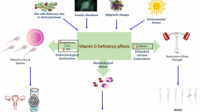
When researchers map vitamin D across time—antenatal levels, cord blood associations, and later symptom measures—they often visualize patterns rather than absolute destinies. The fascination is in the shape of the distribution: why some individuals maintain sufficiency while others drift into insufficiency under similar circumstances.


These images underscore a practical takeaway: vitamin D is measurable. That measurability invites a more individualized approach—one that can transform curiosity into a data-guided plan.
Limitations and the reason caution remains wise
Evidence can be compelling without being complete. Associations do not automatically prove causation. Vitamin D status might be a proxy for other factors: overall nutrition quality, time outdoors, socioeconomic conditions, access to healthcare, or differential exposure to stressors. Some studies also face challenges related to sample size, measurement variability, and confounding variables.
Yet caution does not cancel the potential. A nutrient can be both a marker and a modulator. The most responsible stance is to treat vitamin D as a candidate intervention—reasonable, biologically plausible, and testable—rather than as a stand-alone cure.
Practical next steps: turning fascination into an actionable plan
If postpartum depression is on the horizon—or already present—vitamin D should be considered as part of a broader wellbeing strategy. The foundational step is clinical evaluation: screening for depression, assessing safety, and discussing vitamin D testing with a healthcare professional. If a deficiency is found, supplementation can be tailored toward repletion and maintenance rather than guesswork.
At the same time, vitamin D should sit alongside evidence-based mental health care. Therapy, social support, sleep protection where possible, and (when indicated) medication or other interventions remain central. Vitamin D may contribute to the physiological backdrop, but mood recovery is rarely a one-variable equation.
The bottom line: dose as precision, evidence as a compass
Vitamin D for postpartum depression is fascinating because it sits at the intersection of prevalence and plausibility. Low levels are common, the biology is coherent, and research has reported associations spanning pregnancy and birth-linked measures. Dose matters because vitamin D is not a charm; it is a physiological parameter that requires correction within safe bounds.
When approached with testing, individualized dosing, and mental health best practices, vitamin D becomes less about speculation and more about precision—an intentional lever in the complex machinery of postpartum wellbeing.