Ever wondered how a vitamin that’s so helpful can become the villain? Picture this: you’re dutifully sipping sunshine in pill form, convinced you’re “doing it right,” when suddenly your body starts sending red-flag postcards. Vitamin D toxicity is rare—but it’s not mythical. And here’s a playful challenge: How much is too much before calcium turns from helpful to hazardous? In 2025, the guidance is clearer than ever, yet the pitfalls remain beautifully sneaky.
Vitamin D’s double life: ally and agitator
Vitamin D helps your body absorb calcium and supports bone mineralization, immune signaling, and muscle function. In moderation, it behaves like a meticulous foreman—directing the delivery of calcium where it belongs. But when intake overshoots the mark, the system can become overzealous. The result is often hypercalcemia (elevated calcium in the blood), which can disturb nerves, kidneys, the heart rhythm, and even your digestive tract.
Think of vitamin D as a dimmer switch. Turn it up too far, and instead of warm comfort you get overheating. Toxicity usually doesn’t happen overnight; it typically accumulates with excessive dosing over time. Still, some people react more dramatically, especially if they already have conditions that amplify calcium absorption.
So what counts as “too much”? The 2025 guideline lens
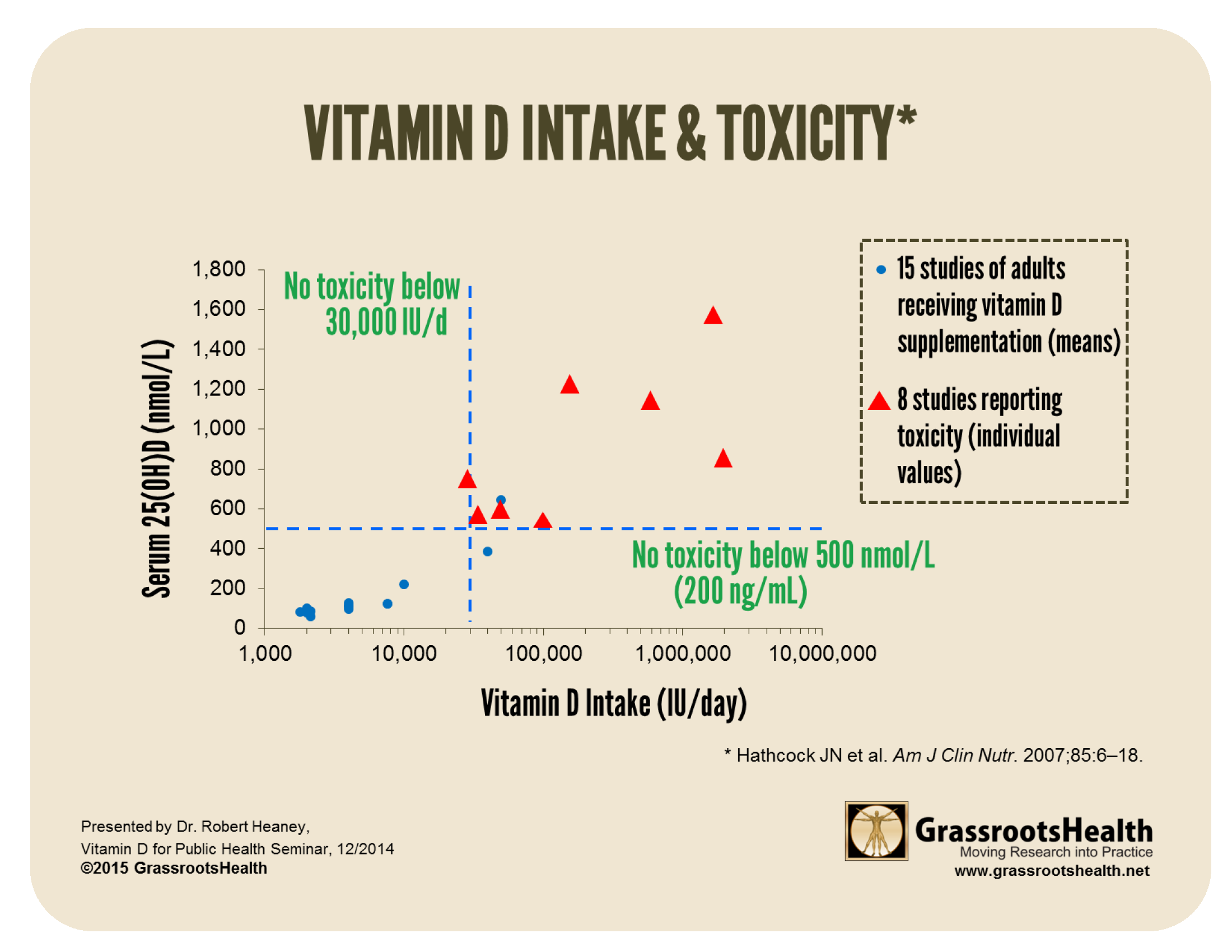
In 2025, most recommendations still converge around the concept of an upper limit for chronic intake. For adults, the commonly used safety threshold for daily vitamin D intake from all sources is typically 4,000 IU/day (100 micrograms/day). Above this level, the probability of adverse effects rises—particularly when supplements are involved and blood levels drift upward.
But here’s the nuance: “too much” is not only about the dose. It’s also about baseline vitamin D status, body weight, kidney function, medication history, and whether the vitamin is taken consistently. Some people can tolerate higher amounts under medical supervision because dosing is adjusted based on labs. Others—especially those using high-dose regimens without follow-up—may tip into toxicity.
If you want a practical way to think about it: aim for adequacy, not maximalism. The goal isn’t to chase a glamorous number; it’s to land in a functional, safe range.
How toxicity actually develops (and why it can be slow)
Vitamin D is fat-soluble, meaning it can accumulate in body tissues. Unlike water-soluble vitamins, which the kidneys can more easily excrete, vitamin D’s storage behavior makes prolonged overconsumption more concerning. This is why toxicity is often linked to ongoing high supplementation rather than a single overzealous day.
The biochemical pathway goes like this: increased vitamin D leads to increased intestinal absorption of calcium and phosphate. When calcium rises beyond what the body can comfortably regulate, symptoms may appear. The kidneys then work harder to manage the burden. Eventually, dehydration, kidney stress, and electrolyte imbalances can follow.
In short: the body doesn’t simply “feel” too much vitamin D—it has to metabolically accommodate the after-effects.
Spot the warning signs: symptoms that feel like other problems
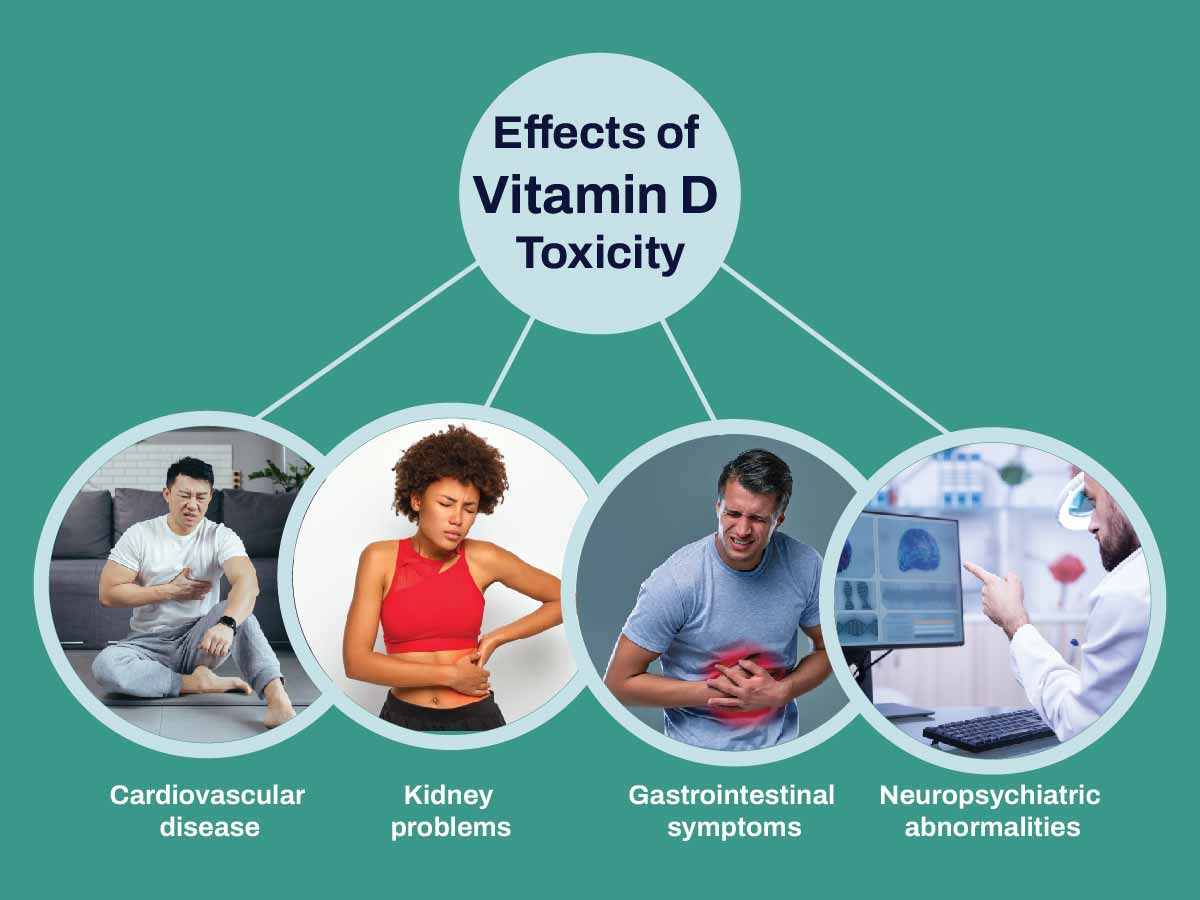
Vitamin D toxicity doesn’t always announce itself with a single dramatic symptom. Instead, it can mimic common illnesses, which is part of the challenge. Elevated calcium can cause a constellation of symptoms, including fatigue, nausea, constipation, abdominal discomfort, frequent urination, excessive thirst, confusion, and muscle weakness.
Some people describe mood changes or a foggy cognitive state. Others experience more obvious physical signals like dehydration or persistent gastrointestinal upset. If symptoms persist while someone is taking high-dose vitamin D, it’s wise to consider calcium metabolism as a suspect.
/symptoms-of-too-much-vitamin-d-5105134_final1-eb2f19a74bd54a80950644df25ccb5b2.png)
Lab markers: what clinicians measure when vitamin D is under suspicion
Blood testing is the compass. When vitamin D toxicity is considered, clinicians typically evaluate:
1) 25-hydroxyvitamin D — the main circulating marker of vitamin D status.
2) Serum calcium — the key toxicity signal.
3) Kidney function markers — such as creatinine and related measures.
4) Sometimes phosphate and parathyroid hormone — to understand the endocrine feedback loop.
In toxicity, calcium tends to be high, vitamin D can be elevated, and parathyroid hormone may be suppressed. However, lab interpretation must be individualized. Certain conditions—like sarcoidosis, granulomatous diseases, hyperparathyroidism, or specific medications—can complicate the picture.
The “numbers” aren’t the whole story. The trend and the clinical context matter just as much.
Risk factors that quietly increase the odds
Even if someone stays within “reasonable” supplement ranges, risk can rise when other factors are present. Common amplifiers include:
• Pre-existing kidney impairment — reduced ability to handle calcium load.
• Certain medical conditions — for example, disorders that increase vitamin D activation.
• Concomitant supplements — especially if calcium and vitamin D are stacked without awareness.
• High-dose prescriptions or wellness protocols — taken longer than intended.
• Medication interactions — such as thiazide diuretics, which can affect calcium handling.
There’s also the “stacking” problem: multivitamins plus separate vitamin D capsules plus fortified foods. It’s easy for total daily intake to exceed expectations, turning a well-meant regimen into an accidental megadose.
Vitamin D toxicity vs. “good vitamin D” myths
Vitamin D deficiency is common, and correcting it can be life-changing—especially for bone health and muscle function. The problem is the internet’s tendency to treat vitamin D like a universal cure rather than a nutrient that requires measured dosing.
Some myths to sidestep:
• “More is always better.” Not for fat-soluble nutrients.
• “If it’s over-the-counter, it can’t harm you.” It can—especially at high, sustained doses.
• “Sun exposure equals safe supplementation.” Natural sunlight and supplements behave differently, and the body’s regulation isn’t identical.
Better question: What level makes you feel well and function optimally—without pushing calcium into danger?
What happens in the body: calcium overload and downstream effects
When calcium climbs, several systems can be affected. You might see kidney stones, kidney strain, and impaired ability to concentrate urine. Nerves can become irritable, and muscles may twitch or weaken. The heart can also experience rhythm disturbances in severe cases.
One reason toxicity feels multifaceted is that calcium is a conductor in the physiology orchestra. It supports contraction, nerve transmission, and vascular tone. Excess calcium changes the tempo.

Prevention: a sensible strategy (not a maximalist one)
Prevention is mostly about precision. A practical approach includes:
• Start with an intake inventory — multivitamins, gummies, drops, fortified foods, plus calcium supplements.
• Use blood tests when possible — especially if taking doses above typical maintenance levels.
• Avoid prolonged high dosing without supervision — even if a bottle label seems reassuring.
• Stay hydrated — since kidney handling becomes more important when calcium is high.
• Reassess after a defined period — nutrients don’t behave like instant fixes.
And perhaps the simplest rule: if you feel compelled to keep raising the dose, pause. That urge is often psychology, not physiology.
Treatment basics: what typically happens if toxicity is suspected
If vitamin D toxicity is suspected—particularly with symptoms suggestive of hypercalcemia—medical evaluation is essential. Typical management may include stopping vitamin D supplementation, and in more significant cases, reducing calcium intake and using treatments aimed at lowering calcium levels.
Clinicians may also provide supportive care such as hydration and monitoring of electrolytes and kidney function. The timeline for recovery depends on the severity and duration of exposure, since vitamin D’s fat-soluble nature can prolong its effects.
Self-treatment is not ideal here. Because toxicity can mimic other conditions, testing is crucial to avoid missing the real culprit.
A clear takeaway: aim for adequacy, respect the upper limit
Vitamin D can be a steady, dependable partner for health—until it becomes a substance used without measurement. In 2025 guidance, the upper limit concept remains the anchor for safety in typical adult supplementation. When intake consistently exceeds recommended boundaries, the risk of hypercalcemia and organ stress increases.
The final playful challenge can be reframed into a wiser question: Are you taking vitamin D to correct a deficiency, or are you chasing a theoretical “more”? When you answer that, the path to safe dosing becomes much easier—and your body stops working overtime to undo the consequences.