People often treat vitamin D like a quiet insurance policy for the body—something safely tucked into the routine, quietly supporting bones, immunity, and mood. Yet somewhere between “optimize” and “overdo,” the conversation turns unexpectedly thorny. A common observation comes up again and again: the word “side effects” gets used like a catch-all, even when the biology is actually more nuanced. What looks similar on the surface—fatigue, nausea, weakness—can come from very different mechanisms. That is where the line between normal side effects and vitamin D toxicity begins to feel less like a slogan and more like a map.
Why the Confusion Exists: Side Effects vs Toxicity
Most consumers hear “vitamin D” and imagine a gentle, steady substance. But the body handles vitamin D through an intricate chain of conversions, transports, and receptor-level signaling. A “side effect” is often a mild or expected reaction, sometimes dose-adjacent, sometimes individual. Toxicity, however, is a runaway imbalance—an upstream alteration that cascades into overt physiological disruption.
Think of it like this: side effects may resemble a jitter from too much caffeine—annoying, sometimes inconvenient, but not necessarily a full system breakdown. Toxicity is closer to overheating a machine: the components begin to fail, not simply wobble.
The deeper reason people become fascinated by this topic is psychological as much as medical. Vitamin D sits in an odd cultural position: it sounds wholesome, it’s tied to sunlight (a natural icon), and it’s available over the counter (a sense of accessibility). That combination makes the mind assume low risk, even when the physiology is calibrated for precision, not casual accumulation.
The Body’s Balancing Act: How Vitamin D Works
Vitamin D is not simply “vitamin” in the everyday sense. It behaves like a prohormone. After ingestion, the body converts it into active metabolites that influence gene expression and calcium handling. The most pivotal downstream variable is calcium.
When vitamin D is within an appropriate range, it nudges calcium absorption and helps maintain bone mineralization. But when stores build beyond what the body can tolerate, calcium absorption can overshoot, driving hypercalcemia. The result is not merely discomfort; it becomes a biochemical overload with systemic consequences.
What “Normal” Side Effects Can Look Like
Not every unwanted feeling signals toxicity. Some reactions are relatively common with supplementation, especially when someone is sensitive to fat-soluble vitamins or takes them inconsistently with food.
Possible “normal” or non-toxic side effects may include:
• Mild nausea or stomach upset—sometimes linked to dosing timing and gastrointestinal tolerance.
• Constipation or appetite changes—often subtler at first, yet worth monitoring.
• Headaches—which can be nonspecific and triggered by many factors.
• Fatigue or mild weakness—more ambiguous, but sometimes noted during periods of supplementation.
Notice the language: these symptoms can appear without reaching the toxicity threshold. They also overlap with dehydration, electrolyte shifts, medication interactions, and even stress-related physiology. This overlap is one reason the topic feels so gripping; it’s hard to know, at a glance, what’s happening inside the body.
How Toxicity Typically Develops: The Accumulation Problem
Toxicity is usually about accumulation. Vitamin D is fat-soluble, meaning it doesn’t disappear quickly in the way water-soluble vitamins can. With prolonged high intake—or occasional very large doses—vitamin D levels can rise enough to trigger persistent calcium elevation.
Classic toxicity patterns don’t necessarily begin with dramatic symptoms. Instead, they often progress through a sequence: early gastrointestinal irritation and thirst, then escalating neurological and renal effects. The body may try to compensate, but compensation becomes costly.
This is the “deeper reason” behind why people keep returning to the question. The timeline can be deceptive. Someone may feel “mostly fine” for a while—until a tipping point arrives and the body’s regulatory systems can’t keep pace.
Key Symptoms of Vitamin D Toxicity (When It Stops Being Routine)
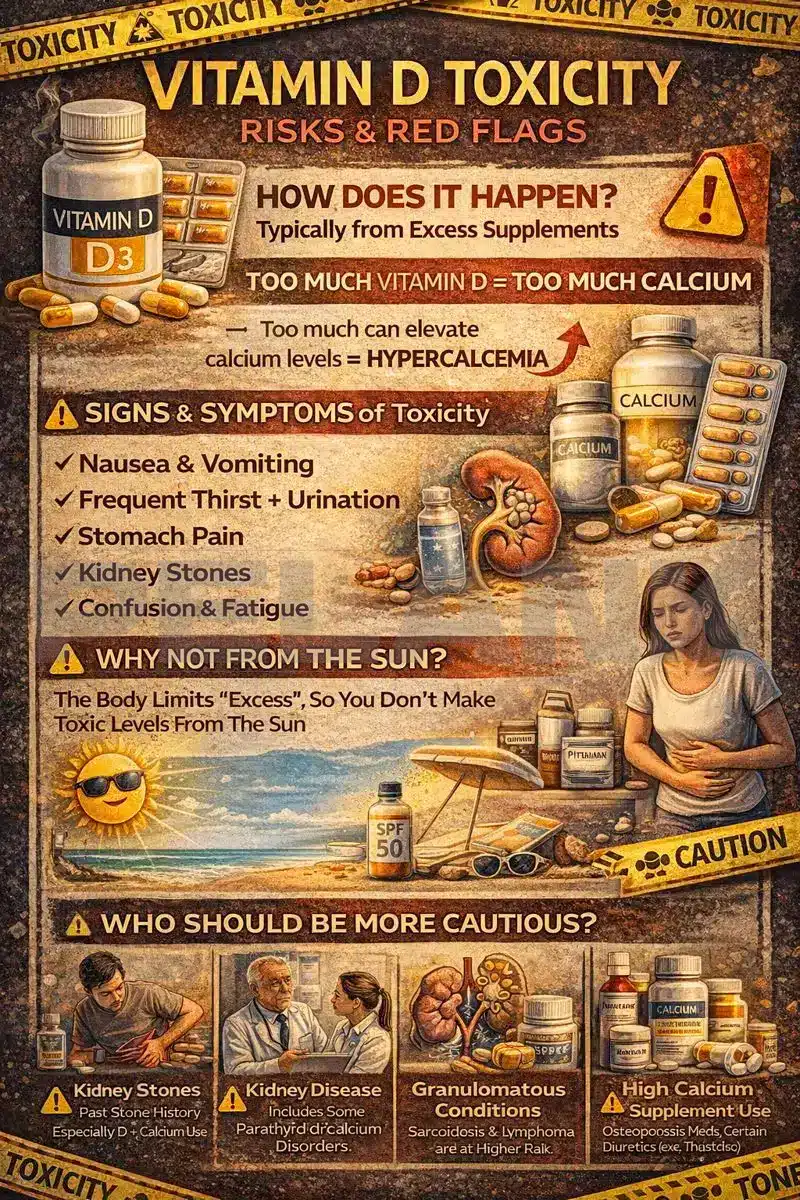
Vitamin D toxicity commonly presents through hypercalcemia-related effects. Symptoms may be more intense, more persistent, and less easily dismissed as simple upset stomach.
Common toxicity-associated symptoms include:
• Excessive thirst and frequent urination—often a compensatory attempt to clear excess calcium.
• Persistent nausea and vomiting.
• Severe constipation or abdominal pain.
• Marked fatigue, confusion, or unusual lethargy.
• Muscle weakness or decreased coordination.
• Heart rhythm changes in more serious cases.
In advanced scenarios, kidney strain can occur. The kidneys, acting as filtration hubs, may struggle when calcium levels remain chronically high.

Why High Calcium Is the Central Culprit
Vitamin D toxicity is not merely about vitamin D being “too high.” The essential hazard is the downstream calcium surge. Calcium is fundamental—bones, nerves, muscles, and signaling pathways rely on it. Yet calcium is also a narrow-band variable; too little is risky, and too much is equally destabilizing.
When calcium overshoots, it can interfere with fluid balance, kidney function, and neurological stability. That is why toxicity symptoms can feel multi-system rather than purely gastrointestinal. A single supplement can ripple outward—like a stone dropped into a pond—affecting far more than the initial splash suggests.
Who Might Be More Vulnerable to Toxicity?
Vitamin D toxicity is most often linked to high dosing, but individual vulnerability matters. Some people have conditions that alter calcium regulation or vitamin D metabolism. Others may unknowingly combine multiple sources—prescription vitamin D, multivitamins, and fortified supplements—creating a cumulative intake that exceeds expectations.
Potentially higher-risk situations include:
• Kidney disease or impaired kidney clearance.
• Primary hyperparathyroidism or other calcium-regulating disorders.
• Granulomatous diseases that can raise active vitamin D levels through immune pathways.
• Medication interactions (for example, certain diuretics or calcium-related therapies).
• High-dose supplementation without lab monitoring, especially over months.
Fascination often comes from the sense of “how could this happen?”—yet the answer is usually arithmetic. Supplements rarely fail loudly; they accumulate quietly, and then physiology responds at full volume.
How “Too Much” Happens: Dosing, Stacking, and Misinterpretation
One of the most practical turning points is understanding the typical pathways into excess. Some individuals begin with a legitimate deficit but continue dosing long after correction. Others mistake “5000 IU feels normal” and continue indefinitely, without realizing their actual target dose might be far lower.
Stacking is another stealth mechanism. Multivitamins, separate vitamin D drops, fortified beverages, and even certain weight-loss products can combine into a surprisingly high total. Labels can be clear, yet everyday routines can blur attention—especially when brands change formulations or when multiple household members take different products.
When to Seek Medical Attention: Treat It as Urgent if Symptoms Escalate
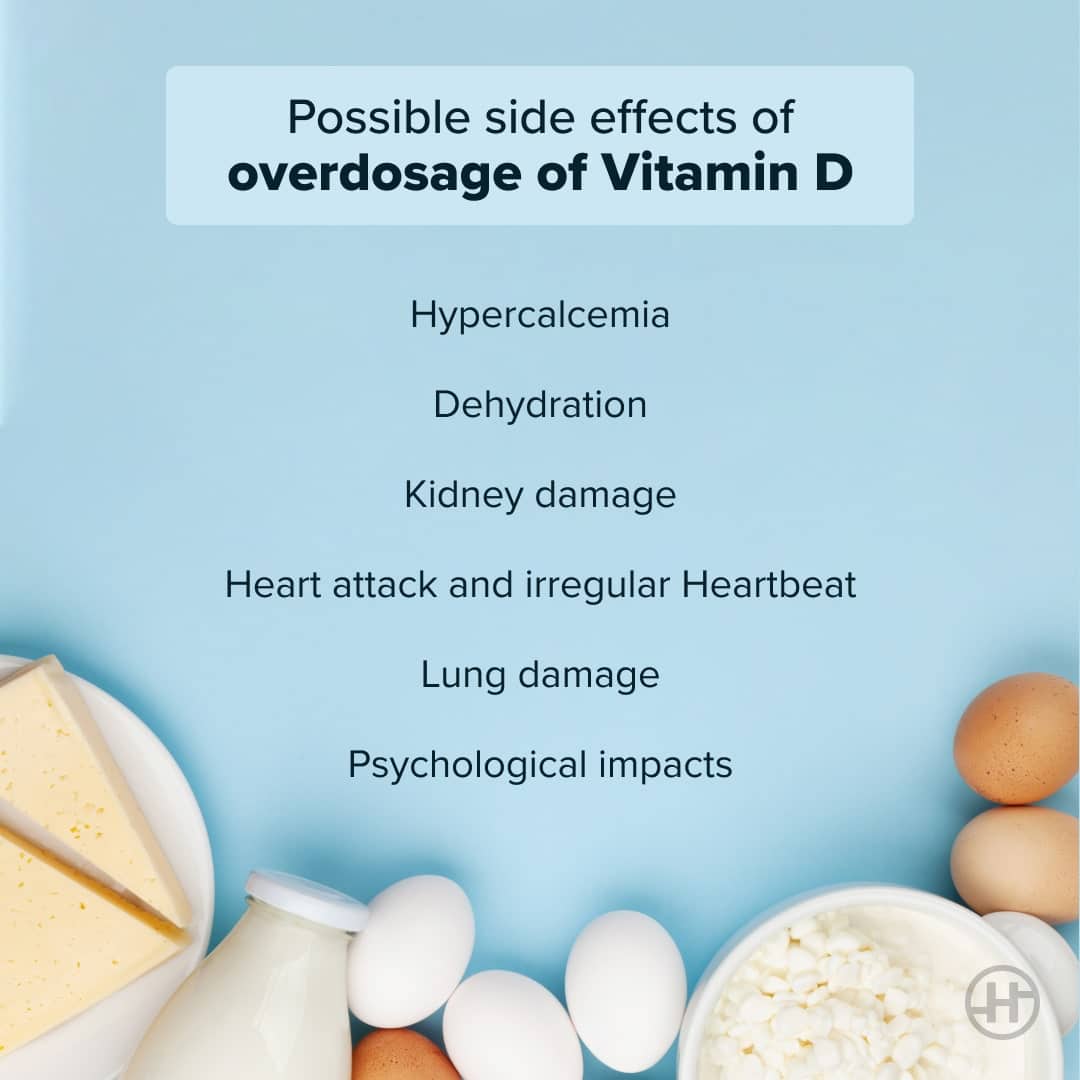
Because toxicity can progress, monitoring is not just a preference; it’s a safety tool. If someone experiences persistent vomiting, severe weakness, confusion, dehydration, or signs of reduced kidney function, prompt evaluation is warranted.
Clinicians may consider lab work such as serum calcium, vitamin D metabolites, kidney markers, and related electrolytes. The goal is not to panic; it’s to clarify whether symptoms represent a tolerability issue or a metabolic overload.
Short sentences help here: don’t “wait it out” if symptoms intensify. Don’t assume that because vitamin D is common, toxicity is improbable.
Prevention: The Calm, Practical Way to Use Vitamin D
Prevention is where the topic becomes empowering. Instead of guessing, align intake with individual needs, often guided by blood testing and risk factors. Use the lowest effective dose, and reassess after an appropriate interval.
Practical guardrails include:
• Check total daily intake from all products, not just one label.
• Take doses consistently, preferably with meals that include dietary fat if that matches the formulation.
• Avoid long-term high-dose use without medical guidance.
• Re-test when appropriate to confirm that levels have reached desired ranges.
This is how curiosity becomes wisdom. The same fascination that draws people into the controversy can lead them toward precision—toward a measured relationship with a nutrient that is powerful precisely because it is regulated.
Bottom Line: How to Tell “Normal” From “Not Normal”
Side effects and toxicity can overlap, but toxicity is typically more severe, more persistent, and more linked to calcium dysregulation. If symptoms remain mild and transient, a tolerability issue may be plausible. If symptoms escalate—or if there are risk factors, long-term high dosing, or dehydration-related concerns—toxicity rises on the differential.
Ultimately, vitamin D is not villain or hero. It is a tool. Used thoughtfully, it supports the body’s architecture. Used carelessly, it can upset the delicate choreography of calcium and cellular signaling. And that is why the question remains compelling: it teaches respect for biology’s boundaries—even when the supplement bottle looks deceptively ordinary.