Vitamin D is often described as “the sunshine vitamin,” but in bariatric medicine and metabolic pharmacology it behaves more like a quiet architect—one that arrives late, quietly adjusts the scaffolding, and determines whether the body’s calcium framework holds steady. When vitamin D deficiency appears, the consequences can feel strangely delayed: bone discomfort in ordinary days, muscle weakness that seems mysterious, fatigue that won’t negotiate. In this landscape, bariatric patients and GLP-1 users inhabit adjacent worlds—both metabolically stressed, both capable of falling into deficiency—but the pathways, tempo, and risk signatures differ in intriguing ways.
Two journeys toward the same biochemical dimness
Imagine vitamin D as a lantern used to “see” calcium and phosphate clearly. Without that light, bones become like old libraries with blurred maps: the body still functions, yet structural knowledge becomes unreliable. Bariatric surgery patients may experience deficiency because the digestive system has been surgically re-engineered. GLP-1–based therapies, on the other hand, can influence appetite, nutrient intake, and weight-related physiology, nudging vitamin D status downward more subtly.
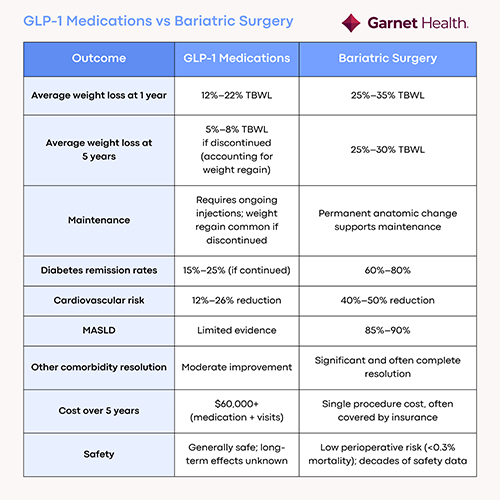
Bariatric procedures such as Roux-en-Y gastric bypass and sleeve gastrectomy can create a dual problem: reduced dietary intake paired with altered absorption. GLP-1 users may not face a structural absorption shutdown, but they can experience reduced consumption and slower intake replenishment, especially during rapid weight loss phases. The shared destination is deficiency; the routes are different—one is a redirected highway, the other a winding back road that gradually drains fuel.
Why bariatric patients are at higher risk: absorption, bile, and the “short circuit” effect
After bariatric surgery, digestion can resemble a workshop where tools still exist, but the assembly line has been reconfigured. Vitamin D—fat-soluble—depends on intestinal absorption mechanisms, including bile-mediated processes and adequate contact time with absorptive surfaces. When those conditions are disrupted, vitamin D absorption can drop.
Additionally, many patients develop secondary hyperparathyroidism when calcium absorption is compromised. Parathyroid hormone then acts like an overzealous foreman, pulling calcium from bone to stabilize blood levels. This can be beneficial in the short term—homeostasis is preserved—but harmful over time, potentially accelerating bone mineral density loss.
Compounding factors also matter: postoperative dietary restrictions, changes in meal composition, and inconsistent adherence to supplementation regimens. Even when supplementation is prescribed, the body may require a more aggressive correction strategy because baseline stores can dwindle during the interval between surgery and stabilization.
Why GLP-1 users can still drift into deficiency: appetite suppression and metabolic redistribution
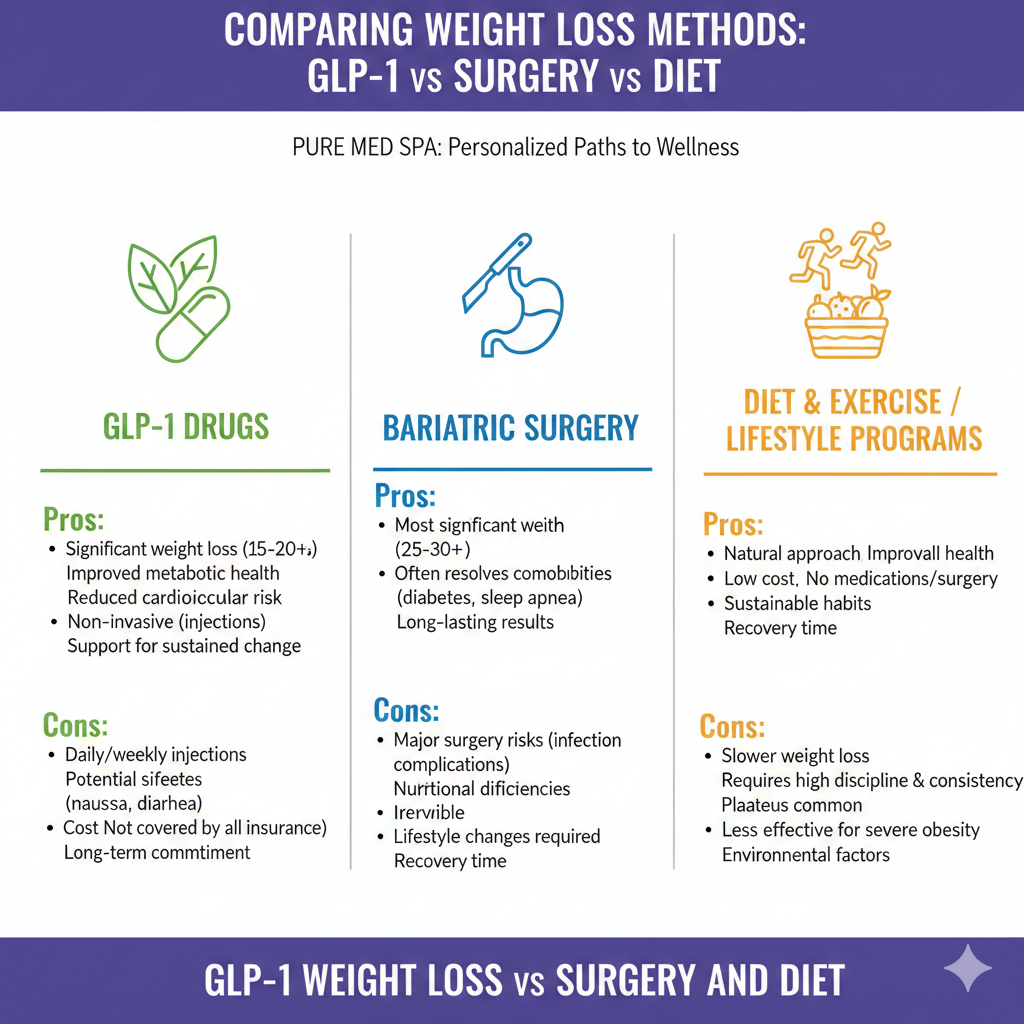
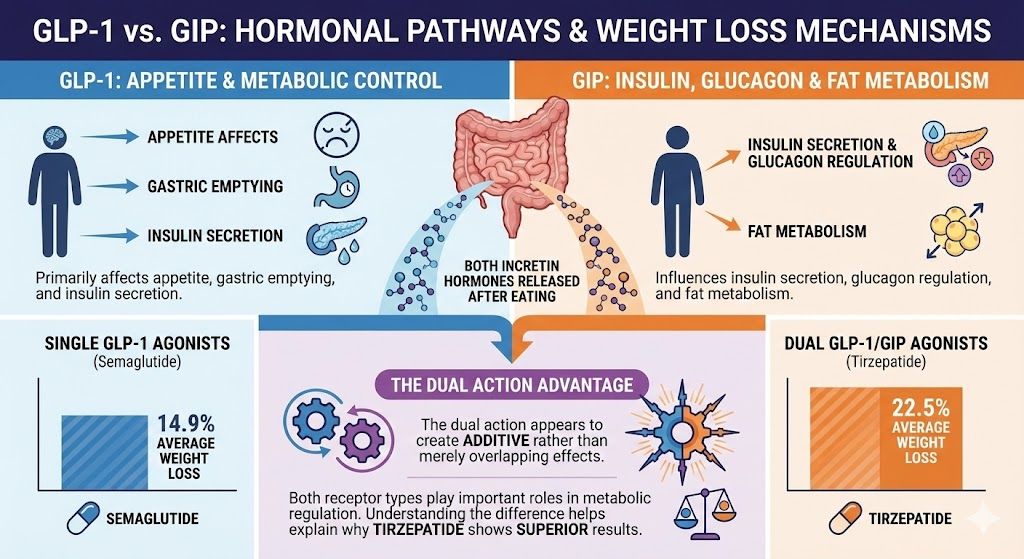
GLP-1 receptor agonists and related therapies can feel like a gentle throttle on hunger. For many patients, this is clinically beneficial. Yet vitamin D is not merely “ingested”; it also depends on consistent intake, adequate dietary fat context, and a steady replenishment cycle.
During GLP-1–associated weight loss, patients may reduce calories significantly. If diet becomes nutritionally narrow—lower in fat, less fortified, or lacking consistent supplementation—vitamin D stores can fall. Some individuals also experience nausea, altered meal tolerance, or reduced appetite persistence, which can disrupt long-term nutrient patterns.
There is also an intriguing metabolic angle. As fat mass declines, vitamin D stored in adipose tissue may shift. Depending on the timing, this redistribution can temporarily confuse lab values. It can resemble a foggy relocation: stores move, blood levels fluctuate, and the body’s “balance sheet” remains incomplete. Clinically, the risk is not always as dramatic as with malabsorptive surgery, but it is real—particularly in patients who are not supplementing or who have limited dietary reserves.
Symptoms aren’t always obvious: the subtle clinical theater of deficiency
Vitamin D deficiency can be theatrically quiet. Some patients experience bone pain, muscle weakness, or generalized fatigue, yet these symptoms can be misattributed to weight loss itself, reduced activity, or aging. The result is delayed recognition—like noticing a loose beam only after the roof has begun to flex.
Bariatric patients may notice discomfort related to altered biomechanics and bone remodeling. GLP-1 users may report weakness during periods of rapid change, especially if their protein and micronutrient intake is also reduced.
Because symptoms are non-specific, labs often become the spotlight. Clinicians typically monitor 25-hydroxyvitamin D, calcium, phosphate, and parathyroid hormone trends—turning biochemical data into a diagnostic narrative. A single low vitamin D value may not tell the whole story; the pattern over time, along with parathyroid response, clarifies whether deficiency is mild, moderate, or functionally destabilizing.
Bone health: remodeling velocity and fracture risk narratives
Bone is not static. It is a living material, continuously rebuilt. In deficiency states, remodeling can become skewed—bone resorption may outpace formation. In bariatric patients, the altered absorption and secondary hyperparathyroidism can raise concern about long-term reductions in bone mineral density.
In GLP-1 users, bone effects are typically less directly tied to malabsorption. Still, weight loss itself can influence bone turnover, and reduced nutrient intake may weaken the substrate required for mineralization. Over months and years, inadequate vitamin D can contribute to weaker bone architecture, particularly if calcium intake is also insufficient.
Fracture risk is influenced by multiple factors: age, baseline bone density, physical activity, fall risk, and concurrent deficiencies such as calcium and magnesium. Vitamin D deficiency can be considered a “multiplier.” It doesn’t always initiate harm alone, but it can amplify other vulnerabilities into clinically meaningful outcomes.
Lab interpretation: beyond a single number
A number on a lab report is like a snapshot of weather. It tells you what happened at a moment, not what the climate has been doing. Clinicians consider the broader context: vitamin D level, calcium status, phosphate, and parathyroid hormone. When vitamin D is low and parathyroid hormone is high, the body is often signaling that it cannot maintain calcium balance without drawing from skeletal reserves.
Bariatric patients may show a more pronounced pattern if absorption is compromised and dietary adherence is inconsistent. GLP-1 users may show lower vitamin D with a subtler endocrine response. Yet both groups can present similarly in terms of lab values, even though the underlying mechanisms differ.
Vitamin D can also fluctuate seasonally. If testing occurs during winter months or following periods of reduced supplementation, interpretation should account for timing. Trendlines are often more informative than one-off results.
Correction strategies: tailoring the “maintenance plan” to the mechanism
Correction usually involves supplementation and addressing the upstream causes—whether those causes are reduced intake, malabsorption, or incomplete adherence. Bariatric patients frequently require higher-dose vitamin D regimens to replete stores because absorption may be inefficient. Monitoring is essential to ensure safe normalization and to prevent overshooting into excessive levels.
GLP-1 users may benefit from structured supplementation aligned with reduced appetite patterns. The most effective approach often combines: consistent vitamin D intake, supportive calcium strategies, and attention to dietary composition. Fortified foods and adequate dietary fats (within clinical guidance) can help optimize fat-soluble absorption.
In both groups, adherence is the hinge. People do not fail out of negligence; they fail out of complexity. Regimens need to be simplified, timed, and integrated into routine habits. Follow-up testing then becomes the course correction—an ongoing dialogue between physiology and therapy.
Practical prevention: turning deficiency into a controllable variable
Prevention is best understood as engineering resilience. For bariatric patients, regular lab monitoring after surgery is crucial, as is lifelong supplementation and nutritional follow-through. The body needs continuity—vitamin D is not a one-time fix but a stable requirement for skeletal and muscular function.
For GLP-1 users, prevention often begins before therapy: baseline vitamin D assessment, education on supplementation, and dietary planning that respects the realities of appetite suppression. Patients may feel confident because weight is improving, yet micronutrient stability requires separate attention.
Physical activity also plays a supportive role. Weight-bearing and resistance exercises help maintain bone integrity, especially when paired with adequate vitamin D and calcium. Think of exercise as the rhythm section that keeps bones “listening,” while vitamin D supplies the signal.
Unique appeal: what each group teaches about metabolism and care
Bariatric patients teach that anatomy can reshape nutrient destiny. Their deficiencies are often mechanistically loud: absorption pathways are altered, and the body’s calcium equilibrium may demand extra surveillance. GLP-1 users teach that physiology can reshape intake and storage. Their deficiencies may be quieter, emerging through appetite dynamics and nutritional narrowing rather than direct malabsorption.
In both cases, the shared lesson is that metabolic care is not only about weight. It is also about the microscopic scaffolding that keeps the body durable. Vitamin D deficiency is a reminder that the body is both a system and a story—one written in absorption, endocrine signaling, and consistent replenishment.

Closing perspective: clarity, vigilance, and lifelong calibration
If vitamin D is a lantern, then bariatric patients and GLP-1 users are two different kinds of lantern keepers. One may struggle because the light route has been rerouted. The other may struggle because the fuel intake drops during a dimming appetite. Both need calibration—through monitoring, supplementation, and practical nutrition.
When deficiency is caught early, the prognosis is often straightforward: restore levels, support calcium handling, and protect bone integrity. When it is ignored, the body can compensate for a while—until compensation becomes cost. The goal, then, is not fear. It is clarity. It is a proactive, individualized approach that respects each patient’s mechanism of risk, turning biochemical shadows into measurable, manageable outcomes.