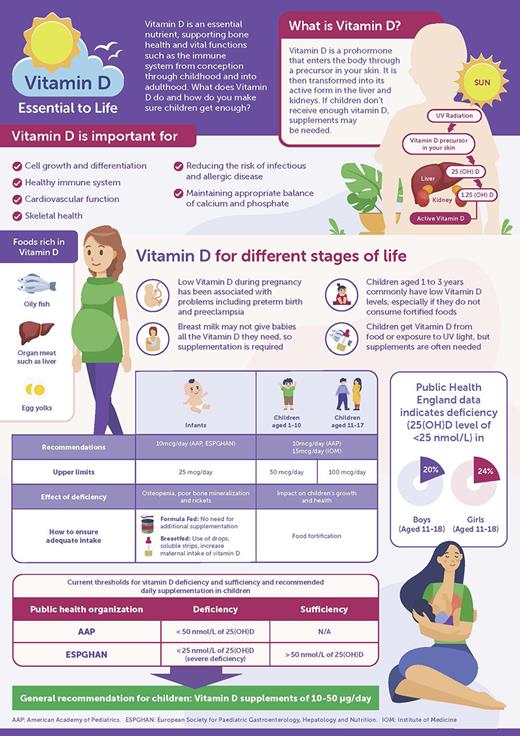
Vitamin D often enters the pediatric conversation as a simple number—an intake goal, a dosing chart, a “yes or no” supplement. Yet the real story is more interesting. In 2025, the pediatric approach has quietly shifted from blanket recommendations toward a more discerning, patient-centered lens. The promise is not only better safety, but also a more nuanced way to prevent deficiency, support bone mineralization, and potentially reduce the downstream ripple effects that accompany chronic low vitamin D. Consider this your guide—a steady hand for parents and clinicians alike, written to spark curiosity rather than settle for slogans.
Why vitamin D in children is never really “just vitamin D”
Vitamin D is a prohormone with endocrine reach. It influences calcium absorption in the gut, supports skeletal mineralization, and helps regulate immune signaling pathways. In children, where growth velocity can be astonishing, even small gaps in vitamin D status may matter. Some children are less efficient at synthesizing vitamin D due to skin pigmentation, limited sun exposure, or seasonal factors. Others may have dietary patterns that rarely include vitamin D-rich foods. Add to that the realities of urban living, sunscreen use, indoor school routines, and screen time—sunlight becomes an intermittent guest rather than a daily resident.
The perspective shift in 2025 is subtle: vitamin D adequacy is treated as a dynamic equilibrium. It’s not merely “supplement or not,” but “monitor risk, anticipate needs, and tailor the dose.” The goal is to replace guesswork with a deliberate, evidence-informed rhythm.
Promises a shift in perspective: from one-size dosing to individualized risk stratification
Once, pediatric supplementation guidance leaned heavily toward universal dosing. In many settings, that still serves as a foundation—particularly for infants. But 2025 brings a more refined posture: clinicians increasingly consider the child’s risk geometry, not just age. Risk can cluster around factors such as limited sun exposure, darker skin tone, obesity, malabsorption syndromes, chronic liver or kidney conditions, adherence challenges, and maternal vitamin D status in infancy.
This shift doesn’t mean “no supplementation.” It means smarter supplementation—so the child receives enough to reach sufficiency without drifting toward excessive dosing. The best plan feels almost invisible: it avoids both deficiency and overshoot.
Infants: dosing foundations and the art of early prevention
For infants, vitamin D supplementation remains a cornerstone because breast milk—while extraordinary nutrition—typically contains insufficient vitamin D for most exclusively breastfed babies. In 2025 practice, the key is consistency. The dose is usually modest, but the schedule must be reliable. Drops are often used for accuracy, and parents are encouraged to choose a routine tied to daily care, such as after morning feeding.
Formula-fed infants generally require less supplementation because many formulas are fortified, yet the clinician should confirm product fortification and intake volume. Preterm infants and those with medical complexity may require different dosing strategies and closer follow-up.
Toddlers and preschoolers: sunlight is unreliable—diets vary widely
As children transition from infancy to early childhood, vitamin D can become quietly inconsistent. Some families rely on dietary sources—fortified milk, yogurt, or fortified cereals—while others have limited access or preference constraints. Preschoolers may also be outside, but sun exposure is not a dependable calculator. Cloud cover, latitude, skin tone, and sunscreen habits all alter vitamin D production.
In this age group, supplementation often remains appropriate when dietary intake is insufficient. The pediatrician’s job is to estimate the “gap” between what the child consumes and what the child’s physiology requires for bone health and long-term adequacy.
School-age children and adolescents: the adolescence pivot point
Puberty accelerates growth. Adolescents may also spend more time indoors while managing school stress, athletic schedules, or shifting dietary behaviors. Vitamin D deficiency can emerge even in children who “seem healthy,” especially if summer sunlight fades into fall routines and supplement adherence drops.
For older children, clinicians increasingly ask a question that feels almost detective-like: how does this family’s vitamin D life actually work? Is there a daily supplement? Is it taken consistently? Are fortified products part of meals? Does the child have a condition that affects absorption or vitamin D metabolism? When the answers reveal variability, the approach can shift toward structured supplementation and, when appropriate, selective laboratory testing.
Measuring vitamin D: when labs help and when they may mislead
Vitamin D status is typically assessed via serum 25-hydroxyvitamin D [25(OH)D]. In 2025, testing is often framed as a tool for specific decisions rather than a reflex. Labs may be particularly useful for children with high risk, symptoms suggestive of deficiency, suspected malabsorption, chronic medication use, obesity, or unusual dietary patterns. They can also clarify response when a child is receiving treatment.
However, the pediatrician should remember that vitamin D results can be interpreted within a broader nutritional context. Calcium intake, phosphorus balance, parathyroid hormone dynamics, and overall health can influence the picture. A single number rarely tells the entire story, but it can still guide a well-tailored intervention.
Choosing the right dose: sufficiency, correction, and safety ceilings
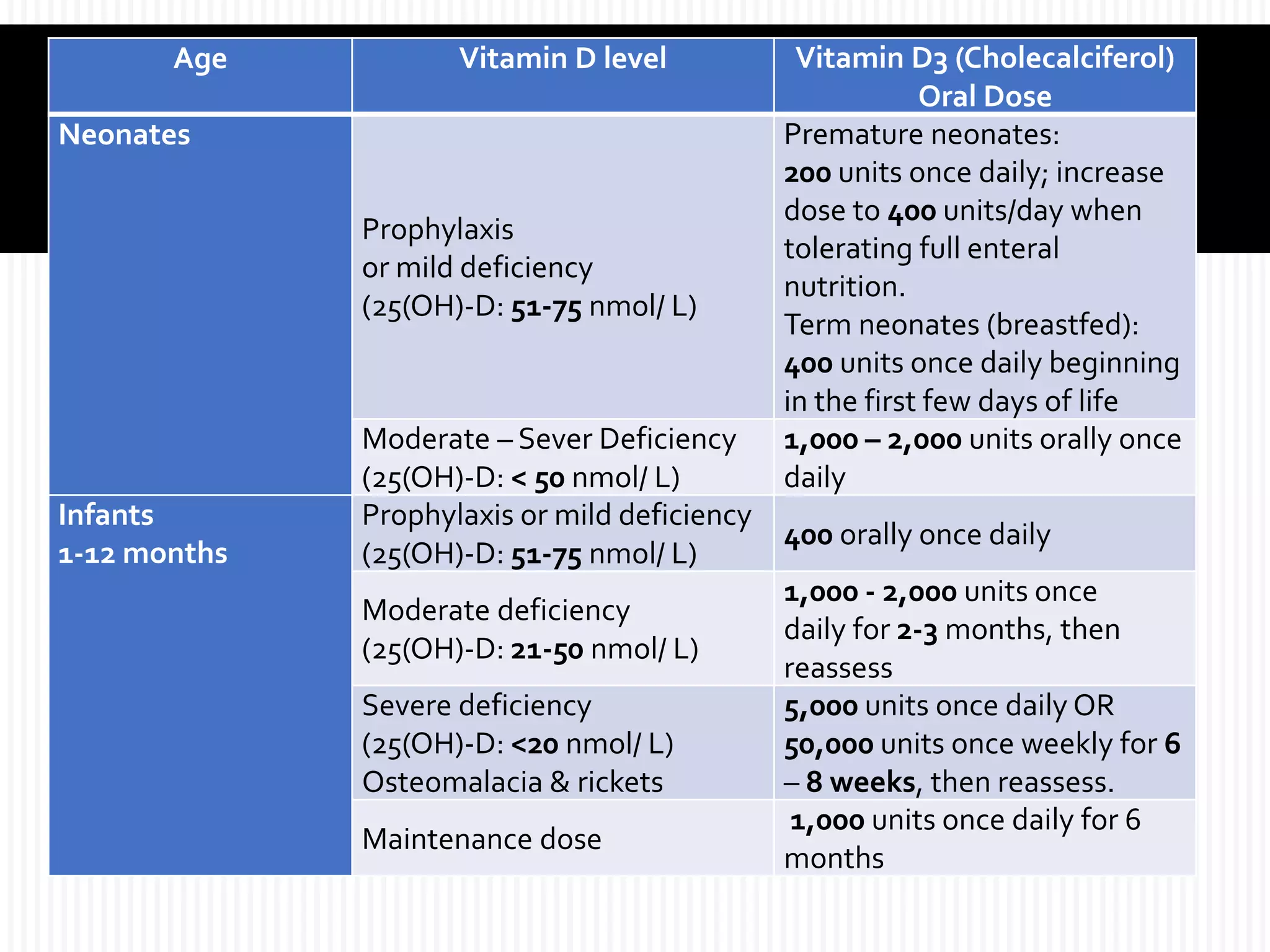
Dosing in pediatrics is not simply arithmetic. It’s balancing physiology, growth demands, adherence realities, and the risk of overcorrection. For many children, preventive dosing aims to maintain sufficiency with minimal variability. For children with documented deficiency, clinicians may use higher “repletion” dosing followed by a maintenance plan.
Safety matters. Excess vitamin D can raise calcium levels and cause complications, so dosing should not be improvised. In 2025, professional practice increasingly emphasizes dose ranges, maximum tolerable intake considerations, and follow-up timing—especially when higher repletion regimens are used.
Special situations that demand clinical nuance
Some children require more than standard protocols. Those with malabsorption disorders (such as celiac disease or inflammatory bowel conditions), chronic kidney disease, certain liver disorders, or those taking medications that alter vitamin D metabolism may need adjusted dosing and careful monitoring. Obesity can also affect vitamin D bioavailability and distribution, sometimes necessitating different dosing strategies to achieve the same serum target.
For children with limited mobility or rare syndromes affecting vitamin D pathways, pediatricians often coordinate with endocrinology or gastroenterology. In these circumstances, the guide becomes less “one plan” and more a pathway of clinical checkpoints.
Therapeutic promises: bone health, immune resonance, and long-horizon outcomes
Correcting deficiency helps prevent rickets, supports healthy bone mineralization, and stabilizes calcium homeostasis. But the pediatric interest in vitamin D extends beyond visible bone health. Research continues to explore roles in immune regulation, respiratory outcomes, and inflammatory signaling. The important perspective in 2025 is appropriate optimism: vitamin D may contribute to broader resilience, yet it is not a magic shield.
Still, the trajectory is compelling. When supplementation is thoughtful—right dose, right timing, right follow-up—it becomes a quiet form of prevention. One that complements nutrition, encourages outdoor activity safely, and aligns with overall pediatric health priorities.
Practical family guidance: how parents can make supplementation effortless
Adherence is the hidden variable. A plan that works on paper can fail in real life. In 2025 practice, pediatric guidance often includes simple operational tips: choose a consistent time of day, connect dosing to a routine (like brushing teeth or bedtime), use a measured dropper, store supplies away from humidity, and track doses for a few weeks to confirm the habit.
For families wary of supplements, the tone can be reassuring rather than prescriptive. Vitamin D is often best framed as a nutritional bridge, particularly during seasons or circumstances when sun exposure and diet are insufficient.

When to call the pediatrician: red flags and decision points
Vitamin D deficiency can sometimes be subtle early on. Parents should seek medical advice if there are concerns about poor growth, bone pain, delayed motor milestones, gait abnormalities, muscle weakness, or a history of malabsorption. In infants, any clinical concerns around feeding tolerance, growth faltering, or unusual lethargy warrant prompt discussion.
Medication history also matters. If a child uses anticonvulsants, glucocorticoids, or other drugs affecting vitamin D metabolism, the pediatrician may recommend testing or dose adjustments.
Looking ahead: a pediatric vitamin D mindset for 2025 and beyond
The future belongs to clinicians who blend evidence with empathy and individualized reasoning. Vitamin D supplementation in 2025 is not merely a preventive checkbox—it’s a targeted strategy that respects context. It acknowledges that children live in different environments, eat in different patterns, and grow at different tempos.
And here is the most hopeful promise: when supplementation is personalized, it becomes safer, simpler, and more effective. The right dose at the right time can feel like a small decision—yet it supports a powerful outcome: strong bones, healthier growth, and a pediatric future built on prevention rather than reaction.