It’s a curious moment: you stretch, you relax, and yet your muscle answers with a sudden, unruly twitch—or worse, a full-on cramp that feels like a brief act of sabotage. Many people blame overexertion, hydration, or “getting older.” But a more nuanced story often lurks beneath the surface: the intertwined roles of vitamin D and magnesium, two nutrients that rarely share the spotlight, yet frequently influence the same physiological stage. When people search for patterns—why cramps arrive at night, why they worsen after a busy day, why they sometimes improve when diet changes—they are often circling a deeper biochemical conversation.
Why muscle cramps feel personal
Muscle cramps are dramatic because they’re abrupt. A cramp is not simply “tightness”; it’s a involuntary contraction that can linger, leaving tissue tender and nerves unusually sensitive. The common observation—“my muscles cramp more than they used to”—is often dismissed as random. Yet the body is rarely random. Even the timing has meaning: nighttime cramps can suggest a mismatch between muscle excitability and the body’s calming signals.
What makes this topic fascinating is how many factors can converge without obvious warning. Electrolytes matter, yes. Nerve signaling matters, too. And vitamin and mineral status can quietly set the conditions for either harmony or chaos. In other words, cramps may be the body’s alarm bell for a deeper equilibrium problem.
Magnesium: the quiet governor of nerve and muscle
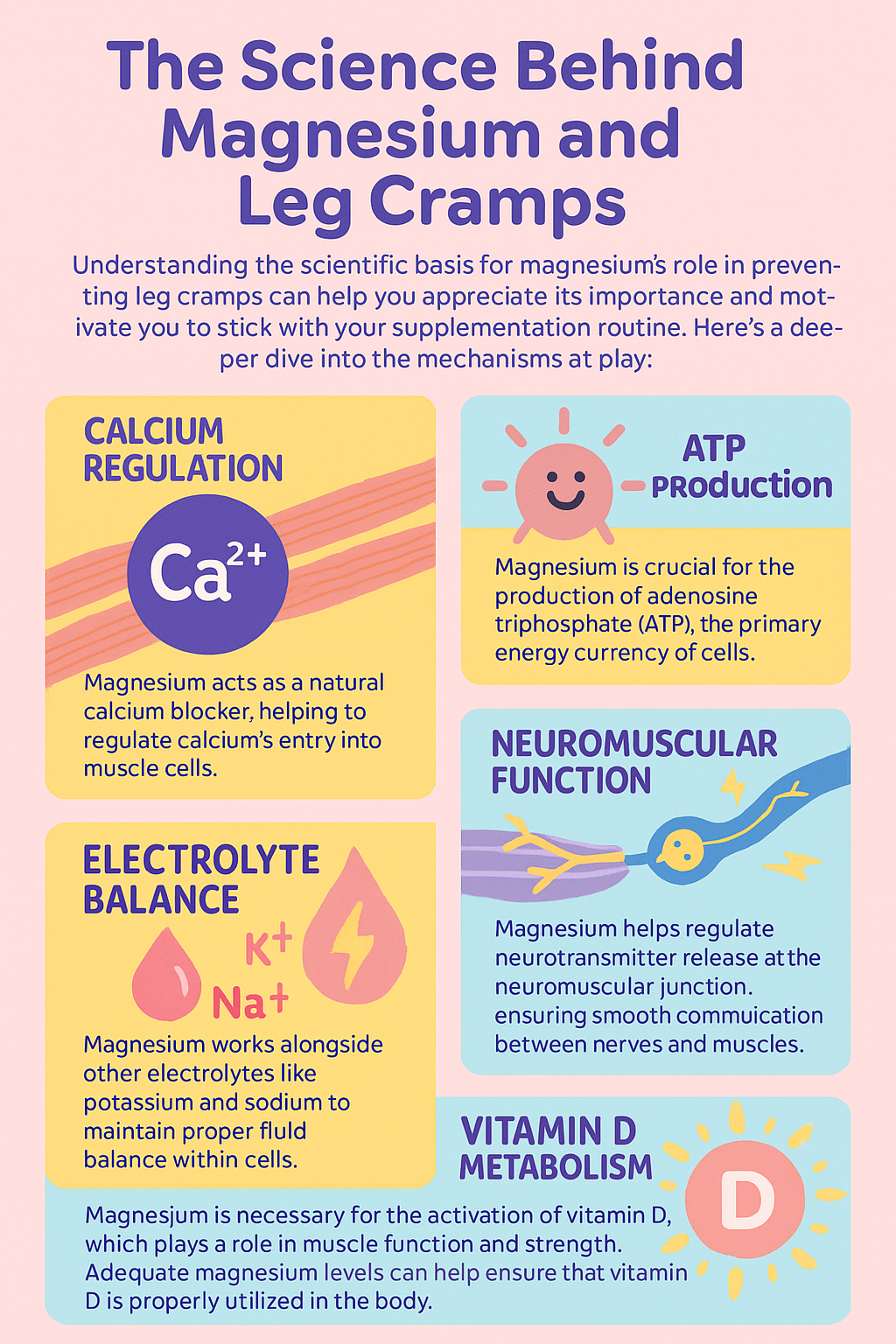
Magnesium is often described as a “relaxation” mineral, but that phrasing undersells its complexity. It participates in hundreds of enzymatic reactions and helps regulate how muscles contract and how nerves communicate. In practical terms, magnesium supports the balance between excitatory and inhibitory signals—signals that can otherwise drive muscles toward hyperactivity.
When magnesium is low, the nervous system may become more prone to sending persistent “fire” signals. Calcium can then dominate the scene, promoting contraction, while the mechanisms that normally temper that contraction may not function as effectively. The result can be twitching, spasms, and an increased tendency toward cramping.
Some people notice magnesium-responsive patterns: cramps that flare during periods of stress, after heavy sweating, or when dietary magnesium intake has been consistently low. Others observe that certain routines—like hydration habits or stretching—don’t fully solve the problem, because the underlying regulatory system remains underfed.

Vitamin D: more than bone biology
Vitamin D is often framed as a bone-supporting vitamin, and that’s true—yet incomplete. Its influence extends to neuromuscular function and the immune system, and it participates in calcium homeostasis, which directly affects muscle contraction.
When vitamin D status is suboptimal, the body may struggle to maintain appropriate calcium levels in the ways that muscles and nerves prefer. Calcium is essential for contraction, but imbalance can tip the system toward irritability. A common observation is that people with low vitamin D seem to have more aches, weakness, or discomfort—sometimes including muscle cramps. The deeper reason isn’t simply “low vitamin D causes cramps.” Instead, low vitamin D may create a downstream environment where muscle signaling becomes more unstable.
There’s also a subtle narrative about sunlight, lifestyle, and absorption. Many people have limited sun exposure due to seasonal routines, indoor work, or skin-covering habits. Meanwhile, gastrointestinal issues and certain dietary patterns can reduce nutrient absorption. In that light, vitamin D deficiency becomes less like a random event and more like a predictable consequence of modern living.

The calcium–magnesium–vitamin D triangle
Think of muscle cramping as a contest of ions and signals. Calcium tends to push toward contraction. Magnesium helps modulate that push, contributing to smooth electrical activity and appropriate relaxation. Vitamin D influences calcium availability and regulatory pathways. This forms an interlocking triangle: when one corner weakens, the others may compensate—until they can’t.
For example, vitamin D deficiency can alter how efficiently the body handles calcium. If magnesium is also low, the “brakes” on excitability may be less effective. Together, these gaps can heighten the likelihood of cramps, particularly in situations where the body already faces strain—long days, dehydration risk, or changes in exercise intensity.
That’s why some people notice that focusing on only one nutrient doesn’t always resolve the issue. They might raise magnesium intake yet still experience cramps if vitamin D remains low. Or they might correct vitamin D but fail to restore magnesium. The body tends to operate with system-level logic, not single-variable fixes.
Why cramps often show up at night
Night cramps are a recurring storyline. During sleep, the nervous system shifts toward regulation and recovery. Muscles are quieter, and the body’s demand patterns differ from daytime. If magnesium and vitamin D status are mismatched, muscle excitability may remain elevated, and the transition into rest can reveal the imbalance.
Another layer: nighttime hydration patterns and blood flow changes can influence electrolyte gradients. Even small shifts in fluid balance can affect nerve signaling. In some individuals, restless legs or sleep disturbances coexist, suggesting an overarching neuromuscular sensitivity rather than isolated “tight muscles.”
This is where fascination grows: cramps are not merely a muscular event. They can be a nervous system echo—an emergent property of chemistry and electrical behavior.
Common observation: “I drink water, so why am I still cramping?”
Many people assume that hydration alone prevents cramps. Hydration helps, but it’s not a complete explanation. Water doesn’t replace minerals. You can drink enough and still have inadequate magnesium, poor calcium balance, or a vitamin D deficit. Moreover, cramps don’t always result from low fluid volume; they can stem from nerve excitability and ionic regulation.
Consider the practical scenario: someone sweats a lot, drinks water, and feels fine during the day—then cramps at night. If magnesium stores were modest to begin with, sweating may accelerate depletion. Vitamin D status might also affect muscle comfort and calcium handling. In that case, the cramp becomes a delayed “accounting problem,” manifesting when the body can no longer compensate.
Deeper reasons people become interested in this connection
It’s not only about finding a solution. It’s about regaining a sense of predictability. When cramps become frequent, they feel like an unpredictable betrayal. Vitamin D and magnesium provide a plausible, measurable narrative—nutrients that can be influenced by lifestyle, diet, and, in many cases, laboratory testing.
There’s also a cultural fascination with personalized wellness. People increasingly seek root-cause thinking rather than symptom-chasing. When nutrition intersects with neuromuscular physiology, the topic becomes compelling: it links kitchen choices and sunlight habits to sensations in the body.
Yet the deeper truth is humility. The body is multi-causal. Cramps may also relate to circulation, medication effects, thyroid status, kidney function, pregnancy, nerve compression, or intense exercise. Vitamin D and magnesium are often important contributors, not universal villains or universal heroes.
How to think about prevention and support
Prevention starts with curiosity and structure. If cramps are persistent, it can help to consider magnesium intake and vitamin D exposure together rather than separately. Food sources matter: magnesium-rich options include nuts, seeds, legumes, and whole grains. Vitamin D often comes from fortified foods and supplements when appropriate, plus sunlight exposure—always balanced with skin-safety realities.
Short-term relief strategies can help too: gentle stretching, gradual training progression, and attention to sleep quality. Still, the most enduring approach is to identify whether nutrient insufficiency is part of the pattern. That may involve discussing symptoms and considering relevant bloodwork with a clinician.
If supplementation is considered, it’s wise to think in terms of individualized safety. Magnesium can cause gastrointestinal side effects in some forms or doses. Vitamin D can be problematic at excessive levels. The goal is calibration, not guesswork.
When to seek medical insight
Occasional cramps are common. But medical evaluation can be warranted if cramps are frequent, severe, new, or accompanied by weakness, numbness, swelling, or persistent pain. If you have kidney disease, take medications that affect electrolytes, or experience dramatic changes in muscle function, professional guidance is essential.
That step doesn’t negate nutrition; it sharpens it. Testing can clarify whether vitamin D is low, whether magnesium status is contributing, or whether another mechanism is driving symptoms. The body’s story is always bigger than one nutrient, yet understanding the cast helps you interpret the plot.
The bottom line: two nutrients, one neuromuscular harmony
The link between vitamin D, magnesium, and muscle cramps is best understood as an ecosystem rather than a single cause. Magnesium modulates nerve-muscle excitability and supports relaxation. Vitamin D contributes to neuromuscular function and calcium regulation. When deficiencies overlap, the stability of contraction-relaxation cycles can shift, making cramps more likely.
And that’s why people keep returning to this topic with such intensity. Cramps aren’t just discomfort. They’re a signal—sometimes subtle, sometimes loud—that the body is asking for better biochemical alignment. Vitamin D and magnesium are two of the most intriguing notes in that harmony, offering both a practical pathway and a fascinating glimpse into how the body coordinates its quiet electrical language.