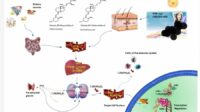
Imagine your immune system as a vigilant harbor master—part logistics, part intuition, part disciplined routine. Now imagine a second figure stepping onto the dock during a storm: an “overdrive” operator who treats every wave like an emergency alarm. Both figures are protective. Yet only one delivers safe momentum. In this article, the spotlight moves to vitamin D—a nutrient that can nurture immune support in calm, calibrated ways, while also tempting the mind into thinking “more” automatically means “stronger.” Understanding the difference between immune support and immune overdrive is where nuance becomes power.
Immune Support vs. Immune Overdrive: The Core Distinction
Immune support is the act of giving your body the materials it already knows how to use: building blocks, biochemical cues, and regulatory signals. Think of it as replenishing a well-run engine’s fuel and maintaining the throttle so it responds with precision.
Immune overdrive, by contrast, is when the immune system accelerates beyond what’s helpful—like a lighthouse that blasts its beam too long, too wide, turning warning into glare. Overdrive doesn’t merely mean “stronger immunity.” It can mean heightened inflammation, symptom flare-ups, and a reduced ability to distinguish friend from foe.
Vitamin D sits near the center of this distinction because it supports immune signaling rather than acting like a simple on/off switch. It’s less “ignite” and more “tune the instrument.”
Vitamin D’s Role: A Regulatory Conductor, Not a Hammer
Vitamin D functions like a molecular conductor directing an orchestra of immune responses. It helps modulate how immune cells behave—how they communicate, how aggressively they react, and how they return to equilibrium after a threat passes.
In immune support, vitamin D encourages a balanced rhythm. It can support the skin barrier indirectly, influence antimicrobial peptide activity, and shape the inflammatory tone so it doesn’t overreact. When vitamin D status is low, the immune “score” can sound incomplete—less coherent, more prone to misinterpretation.
In immune overdrive, the problem isn’t vitamin D’s intention; it’s the context and the dosage. Too much can shift the immune environment toward imbalance. The immune system may interpret the biochemical signals as justification to stay heated rather than to cool down.
The “Sweet Spot” Concept: Why Balanced Levels Matter
The human body is an ecosystem that runs on feedback loops. Many pathways respond to vitamin D in a dose-sensitive manner. Picture vitamin D as a thermostat: in the immune support zone, it helps maintain a comfortable room temperature—warm enough to fend off invaders, cool enough to avoid burning energy.
When vitamin D is insufficient, the immune system may operate with less efficiency, like a team missing a key strategist. When vitamin D is excessive, the thermostat can overshoot, pushing inflammatory processes out of alignment.
The intriguing part is that “more” is not inherently better. The body prefers calibration. Immune systems are not designed for perpetual intensity; they are designed for adaptive competence.
Immune Support in Practice: Signs You’re Nudging in the Right Direction
Immune support is often subtle. It’s not necessarily dramatic. It’s the difference between a smoke detector that triggers at the right moments and one that becomes twitchy from static.
Vitamin D support is most plausible when it addresses a gap—such as limited sunlight exposure, darker skin tones, geographic constraints, dietary limitations, or certain lifestyles where outdoor time is reduced. In these scenarios, vitamin D becomes a restoration mechanism, helping the immune response behave more like a well-trained unit.
Common narratives around immune support include more consistent resilience and fewer “false alarms.” Still, outcomes vary. Genetics, sleep quality, stress load, gut microbiota, and overall nutrition can all influence what you experience.

Immune Overdrive: How Excess Can Create a Fever Without a Fire
Immune overdrive is not the same as effective defense. Effective defense is selective and time-limited. Overdrive can resemble constant red alert—even when the threat has already passed.
With excessive vitamin D intake, the body can accumulate calcium. This can lead to systemic strain, including symptoms like fatigue, weakness, nausea, and changes in appetite. While these aren’t “immune symptoms” in the classic sense, they reflect the broader physiological disturbance that can indirectly affect immune balance.
At the cellular level, excessive signaling may nudge inflammatory processes toward persistence rather than resolution. The immune system might stay on a higher baseline, making it more reactive to non-threatening stimuli. Think of it as keeping the engine in a high-rpm gear: it may feel powerful, but it wears faster and runs hotter.
Why It Feels Tempting: The Psychology of “Boosts”
Humans naturally seek leverage. If one small change produces a benefit, the mind imagines a staircase where doubling the dose doubles the advantage. This is where vitamin D can become mythologized as a universal shield.
But the immune system isn’t a blender. It’s a living circuit. Support is usually about correcting deficiency and maintaining stability, not chasing maximum intensity.
When marketing pushes “boosting” language, it’s easy to confuse increased activity with improved outcomes. A calm immune system that responds accurately can outperform a chaotic immune system that responds loudly.
Metaphor Deep Dive: Harbor Master vs. Fire Drill
Return to the harbor. In immune support, vitamin D helps the harbor master maintain the right staffing levels: dockhands ready, radios tuned, gates operating smoothly. Ships arriving can be inspected quickly, without unnecessary commotion.
In immune overdrive, the master decides every ripple is a catastrophe. The entire port runs a fire drill—sirens, barriers, and frantic resource allocation. Even if danger exists sometimes, constant drills drain the harbor’s capacity to respond well when it truly matters.
This is the heart of the distinction: immune support preserves the immune system’s ability to choose, while immune overdrive pushes it into constant activation.
How to Approach Vitamin D Responsibly: Precision Over Guesswork
A professional strategy starts with context. Rather than treating vitamin D like a generic “immunity booster,” approach it like a biochemical adjustment. The most grounded method is checking vitamin D status through appropriate lab testing and discussing interpretation with a clinician.
From there, supplementation (if needed) can be tailored to the individual—taking into account age, baseline levels, dietary intake, sun exposure, body composition, and existing medical conditions.
Pay attention to tolerability and avoid stacking multiple products that may each contain vitamin D. The goal is not to reach the ceiling; the goal is to reside comfortably within a functional range.
Unique Appeal: Vitamin D’s “Invisible Work”
Vitamin D is compelling because much of its influence is quietly downstream. It doesn’t always produce immediate, noticeable effects. Instead, it supports immune orchestration—helping immune cells coordinate properly, antimicrobial defense potentially function more effectively, and inflammatory balance remain steady.
This makes vitamin D feel like a shadow architect: constructing resilience out of signals rather than spectacles. When used for immune support, it helps the immune system work like it was designed to work. When it veers into overdrive, that careful architecture can wobble.
In the end, vitamin D’s unique appeal lies in its nuance. It’s not merely about strength—it’s about harmony.
Closing Perspective: Support is Stewardship, Overdrive is Mismanagement
Immune support is stewardship. It means maintaining readiness, not burning through resources. Immune overdrive is mismanagement—an attempt to accelerate protection without respecting the immune system’s need for balance and resolution.
Vitamin D can be an elegant ally when used thoughtfully: to correct deficiency, tune immune responses, and help the body respond with precision. The best immune strategy is not louder—it’s smarter.