Blind supplementation has a peculiar seduction: it sounds efficient, almost elegant—take what seems promising, then wait for the body to comply. Yet the bill often arrives quietly. It arrives as plateaus disguised as “adaptation.” It arrives as fatigue that creeps in despite “support.” And it arrives as wasted time, unnecessary cost, and the uncomfortable suspicion that nothing was ever actually tested. The cost of not testing isn’t merely financial; it is epistemic—the price of acting without evidence, then having to learn the hard way.
When “Assume” Becomes a Budget Plan
Many people adopt a mindset that could be summarized as: if a supplement has a rationale, it should work. The reasoning feels rational, even soothing. A compound is studied in some context. A mechanism is proposed. A testimonial is shared. But rationale is not proof, and context is not interchangeable.
In supplementation, assumptions compound. Dosages vary. Timing varies. Training loads vary. Diet varies. Sleep patterns vary. Genetics vary. Even the “same” product can diverge between batches due to sourcing differences or formulation inconsistencies. When testing is absent, you are not running an experiment—you are running a gamble with your physiology.
Long sentences can hide long odds. Blind supplementation often turns a simple decision into a chain reaction of uncertainty: no baseline, no control group, no reliable feedback loop. The result is a fog of plausible explanations where outcomes should be measurable.
Fatigue, Performance, and the Illusion of Delayed Failure
Consider the practical promise many supplements carry: reduced fatigue, improved output, smoother training sessions. But fatigue is multifactorial. It is metabolic. It is neuromuscular. It is psychological. It is influenced by recovery capacity, hydration, glycogen availability, and the cumulative stress of daily life.
Without testing, the most common illusion is the delayed one. You start a regimen and feel “fine” at first. Then training intensifies. Then life introduces friction—travel, stress, interrupted sleep. The supplement may not be useless, but it may be mismatched to the actual bottleneck you are experiencing.
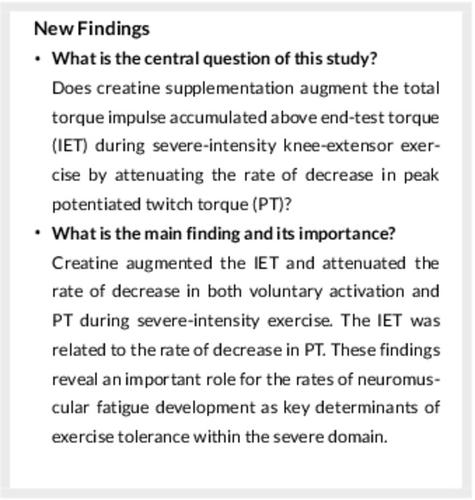
Some strategies can attenuate the perceived rate of fatigue development in specific circumstances, but that does not mean they will automatically rescue every athlete from every training block. Testing clarifies whether your reality matches the assumptions attached to the supplement’s reputation.
Why the “Works for Someone Else” Fallacy Is So Expensive
There is a reason the phrase “it worked for me” carries weight. Humans are story-driven. We prefer narratives to graphs. But supplementation does not behave like a fairy tale; it behaves like chemistry under constraint. What works for one person can fail for another because the limiting factor may be elsewhere.
Maybe you already consume adequate dietary precursors. Maybe your training intensity is structured differently. Maybe your baseline is higher—or lower—than expected. Maybe your recovery is undermined by caloric deficit, sleep debt, or chronic inflammation. In those cases, a supplement can be technically “doing something” while still not producing the outcome you wanted.
Testing converts that expensive uncertainty into targeted knowledge. It answers: Are you responding? Are you responding in the right direction? Is the effect meaningful, or merely statistical noise wearing a performance costume?
Compliance Without Verification: The Quiet Saboteur
Even when people mean well, adherence becomes a variable they don’t track. Missed doses happen. Powder is mixed differently. Timing is inconsistent. The “every day” routine gets punctured by weekends, travel, or forgetfulness. Sometimes the supplement is taken with food when it was intended to be taken without it. Sometimes caffeine is used simultaneously, altering perceived energy and perceived “tolerance.”
Blind supplementation treats these deviations as minor. But in practice, deviations can be major. A small drift in timing can change absorption. A small drift in dose can shift effect size. A small drift in training load can turn “progress” into “regression,” making it difficult to attribute causes.
Testing is not only about whether a supplement helps—it is also about whether you can reliably reproduce the conditions under which it might help. Without verification, your conclusions are braided from randomness.
Product Reality: Formulation, Quality, and Batch Entropy
Supplements inhabit a world where marketing outpaces measurement. Label promises can be accurate, inflated, or incomplete. Ingredients might vary. Bioavailability may differ depending on form. Contaminants can lurk where standards are inconsistent.
This is where curiosity becomes a survival trait. A serious question is not “Does it sound effective?” but “Is this particular version effective for your particular situation?” Batch-to-batch variability—sometimes subtle, sometimes dramatic—can create the impression that the supplement “sometimes works,” when the real culprit is inconsistency in composition.
Testing, again, is the antidote. It forces specificity. It pushes you to treat supplementation as a controllable variable rather than an atmospheric belief.
What Testing Really Reveals: Baselines, Boundaries, and Signal
Testing doesn’t have to be complicated to be powerful. The essential requirement is a baseline and a method for observing change. Baselines prevent you from mistaking adaptation for efficacy. Boundaries prevent you from overextending a conclusion based on a few good days.
Good supplementation testing asks uncomfortable questions. Does performance actually rise, or does it simply feel easier? Does fatigue decrease relative to workload, or only under specific conditions? Are you measuring outcomes that matter—recovery quality, training adherence, strength metrics, perceived exertion—or only measuring intention?
Long before you chase optimization, you need signal. Testing distinguishes signal from noise. Without it, you might interpret noise as progress, or progress as luck, and both outcomes waste resources.
Costs Beyond Money: Time, Risk, and Cognitive Burden
The direct cost of supplements is easy to count. The indirect costs are harder to quantify. There is the time spent reorganizing routines around a regimen that may not suit your physiology. There is the risk of interactions—substances don’t always ignore each other politely.
And there is cognitive burden. Blind supplementation creates a continuous background question: “Should I be feeling more by now?” That question drains attention from training, sleep, nutrition quality, and stress management—areas that often determine results more than any single ingredient.
When testing is absent, you end up paying with focus. The bill lands in your decision-making, not just your wallet.
A Shift in Perspective: From “Trust the Promise” to “Earn the Evidence”
The most constructive reframing is simple: treat supplementation as a hypothesis, not a hope. A promise is a starting point. Evidence is the conclusion you must earn.
When you test, you stop outsourcing certainty. You become the observer of your own physiology, armed with real-time feedback. You begin to ask sharper questions: What changed? What stayed constant? How quickly did the response appear? How did the response evolve across a training block?
That shift in perspective is more than scientific. It is psychological. It reduces frustration. It accelerates learning. It transforms supplements from a mysterious ritual into a deliberate tool.

Closing the Loop: Make Testing the Next Logical Step
Blind supplementation fails because it skips the loop that turns claims into knowledge. Without testing, outcomes remain ambiguous and explanations become self-serving. With testing, you replace uncertainty with actionable insight.
If the goal is improved training performance and more manageable fatigue, the pathway is not blind devotion to a regimen. The pathway is structured evaluation—small, repeatable, and honest.
Start with baselines. Track outcomes that reflect reality. Compare before and after conditions. Verify consistency. Then decide. That is how supplementation earns its place—by producing evidence, not by borrowing confidence.