Some connections in medicine feel obvious only after the evidence gathers momentum—like a constellation you can’t see until the sky finally tilts into clarity. Vitamin D, best known for bone health, is emerging as a more nuanced player: a potential modulator of the brain’s chemistry, timing, and temperature. And within that widening frame, ADHD—an attention-related neurodevelopmental condition—has begun to draw fresh scrutiny. The relationship is still “emerging,” not settled. Yet the story is compelling enough to warrant a shift in perspective, from vitamin D as a background nutrient to vitamin D as a possible neurological conductor.
First, the mood of the conversation: ADHD is more than focus
ADHD is often summarized as inattentiveness, impulsivity, and hyperactivity. That shorthand is useful, but it can compress a complex neurodevelopmental profile into something flatter than reality. Many people with ADHD also experience emotional dysregulation, sleep disturbance, difficulty with executive functioning, and variable motivational drive. These dimensions share a common theme: they rely on brain networks that coordinate attention, inhibition, reward processing, and timing.
Now consider vitamin D—how could a nutrient best associated with sunlight exposure and skeletal metabolism influence those networks? The intrigue begins here. Vitamin D doesn’t merely “feed” the body; it may act like a molecular signal that influences gene expression and neuronal function. When that signaling system is underpowered, the brain might compensate—perhaps imperfectly—through circuits that become more error-prone under stress.
Vitamin D as a neuroactive signal, not just a supplement
Vitamin D is often described in familiar terms: sunlight synthesis in the skin, dietary intake, and then conversion into active forms. But in the brain, it behaves less like a passive nutrient and more like a regulatory molecule. Receptors for vitamin D have been detected in areas connected to cognition and behavior, suggesting that vitamin D can influence neurotransmission and neuroplasticity.
Neurotransmitters—chemical messengers such as dopamine and serotonin—are central to the patterns seen in ADHD. Vitamin D is thought to intersect with these systems indirectly by affecting inflammatory signaling, oxidative balance, and the developmental programming of neural pathways. In other words, it may shape the environment in which the brain’s communication tools operate.
It’s also a reminder that symptoms are not always the result of a single malfunction. They can be the outcome of subtle miscalibration across development. Vitamin D could be one of the dials involved in that calibration.
The dopamine connection: attention, reward, and reinforcement
Dopamine-related circuitry is frequently invoked in ADHD research because it influences motivation and the “salience” of stimuli—what the brain decides is worth noticing. When dopamine signaling is atypical, tasks can feel less rewarding, delays can feel intolerable, and impulses can feel harder to inhibit.
Vitamin D may influence dopamine pathways through multiple routes: modulation of inflammatory mediators, regulation of neurotrophic factors, and impacts on neural resilience. While the exact mechanism remains under construction, the hypothesis is plausible. A nutrient that shapes developmental neurobiology could create downstream differences in reward sensitivity and attentional control.
Even the language used in emerging research is telling: it often treats vitamin D as a potential “risk modifier” rather than a sole cause. That perspective respects how ADHD is polygenic and multifactorial—yet still leaves room for meaningful biological nudges.
Inflammation, oxidative stress, and the brain’s microclimate
The brain is not an isolated island. It is constantly negotiating with immune signals and oxidative stress. Inflammation can influence synaptic function and neural communication, and oxidative imbalance can affect cell health and signaling efficiency. If vitamin D levels are low, immune regulation may become less precise, potentially creating a microclimate that favors cognitive variability.
Think of it as the difference between a well-tuned thermostat and one that overshoots. The system may still function, but with more fluctuations—more noise in the signal. ADHD symptoms can look like noise: difficulty sustaining attention, inconsistent performance, and heightened reactivity. Vitamin D’s anti-inflammatory influence is therefore a biologically coherent thread.
Importantly, this does not mean low vitamin D “explains” ADHD. It suggests that low vitamin D might worsen vulnerability—amplifying tendencies that already exist due to genetics and environment.
Pregnancy and early life: how timing could matter
One of the most thought-provoking angles is prenatal exposure. Vitamin D status during pregnancy may influence neurodevelopmental trajectories, including brain growth and maturation. If fetal brain development is exposed to suboptimal signaling, the downstream architecture of attention and executive functioning might be altered.
Early life is not merely a beginning; it is a construction phase. Neural networks are being wired, pruned, and stabilized. During these windows, signaling molecules can leave lasting fingerprints—subtle in the moment, influential years later.
This is where the phrase “emerging connection” feels appropriate. The data are not final, but the temporal plausibility is strong: vitamin D status at key developmental stages could shape later symptom expression.
Why studies look mixed: the complexity problem
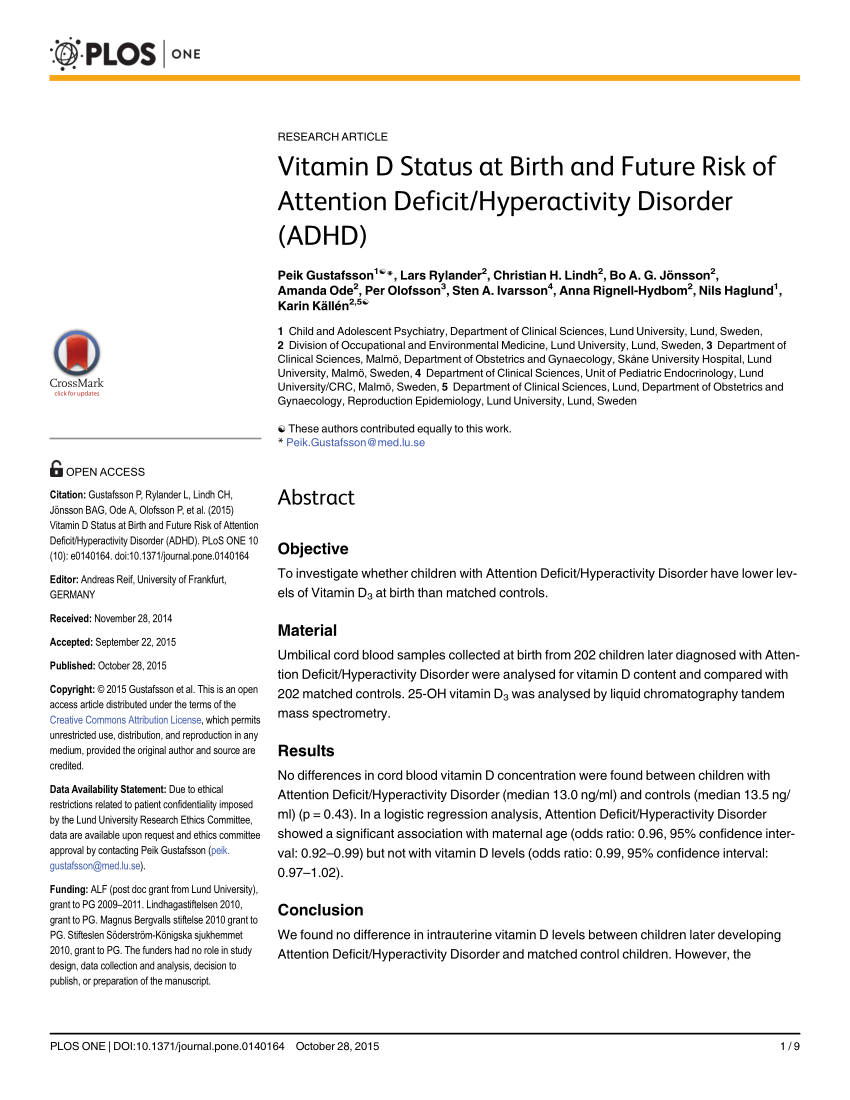
As with many observational and interventional topics, the picture is rarely clean. Some studies suggest associations between lower vitamin D levels and higher likelihood of ADHD symptoms. Others find weaker or inconsistent effects. The reasons are not trivial.
Vitamin D levels vary with sunlight exposure, skin pigmentation, geographic latitude, seasonal changes, diet, body composition, and comorbid conditions. ADHD itself can affect lifestyle patterns that influence vitamin D—sleep schedules, outdoor activity, dietary habits, and family routines. This raises the possibility of reverse causation in observational designs.
There’s also heterogeneity in ADHD. Two individuals can share the diagnosis yet differ in symptom profile, developmental history, and neurobiological subtype. Vitamin D might influence some symptom dimensions more than others. It may even interact with genetic differences in vitamin D receptor signaling or in immune pathways.
So the current narrative is not “vitamin D causes ADHD.” It’s closer to: vitamin D may modulate symptom risk and severity in a subset of people, under certain conditions.
What “emerging” means for real-world decisions
The most promising shift in perspective is not to treat vitamin D as a standalone cure. It is to treat it as a potentially adjustable factor—one that may support broader neurodevelopmental health, particularly in individuals who are likely to have low vitamin D.
Clinical caution remains important. Vitamin D supplementation should ideally be guided by appropriate evaluation, because excessive dosing can be harmful. Yet for those with documented deficiency or high risk of deficiency, correcting vitamin D status may offer general health benefits, and it may—plausibly—contribute to better neurobehavioral outcomes.
Curiosity here is productive: instead of asking whether vitamin D is “the answer,” the better question is whether vitamin D is part of a larger constellation of modifiable variables that influence symptom trajectories.
Symptoms that might shift first: attention, mood, sleep, and regulation
If vitamin D has any behavioral influence, it may express through domains that are closely intertwined with brain network stability. Sleep is one. Many individuals with ADHD struggle with sleep onset and maintenance, and sleep disruptions can intensify daytime impulsivity and attentional drift. Vitamin D’s role in circadian and inflammatory signaling could theoretically intersect with sleep-related symptoms.
Emotional regulation is another candidate. ADHD often includes labile affect and heightened reactivity. If vitamin D helps modulate inflammatory signaling or supports neuroplasticity, improvements might appear as smoother transitions—less “reactive friction” during challenging moments.
Attention itself may improve indirectly when the brain is in a better biological condition: less oxidative stress, more stable neurotransmitter dynamics, fewer fluctuations in neural signaling efficiency.
A note of hope—and a careful landing
Hope does not require certainty. A careful, evidence-respecting curiosity is what moves science forward. The emerging connection between vitamin D and ADHD symptoms invites a broader, more integrative view of neurodevelopment—one that considers metabolic signals, immune balance, and developmental timing alongside genetics and behavior.
For families, clinicians, and researchers, the next steps are clear: better measurement of baseline vitamin D status, thoughtful study designs that consider seasonality and lifestyle, and interventions that target deficiency with precision. The goal is not to oversimplify ADHD into a vitamin story. The goal is to widen the doorway so that supportive biological factors can be identified and responsibly addressed.
In that widened doorway, vitamin D becomes more than a nutrient. It becomes a potential thread—one that may help explain why some brains thrive under certain environments while others struggle. And as research sharpens, the constellation may come into focus: not as a single star labeled “ADHD,” but as a pattern in the sky—one that includes vitamin D, sunlight, biology, and time.