Depression and mood disorders can feel like weather that never clears—heavy, persistent, and oddly hard to name. In that landscape, one nutrient keeps resurfacing in conversations: vitamin D. Not because it is a magic wand, but because it appears to sit at an intersection of biology, behavior, and environment. People often notice that mood seems to improve when sunlight exposure increases. That observation is not merely anecdotal; it reflects a deeper physiological choreography in which vitamin D participates. The question, then, becomes practical and precise: what is the best vitamin D dosage for depression and mood disorders—and why does it sometimes appear to matter so much?
Why vitamin D is discussed in mood disorders
Vitamin D is best known for bone health, yet its influence extends far beyond the skeleton. Receptors for vitamin D are found in many tissues, including the brain. This makes vitamin D less like a simple vitamin and more like a neuroimmunological signal—one that can affect inflammation, neurotransmission, and neural plasticity.
Depression is increasingly viewed as a multi-system condition. In some people, inflammatory pathways are activated. In others, circadian rhythms drift. In still others, stress-response systems become dysregulated. Vitamin D enters the conversation because it has a hand in immune modulation and in signaling cascades that influence mood-relevant physiology.
There is also the “sunlight linkage” that people intuitively recognize. When days grow brighter, energy can rise, sleep can stabilize, and motivation can return. Those shifts can be partly vitamin D–related, though not exclusively. The fascination is understandable: people feel a change first, then seek an explanation that connects the external world (light, seasons) to internal chemistry (mood, resilience).
Addressing a common observation: “More sunlight makes me feel better”
A frequent observation is that mood improves during summer or after travel to sunnier regions. The common interpretation is that light itself—through circadian effects—directly alters mood. That is true, but vitamin D can be a quiet co-author.
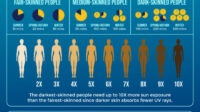
Vitamin D is synthesized in the skin when UVB radiation triggers a biochemical conversion. If someone spends much of the year indoors, wears sun-blocking clothing, or lives at a higher latitude, deficiency becomes more likely. Deficiency does not automatically cause depression, yet it can reduce the “biological margin of safety” that supports emotional regulation.
There is also an everyday behavioral loop. Individuals who feel down may withdraw from outdoor activity. That withdrawal reduces sunlight exposure further, lowering vitamin D. Over time, a pattern forms: mood affects behavior, behavior affects vitamin D status, and vitamin D status feeds back into physiology. That cyclical quality is one reason people become captivated by dosage—because it feels like a lever that might interrupt the loop.
The goal: correcting deficiency vs optimizing
The “best dosage” depends on the starting point. For depression and mood symptoms, the most defensible approach is usually to correct vitamin D insufficiency or deficiency rather than to pursue aggressive megadosing.
Clinically, serum 25-hydroxyvitamin D (25(OH)D) is the standard marker. Many clinicians consider levels below ~20 ng/mL (50 nmol/L) as deficient, and levels between ~20–30 ng/mL as insufficient. People with low levels may see more pronounced benefits after normalization, simply because the body is missing an input it needs for multiple systems to function smoothly.
On the other hand, if someone already maintains an adequate level, escalating the dose may yield diminishing returns. Mood changes might then be driven more by sleep regularity, therapy engagement, social rhythm, or inflammatory health than by vitamin D alone.
Typical dosing ranges used for mood-related concerns
There is no universal dosage that fits everyone like a single tailored suit. Still, certain ranges appear repeatedly in medical practice when treating low vitamin D.
Common maintenance dosing for adults often falls around 800–2,000 IU (international units) per day, especially in people at risk for low sun exposure. For those who are deficient, clinicians may prescribe higher regimens—sometimes 2,000–4,000 IU daily or equivalent loading strategies—followed by a maintenance dose. The intention is to reach a target serum range steadily, not abruptly.
If you prefer a narrative metaphor: think of vitamin D as a conductor’s baton. You don’t want frantic, erratic waving. You want a stable signal strong enough to coordinate the orchestra without blaring the speakers.
How long it takes to notice effects
Vitamin D is not an immediate-acting neurotransmitter. Mood changes, when they occur, typically evolve over weeks rather than hours. Serum levels generally rise over time with consistent dosing, and downstream effects—immune signaling, receptor activity, and possibly sleep/circadian alignment—may lag behind.
A reasonable expectation might be reassessment after several weeks to a couple of months, paired with tracking symptoms. Depression is not a single switch; it is a network. Therefore, even if vitamin D helps, it may do so as part of a broader adjustment—like adding one instrument that makes the entire ensemble sound fuller.
Deeper mechanisms: inflammation, neurotransmitters, and sleep rhythm
One reason vitamin D feels so “fascinating” is that depression is not just sadness. It is often accompanied by fatigue, slowed cognition, sleep disruption, and diminished pleasure. Vitamin D touches multiple lanes of that experience.
Inflammation is a major candidate mechanism. Vitamin D can influence immune responses, potentially lowering pro-inflammatory signaling in some individuals. In that context, mood may improve indirectly, because inflammatory load can affect brain function and energy regulation.
There is also the neurotransmitter angle. Vitamin D is involved in gene expression pathways that can influence serotonin-related systems. While the clinical picture is complex and not identical for every person, the biological plausibility is one reason vitamin D remains a recurring therapeutic theme.
Finally, sleep and circadian rhythm matter. Sun exposure supports circadian entrainment. Vitamin D status may interact with that system, creating a more stable sleep architecture. Better sleep, in turn, is a known mood stabilizer—so the pathway can be both direct and indirect.
How to personalize dosage safely
The “best” dosage is the one that is both effective and safe for the individual. Personalization usually involves three steps: measure, adjust, and monitor.
First, measure 25(OH)D if possible. Second, choose a starting dose appropriate to your level and risk factors. Third, recheck levels after a reasonable interval, especially if using higher doses.
Risk factors include obesity (vitamin D can be sequestered in adipose tissue), darker skin pigmentation (less efficient synthesis), malabsorption disorders (celiac disease, Crohn’s), certain medications (some anticonvulsants, glucocorticoids), and limited sun exposure.
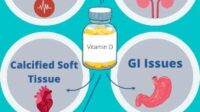
Safety matters. Chronic excessive vitamin D can lead to hypercalcemia and associated symptoms such as nausea, constipation, confusion, and kidney strain. That is why professional monitoring—especially when higher dosing is used—is such a crucial safeguard.
Signs you might benefit vs signs you need a different focus
Vitamin D may be more likely to help when deficiency is present: low measured levels, limited sun exposure, and symptoms that overlap with broader deficiency patterns (fatigue, reduced energy, generalized low vitality). It may also matter when depression coexists with inflammatory conditions.
Yet vitamin D is not a stand-alone solution. If depression is severe, involves suicidal ideation, or includes psychotic features, urgent clinical care is essential. Mood disorders are heterogeneous; sometimes vitamin D is a supportive component, and sometimes it is not the central driver at all.
This distinction is part of the deeper story. People can become enthralled by the simplicity of “dose equals improvement,” but biology is rarely that linear. The best strategy honors complexity while still taking decisive action.
Practical guidance: choosing a form and timing
Most supplements use vitamin D3 (cholecalciferol), which is often preferred for raising 25(OH)D levels. Taking it with a meal that contains fat can enhance absorption. Some people find daily dosing steadier and easier to maintain; others use spaced regimens under clinician guidance.
Because depression is affected by routine, daily habits can offer an additional benefit. A consistent supplement schedule can become a small anchor—one that supports overall self-care behaviors such as hydration, meal regularity, and sleep timing.
When to recheck labs and how to interpret results
After starting a regimen, rechecking serum 25(OH)D helps confirm you are moving into an adequate range. Clinicians often recheck after about 8–12 weeks when adjusting doses, then switch to maintenance.
Interpretation should include symptoms, not only numbers. Two people can share the same 25(OH)D value but differ in inflammation, sleep quality, gut absorption, and stress load. Therefore, lab values guide dosage, while symptom trajectories guide clinical judgment.
Complementary supports that amplify any vitamin D benefit
If vitamin D helps, it likely performs best alongside other interventions that target mood networks. Evidence-based approaches such as psychotherapy, structured behavioral activation, and—in some cases—medication are foundational. Lifestyle measures can also synergize: consistent sleep-wake times, morning light exposure, regular physical activity, and nutritional adequacy.
Think of vitamin D as a “substrate” that supports multiple systems. But the systems themselves still need stable inputs: movement for neurotrophic factors, social connection for resilience, and sleep for emotional recalibration.
A small visual reminder of consistency
Even the most compelling biological theory doesn’t matter without consistency. Tracking intake, sunlight habits, and symptom changes can make the difference between guesswork and progress.

Final perspective: finding the best dosage for your body
The best vitamin D dosage for depression and mood disorders is often the one that corrects low blood levels safely, then maintains adequacy. For many people, this begins with measurement, followed by a moderate-to-appropriate dose and follow-up testing. When mood symptoms improve, it tends to happen gradually, reflecting the nutrient’s role in immune regulation, neural signaling, and sleep/circadian stability.
In the end, the fascination with vitamin D is not just about a number. It is about the yearning for an understandable lever—something tangible in a condition that can otherwise feel opaque. A thoughtful, individualized approach turns that curiosity into a disciplined plan: measure carefully, dose responsibly, and reassess with both data and lived experience.