Picture this: you’ve got a vitamin D capsule in one hand and a full meal in the other. Now comes the mischievous question—should you swallow it with a complete plate, or merely with a fat source? It sounds like a small decision, but your digestion can be picky. And here’s the twist: vitamin D doesn’t behave like a quick, water-soluble guest. It’s more like a thoroughbred—prefers the right conditions, especially when dietary fats are involved.
Why vitamin D is different from most vitamins
Vitamin D is fat-soluble, meaning it travels, stores, and works within the realm of lipids rather than in watery environments. When you take it, your body treats it like cargo that needs a compatible delivery system. Without sufficient dietary fat, absorption may be less efficient, leaving you with a “half-received” benefit. That can feel frustrating—especially if you’re taking vitamin D to correct low levels or to support seasonal wellness.
Think of your intestines as an airport. Vitamin D needs the right runway and baggage handling. Dietary fat helps create the biochemical traffic needed for transport. The better the conditions, the more likely you are to get closer to your intended outcome.
Also, vitamin D doesn’t sprint to action. It’s more deliberate, gradually influencing calcium metabolism, immune function, and bone health. So your timing and meal context matter—not just for immediate absorption, but for consistent, reliable utilization over time.
The playful challenge: “Will a full meal steal the spotlight?”
Here’s a potential challenge that often comes up: some people assume a large meal will distract the body or delay absorption, like a crowded stage where one performer can’t be heard. But in many cases, a full meal—especially one that includes fat—provides a more favorable environment than a snack that’s fat-only or taken on an empty stomach.
A full meal may do two helpful things at once. First, it increases the presence of dietary fats that support absorption. Second, it slows gastric emptying in a way that can allow better processing in the digestive tract. It’s not about “slowing down to fail”—it can be about slowing down to coordinate.
However, not every full meal is created equal. A meal heavy in lean protein and vegetables with minimal fat might not offer the same absorption boost as a meal that includes healthy fats.
Taking vitamin D with a fat source: what it means in real life
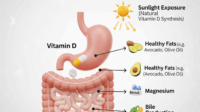
If you’re deciding between a full meal and just a fat source, it helps to clarify what “fat source” actually looks like. It might include foods such as olive oil, nuts, avocado, eggs, whole milk, yogurt, cheese, or fatty fish like salmon. The underlying idea is simple: provide lipids to facilitate absorption.
For some people, pairing vitamin D with a fat-containing snack is practical and easier to remember. A spoonful of olive oil with a meal, a yogurt bowl with some nuts, or vitamin D taken alongside eggs can be a workable routine. This can be particularly helpful if you’re nauseated by large meals or if you prefer smaller portions.
But here’s the nuance: the “fat source” strategy usually works best when the snack contains a meaningful amount of fat. A tiny drizzle or a barely-there amount might not provide the same absorption support as a meal where fats are naturally present.
When a full meal can be the most reliable option
Choosing vitamin D with a full meal often functions like choosing a complete roadmap. Meals tend to be more consistent in their fat content, and that consistency can translate into steadier absorption. If you’re aiming to correct deficiency or maintain adequate vitamin D status, predictable absorption is a strategic advantage.
Additionally, a meal can reduce gastrointestinal discomfort. Some people experience nausea when taking supplements on an empty stomach. Food can act as a buffer. Not everyone will have side effects, but it’s common enough that this practical benefit is worth acknowledging.
If you want a simple rule of thumb: a meal that contains some dietary fat may create the most “absorption-friendly” context. That doesn’t automatically require a heavy, greasy plate. Even moderate fat can be beneficial.
What happens if you take it without food?
Taking vitamin D on an empty stomach might still help some people, but absorption can be less efficient. The fat-soluble nature of vitamin D means fewer lipids are available to assist with transport. In other words, your body may receive the supplement, but it may not move it through the system with maximal efficiency.
This matters most for individuals who are prone to malabsorption, have gallbladder issues, or take medications that affect fat digestion. If any of those apply, the “with fat” question becomes more than a lifestyle preference—it becomes a key health detail.

How dose, form, and routine influence the answer
The question isn’t only “meal vs fat source.” Dose and formulation can shift the landscape. Higher doses may have different absorption thresholds, and some forms of vitamin D may be more efficiently handled in certain contexts. Even so, the fat-soluble principle remains central.
Routine also counts. If you take vitamin D inconsistently—sometimes with food, sometimes without—your results may feel unpredictable. Your blood levels are biological weather; variation can make you wonder whether you’re doing everything right.
Therefore, the most effective plan is often the one you can sustain: take it daily with a meal that includes fat, or with a reliable fat-containing snack at the same time each day.
Simple strategies to make your choice effortless
Consider three practical options:
1) The “steady meal” strategy: Take vitamin D with lunch or dinner that includes a moderate amount of dietary fat. Keep it repeatable.
2) The “fat pairing” strategy: If you prefer smaller intake, take vitamin D with a snack like yogurt with nuts, eggs, or avocado toast.
3) The “comfort-first” strategy: If you experience stomach discomfort, choose the meal route. Food often improves tolerability.
Short and long is the theme here: short action for the pill, long-term benefit for consistency. Small changes compound.
Who should be extra careful about timing with food
Certain people should prioritize taking vitamin D with meals containing fat. Those who have conditions affecting fat digestion or absorption—such as celiac disease, inflammatory bowel disease, pancreatic insufficiency, or liver and gallbladder disorders—may benefit from structured pairing with food.
Older adults, people with limited dietary fat intake, and anyone with persistently low vitamin D levels despite supplementation may also need a more deliberate approach. If your healthcare provider has given a specific plan, following it closely matters more than any general guideline.
A clear takeaway: choose the context that maximizes absorption
So, should you take vitamin D with a full meal or just a fat source? In most real-world scenarios, the best choice is whichever option consistently provides dietary fat and supports comfort. A full meal often offers reliability and reduces the chance of under-serving your absorption needs. A fat source can be perfectly effective if it includes a meaningful amount of fat and becomes part of a stable routine.
Either way, the goal is to turn that playful question into a confident habit. Your body doesn’t need drama. It needs compatible conditions—lipids to help transport, consistency to help outcomes, and timing that feels steady rather than sporadic.