Some numbers feel like law. In nutrition conversations, “safe” often gets pinned to an upper limit—especially for vitamin D. Yet many people keep asking the same uneasy question: if 4000 IU seems cautious, what makes 10000 IU sound reckless? The fascination with high-dose vitamin D is real, but the answer is more nuanced than fear or confidence. Toxicity isn’t a simple switch; it’s a cascading chain reaction driven by absorption, metabolism, genetics, and context. The upper limit, then, becomes less a number on a label and more a boundary around uncertainty.
Why “Upper Limit” Exists: Safety Margins, Not Guarantees
Upper limits are designed to protect populations, not to describe a personal cliff edge. They are often set with conservative assumptions: typical dietary intake, average absorption, and predictable metabolic handling. But individuals do not fit neatly into averages. A person with efficient absorption, limited sun exposure combined with aggressive supplementation, or certain medical conditions may drift toward risk sooner than expected.
Think of the upper limit as a probabilistic moat around toxicity. It isn’t saying “nothing bad happens below this.” It’s saying “the odds of harm remain acceptably low when most people stay within this range.” Still, human biochemistry is rarely polite. Short-lived spikes can occur. Long-term habits can accumulate. And the body’s buffering systems—especially those tied to calcium—have their own capacity.
Vitamin D’s Double Life: Hormone-Adjacency and Calcium Control
Vitamin D is often called a vitamin, but in function it behaves like a hormone precursor. Its job is not merely to “help bones.” It orchestrates calcium and phosphate dynamics—messaging the intestines to absorb minerals and guiding the skeleton and kidneys to maintain balance. When vitamin D is chronically excessive, the body can overshoot its calcium calibration.
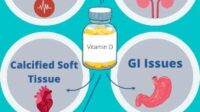
The toxic pathway is often described as vitamin D → increased calcium → hypercalcemia. But the deeper story is about regulatory breakdown. The kidneys may struggle to excrete the mineral load, and tissues can become burdened by mineral deposition. The result can include fatigue, nausea, constipation, frequent urination, thirst, confusion, and in severe cases, kidney impairment.
In other words: vitamin D toxicity is not only about vitamin D. It’s about what vitamin D forces the body to do with calcium.
4000 IU vs 10000 IU: How Dose Changes the Risk Profile
On paper, the difference between 4000 IU and 10000 IU feels like a gradient. In physiology, it can behave more like a threshold experience. A higher dose doesn’t simply add “more benefit.” It increases the likelihood that vitamin D metabolites will rise steadily over time, especially when taken daily.
4000 IU is frequently viewed as a ceiling that aims to cover many needs without pushing calcium handling into trouble for most healthy adults. 10000 IU, however, is a dose that can meaningfully elevate circulating vitamin D metabolites beyond typical safe cruising altitude—particularly if the person already has decent baseline vitamin D or consumes vitamin D through diet and sunlight.
It’s not that 10000 IU automatically becomes poisonous. It’s that the probability of overshoot rises, and overshoot is what matters. Long-duration supplementation turns a “low likelihood” scenario into a “greater chance of accumulation.”
Common Observation: “I Took 10000 IU and Felt Fine”
Feeling fine can be persuasive. Many people report stable energy, no obvious digestive distress, and even improved wellness markers. Yet toxicity can be insidious. Early symptoms may be mistaken for stress, dehydration, or “just getting older.” Calcium dysregulation might start subtle—before it becomes unmistakable.
There is also the matter of time. Acute toxicity is rare with high-dose supplements, but chronic excess is a different creature. Someone might take 10000 IU for weeks, feel okay, and assume safety—while internal markers quietly drift upward.
Another factor is individual calibration. Some bodies metabolize and store vitamin D metabolites more conservatively. Others are less forgiving. This is why two people can ingest the same dose and experience different outcomes.
Deeper Reasons for Fascination: Control, Optimization, and the “More Is Better” Reflex
The attraction to higher doses is understandable. Vitamin D is visible in lab work. It lends itself to a tidy narrative: low numbers need correction, and higher numbers must mean more strength. This is a seductive logic because the body often rewards consistency.
But “optimized” is not synonymous with “maximized.” Health culture sometimes treats upper ranges like completion bars, when they should be treated as guardrails. The fascination with 10000 IU can also stem from anecdote-driven confidence: a friend improved, a forum post praised it, and the mind fills in the unknown risk with hopeful certainty.
There’s also a psychological mechanism: when a nutrient is framed as scarce, people assume scarcity is the primary danger. Yet for fat-soluble compounds like vitamin D, storage is exactly what can make excess consequential. The body doesn’t simply “flush it out” in the next urination cycle.
What “Toxic” Really Means: Hypercalcemia, Not Just High Lab Values
Toxicity is a clinical endpoint. High vitamin D levels alone do not always equal toxicity. The real danger often involves hypercalcemia—elevated calcium in the bloodstream. That is the state where symptoms and tissue effects can emerge.
Deeper still, toxicity is sometimes influenced by baseline calcium intake, kidney function, parathyroid activity, and co-factors like magnesium status. If calcium intake is already high, vitamin D’s effect on absorption can become amplifying rather than supportive.
So, toxicity is not a single number but a relationship. Vitamin D pushes the system; calcium intake and kidney clearance determine whether the system absorbs the push gracefully or becomes overwhelmed.
Who Should Be Extra Cautious: Medications, Conditions, and Subtle Risk Enhancers
Certain conditions can increase susceptibility to vitamin D toxicity or hypercalcemia. Those include granulomatous diseases (where the body may produce active vitamin D more actively), disorders affecting calcium balance, and some kidney impairments. Medications can also matter—especially those that influence calcium handling.
Even without obvious disease, risk enhancers may appear in daily life: high dietary calcium, additional vitamin D from multiple products, frequent use of cod liver oil, or a household where everyone supplements aggressively. It’s not always “one big dose.” Sometimes it’s several smaller sources adding up like an untracked chorus.
In practice, the more variables involved, the less any single upper limit number should be trusted as a universal promise.
Timing and Strategy: How to Think About Dosing Without Gambling
If vitamin D is being supplemented, a safer approach is frequently iterative rather than maximal. Rather than jumping to a high dose and hoping, people can consider baseline testing, conservative dosing, and follow-up measurements. Vitamin D levels change slowly; the body’s “response time” is part of the safety design.
It’s also wise to treat vitamin D as an ecosystem component, not a standalone hero. Magnesium, vitamin K, and calcium balance can influence how the body handles mineral traffic. When vitamin D is increased, calcium metabolism may shift. That shift is not inherently harmful—but it does require respect.
Shorter-term correction under guidance may differ from long-term self-directed supplementation. The body is less tolerant of sustained excess than of carefully monitored adjustments.
Practical Signs to Watch: When “Normal” Might Be a Red Flag
Symptoms linked to hypercalcemia can include thirst, frequent urination, constipation, nausea, abdominal discomfort, unusual fatigue, muscle weakness, and cognitive changes. None of these are exclusive to vitamin D toxicity. Still, when several appear together—especially in someone taking high-dose supplements—attention is warranted.
Another practical clue is dehydration or “dryness” despite fluid intake. Hypercalcemia can pull water and disrupt normal renal processes. If these patterns show up, testing becomes the rational next step rather than doubling down on supplements.
Images and Context: The Real-Food Angle vs the Supplement Shortcut
Vitamin D can come from sunlight and food, but most people still rely on supplements to correct deficiencies efficiently. The fascination often shifts to convenience: a pill is easier than lifestyle change. Yet real-world absorption and co-nutrient patterns can differ.
A useful mental image is not a dose ladder but a balance scale: vitamin D is one weight, calcium intake is another, and kidney clearance is the fulcrum. When one weight is increased without accounting for the rest, the scale can tip.

The Bottom Line: Safety Is Contextual, Not Just Numerical
4000 IU and 10000 IU sit on different sides of a practical safety conversation. The former is often treated as a conservative ceiling for general use, while the latter substantially increases the likelihood of metabolite accumulation and calcium-driven complications—especially with long-term use, existing baseline adequacy, high dietary calcium, or certain medical factors.
The most careful stance is not panic and not bravado. It’s measurement, moderation, and a willingness to treat vitamin D as a regulator rather than a trophy. When the body is kept within its buffering capacity, vitamin D can support skeletal health and immune function. When it is pushed beyond that capacity, the same molecule becomes a trigger for mineral imbalance.
In short: toxicity is rarely about a single moment. It’s about chronic excess colliding with biology—quietly, then suddenly.