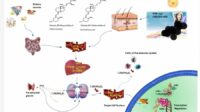
Vitamin D has long been discussed in relation to bone health, immune regulation, and metabolic balance. Yet its influence often extends further than many people expect—into the delicate choreography of skin defense and tissue repair. Skin infections and wounds are not merely “surface problems.” They are living events involving inflammation, microbial pressure, vascular dynamics, and the rebuilding of epidermal and dermal architecture. In that context, vitamin D may serve as more than a background nutrient. It can act like a molecular conductor, tuning cellular behavior in ways that support both resistance to infection and the efficiency of healing.
Vitamin D: More Than a Sunshine Nutrient
Vitamin D is best known as a hormone-like substance synthesized in the skin after sunlight exposure and processed in the liver and kidneys into active forms. The immune system recognizes these active forms as signals. Keratinocytes, macrophages, and other skin-resident cells respond to vitamin D’s presence through the vitamin D receptor, which can modulate gene expression.
This matters because wounds and infected skin represent high-communication environments. Cells are receiving constant input from cytokines, growth factors, and microbial fragments. Vitamin D can influence this signaling network. The result is a more calibrated inflammatory response, rather than a purely chaotic one. In short, vitamin D may help the body “decide” how vigorously to fight while still preserving the pathways required for tissue regeneration.
How Vitamin D May Influence Skin Defense
Skin infections often arise when barriers fail and microbial organisms gain a foothold. Even when a wound seems small, the local immune landscape can shift quickly. Vitamin D is linked to the production of antimicrobial peptides—small proteins that help neutralize bacteria and other pathogens. This is not the same as “antibiotics,” but it is an added layer of innate protection.
Several aspects of immune competence may be affected. Vitamin D can support phagocytic activity, influence macrophage behavior, and regulate the balance between pro-inflammatory and anti-inflammatory signals. That balancing act is crucial. Excessive inflammation can delay repair, while inadequate inflammation can permit microbial persistence. A well-tuned immune response often improves outcomes, especially in chronic wounds where healing cycles become derailed.
Vitamin D and Wound Healing: Cell Signaling, Not Magic
Wound healing progresses through overlapping phases: hemostasis, inflammation, proliferation, and remodeling. Vitamin D may participate in the proliferation and remodeling stages by shaping how keratinocytes migrate and how fibroblasts synthesize extracellular matrix components.
Think of healing as a timed construction project. Collagen deposition, angiogenesis, and epithelial closure must occur in the right order. Vitamin D may help coordinate these processes by influencing cell growth pathways and inflammatory mediators. It can also affect oxidative stress handling, which is especially relevant because chronic wounds often experience a persistent inflammatory and biochemical burden.
Importantly, vitamin D does not replace wound care. It does not sterilize a wound on its own. It works best as an adjunct—supporting the internal environment where healing instructions are carried out.
Types of Skin Infections and Where Vitamin D Might Fit
Not all infections behave the same way. Vitamin D’s potential roles may vary depending on the pathogen type and the clinical setting.
Bacterial infections (e.g., cellulitis, impetigo): Antimicrobial peptide induction and immune modulation may reduce microbial burden and help the body contain spread. Healing may be more efficient when inflammation is well regulated.
Fungal infections (e.g., tinea, candidal involvement): Vitamin D’s immunoregulatory effects may influence host defenses, particularly where local immune responses contribute to control. However, fungal infections often require targeted antifungal therapy, and vitamin D should not be treated as a substitute.
Viral skin conditions (e.g., herpes-related lesions): Viral infections involve complex immune signaling. Vitamin D’s influence on immune tone could theoretically support better containment, though clinical outcomes depend heavily on antiviral timing and individual immune variability.
Chronic wounds (e.g., diabetic foot ulcers, venous ulcers, pressure injuries): These are prolonged, inflammatory landscapes where healing can stall. Vitamin D deficiency is common in many populations, and repletion might help restore a more favorable regenerative environment—alongside standard wound protocols.
Vitamin D Deficiency: A Common Hidden Risk Factor
Low vitamin D levels can be an overlooked contributor to delayed recovery. Deficiency is more likely in people with limited sun exposure, darker skin pigmentation, older age, malabsorption syndromes, obesity, and certain medications. In these situations, the immune system may operate with fewer “tuning” signals, potentially affecting both infection resistance and tissue repair.
When a person repeatedly experiences skin breakdown, slow wound closure, or frequent infections, evaluating nutritional status can be a practical step. Testing 25-hydroxyvitamin D provides a clearer picture than symptoms alone, which can be misleading. If levels are low, correction—performed safely—may help the body heal more effectively.
How Much Vitamin D? Dosing, Safety, and Practical Boundaries
Vitamin D needs vary across individuals. Age, baseline blood levels, dietary intake, skin exposure, and comorbidities all influence dosing. While supplements can be useful, dosing should be considered carefully to avoid excessive intake.
Excess vitamin D can increase calcium levels, leading to complications such as kidney strain, constipation, confusion, and abnormal lab values. For that reason, a measured approach works best: baseline testing when feasible, conservative dosing when levels are unknown, and follow-up after a reasonable interval.
Dietary sources include fatty fish, fortified dairy or plant milks, egg yolks, and fortified cereals. Supplements can bridge gaps, especially during winter or for people with limited sun exposure. Still, vitamin D is only one piece of the healing puzzle.
What Content Readers Can Expect: Research Tone vs. Real-World Use
Many articles alternate between lab-level mechanistic detail and clinical outcomes. Expect a blend of topics such as antimicrobial peptides, immune signaling pathways, and wound-phase dynamics. Some content will emphasize biological plausibility—how vitamin D could affect keratinocyte migration and fibroblast activity. Other content will discuss observational findings and clinical correlations, often noting that results can vary by population and study design.
In practical guides, the narrative tends to shift toward actionable steps: screening for deficiency, discussing supplement safety, and pairing vitamin D with evidence-based wound care. Credible content typically avoids oversimplification. It frames vitamin D as supportive rather than curative, and it highlights that proper hygiene, dressing selection, debridement when indicated, and infection control remain primary interventions.
Integrating Vitamin D with Evidence-Based Wound Care
Healing improves when the wound environment is managed. That includes cleaning with appropriate solutions, applying the correct dressing for moisture balance, protecting surrounding skin, and monitoring for signs of worsening infection such as expanding redness, warmth, swelling, fever, or increased pain.
Vitamin D should integrate into this routine rather than replace it. If an infection is suspected, prompt evaluation is essential. Some skin infections need antibiotics or antifungals quickly to prevent complications. Wounds that do not improve require clinical review. In those cases, vitamin D may support recovery, but medical treatment remains the backbone.
When to Seek Medical Advice Immediately
Certain scenarios demand faster action than supplementation. Rapidly spreading redness, pus formation, severe pain, systemic symptoms (fever, chills), red streaking along lymphatic channels, or wounds that deepen can signal escalation. People with diabetes, immune compromise, vascular disease, or neuropathy should be particularly vigilant because healing capacity can be reduced.
In such contexts, nutritional optimization—including vitamin D—can be helpful, but it should occur alongside professional care. A clinician can determine whether infection is present, whether cultures or imaging are needed, and whether vitamin D testing is appropriate.
Closing Thoughts: A Supportive Lever for Recovery
Vitamin D may help with skin infections and wound healing through multiple pathways: immune modulation, antimicrobial peptide support, and assistance in tissue repair signaling. Its effect is likely best understood as a supportive lever—capable of improving the internal conditions in which healing occurs, particularly when deficiency is present.
For readers seeking clarity, the most reliable takeaway is balanced. Vitamin D can contribute, especially as part of a broader healing strategy. Clean wound care, timely treatment of infection, adequate protein and micronutrients, and medical monitoring all work together. When the body’s “repair orchestra” is well supported, recovery becomes more predictable—even when the skin is under stress.