There’s a moment many people recognize: you take your antidepressant as prescribed, you wait for the promised shift in mood, and then… nothing meaningful happens. Or it helps only faintly, like sunlight filtering through thick curtains. It’s tempting to blame willpower, dose, or “the wrong medication.” But sometimes the issue isn’t located where we assume. A surprisingly frequent culprit hides in plain sight—vitamin D deficiency. Not because vitamin D “replaces” antidepressants, but because low vitamin D can blunt the biological pathways those medications depend on.
When the medication feels like it’s running on empty
One of the most disorienting experiences in mental health treatment is believing you’re doing everything right. The pill is swallowed on time. Side effects may come and go. You may even experience a mild calm. Yet the signature lift—less dread, more steadiness, a quieter mind—never arrives.
This pattern often sparks a familiar conclusion: the antidepressant must be ineffective. But effectiveness is not a single-variable equation. Mood regulation is a network, not a switchboard. If vitamin D is low, the neurochemical terrain may be less receptive. Serotonin signaling, neuroplasticity, immune modulation, and inflammatory tone can all be nudged in directions that make improvement harder to sustain.
In other words, your antidepressant might be working, but your internal conditions could be insufficient for that work to translate into visible relief.

Vitamin D deficiency as a background condition, not a footnote
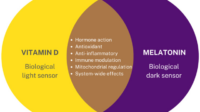
Vitamin D is often framed as a bone nutrient. That description is accurate, but it’s incomplete. In reality, vitamin D functions more like a regulator—an endocrine signal that influences systems throughout the body, including the brain.
Low vitamin D can correlate with depressive symptoms, and the relationship is more than statistical. Vitamin D participates in the development and maintenance of brain circuitry, including pathways linked to emotional processing and stress resilience. It also interacts with immune activity. When the immune system is chronically activated, mood can be dragged downward by inflammatory mediators. In such circumstances, antidepressants may face an uphill battle.
Think of it like trying to tune a radio in a storm. The dial can be set correctly, but interference makes reception intermittent. Vitamin D deficiency can be that interference.
A common observation: “I improved, but not enough”
Sometimes people don’t fail at treatment—they partially succeed. Sleep might improve slightly. Anxiety might soften. The day feels more manageable. Yet the core symptoms—hopelessness, numbness, persistent low motivation—linger.
This incomplete response is frequently where deeper causes reveal themselves. If inflammation is elevated or stress regulation is struggling, an antidepressant may reduce symptoms but not fully neutralize the underlying drivers. Vitamin D deficiency can contribute to those drivers, especially when combined with other factors such as irregular sleep schedules, high stress, limited outdoor activity, or dietary patterns low in vitamin D–containing foods.
Partial improvement isn’t a dead end. It’s an invitation to reassess the biochemical context around the medication.
How deficiency can shape neurotransmission and mood circuitry
Antidepressants often target neurotransmitter systems, especially serotonin-related pathways. But neurotransmitters don’t operate in isolation. They depend on a supporting cast: receptor sensitivity, intracellular signaling, synaptic remodeling, and cellular energy availability.
Vitamin D influences several of these layers. It can affect how neurons communicate and how resilient they are under stress. When vitamin D is low, the brain may have less capacity for adaptive change—the very change many antidepressants aim to stimulate. That’s why someone can feel “stuck,” even when the medication has had time to work.
Another layer is the nervous system’s feedback loop with the immune system. If immune signaling remains pro-inflammatory, mood can deteriorate despite pharmacologic attempts to stabilize neurotransmitters. The result can feel like emotional fog: the mind wants to clear, but the atmosphere won’t.
Clues that vitamin D might be playing a role
Vitamin D deficiency doesn’t announce itself with a single dramatic symptom. It’s more elusive—often expressed through a constellation of hints. People may notice fatigue that feels disproportionate to effort. They may experience low mood that arrives like weather. Body aches can surface without an obvious injury. Sleep may become restless. Recovery from stress may feel slower, and muscles may feel weaker or more achy.
Some individuals also report a history of limited sun exposure, darker skin tones with less sunlight conversion, living in regions with long winters, or spending most daylight hours indoors. Dietary factors matter too—especially if there’s little intake of fatty fish or fortified dairy/alternatives.
None of these signs prove deficiency. But when multiple hints cluster around persistent low mood and a modest antidepressant response, it becomes worth investigating.
Timing matters: the delayed stubbornness of low vitamin D
Even if vitamin D levels are corrected, mood recovery can take time. The reason is structural: the body must re-equilibrate cellular processes, and brain adaptations rarely behave like instant messaging.
That delay can create confusion. Someone might start vitamin D supplementation and expect immediate relief, then feel frustrated when the emotional shift doesn’t arrive within days. But antidepressant treatment itself often requires weeks. Vitamin D repletion can require similar patience.
So if the antidepressant didn’t fully work by week four or six, the answer may not be “stop” or “switch” right away. The deeper question is whether foundational physiology is supportive enough for the treatment to express itself.
Testing and interpreting results without guesswork
Rather than relying on intuition, the cleanest approach is a lab test that measures 25-hydroxyvitamin D. This marker offers the most useful snapshot of vitamin D status. With results in hand, clinicians can interpret levels alongside symptoms, risk factors, and overall health.
Interpretation is nuanced. People can fall into borderline ranges yet still feel unwell, while others with low-normal results feel fine. The meaningful point isn’t just the number—it’s how the number intersects with the person’s biology, lifestyle, and treatment history.
If levels are low, treatment plans may involve supplementation and periodic rechecks. The goal is not maximal levels at any cost, but restoring a functional range that supports neuroimmune and brain-related processes.
Supplements, sunlight, and the ethics of consistency
Once vitamin D deficiency is identified, there are two main pathways: supplementation and sun exposure (when appropriate and safe). Sunlight can be helpful, but it’s highly variable—season, latitude, cloud cover, skin pigmentation, and clothing all alter absorption. Supplementation offers more control.
Consistency matters. Sporadic dosing can leave vitamin D levels unstable, which may translate into continuing emotional “static.” At the same time, vitamin D isn’t a casual vitamin. Dosing should be guided by a clinician, particularly for people with kidney conditions, a history of high calcium, sarcoidosis, or those taking medications that interact with mineral balance.
Viewed through the lens of physiology, supplementation is not a bandage. It’s a calibration—helping the body run its internal systems with less friction.
Vitamin D isn’t the only hidden variable
It’s easy to become enchanted by a single explanation. Vitamin D deficiency may be a key piece, but it’s rarely the entire puzzle. Sleep quality, thyroid function, iron status, B12 levels, stress load, alcohol use, medication interactions, and psychotherapy engagement can all influence how antidepressants land.
Still, vitamin D is a particularly elegant variable because it sits at the crossroads of mood biology, inflammation signaling, and brain resilience. Addressing it can reduce one obstacle while other improvements continue to accumulate.
When the treatment plan becomes more comprehensive—medication optimization, lab-guided supplementation, and supportive mental health care—response often becomes more robust and less fragile.
Reframing “not working” as “not fully supported”
If your antidepressant isn’t working, the most compassionate interpretation is not that you’ve failed. It’s that the system has limitations. Your brain is negotiating with biology, environment, and history—often simultaneously.
Vitamin D deficiency can create conditions where mood-regulating medications face extra resistance. When deficiency is addressed, some people notice a gradual unspooling of symptoms: energy improves first, then sleep steadies, then emotional clarity arrives like a slow sunrise.
That doesn’t mean vitamin D is a shortcut. It means your treatment may be more effective when your physiology is properly resourced. Ask for a vitamin D test. Discuss results. Consider a plan that respects both pharmacology and foundational health. Then, give your body time to recalibrate—because healing rarely happens on schedule, but it does happen when the conditions are right.
-200x112.jpg "天気による1日の気温の変化(問題)")