In the United States, the shelves are crowded with vitamin D products, yet shoppers often circle back to a deceptively simple question: is Vitamin D3 really “better” than Vitamin D2, and what does that mean for cost, availability, and real-world effectiveness? The fascination is understandable. Vitamin D feels like a modern necessity, but it also carries the aura of a quietly complicated nutrient—one that behaves differently depending on its source, formulation, and the body’s biochemical temperament.
Why the D3 vs D2 Debate Keeps Coming Back
People notice differences without always having the language to describe them. A bottle might say “D3,” another might say “D2,” and prices can vary wildly. Then there’s the feeling that one version “works faster,” even when labels appear to promise the same outcome. This is where the common observation begins: customers compare cost per serving, then compare “how quickly labs improve,” and inevitably wonder whether the naming is doing more than marketing.
Underneath that casual comparison lies a deeper reason for the ongoing fascination. Vitamin D is not a single event—it’s a biochemical relay race. First, vitamin D is absorbed. Then it is converted. Finally, it exerts influence through pathways that touch bone metabolism, immune signaling, and neuromuscular function. When a nutrient has multiple “stages,” the details of the starting material—D2 or D3—can matter more than expected.
What’s Actually Different Between Vitamin D3 and D2
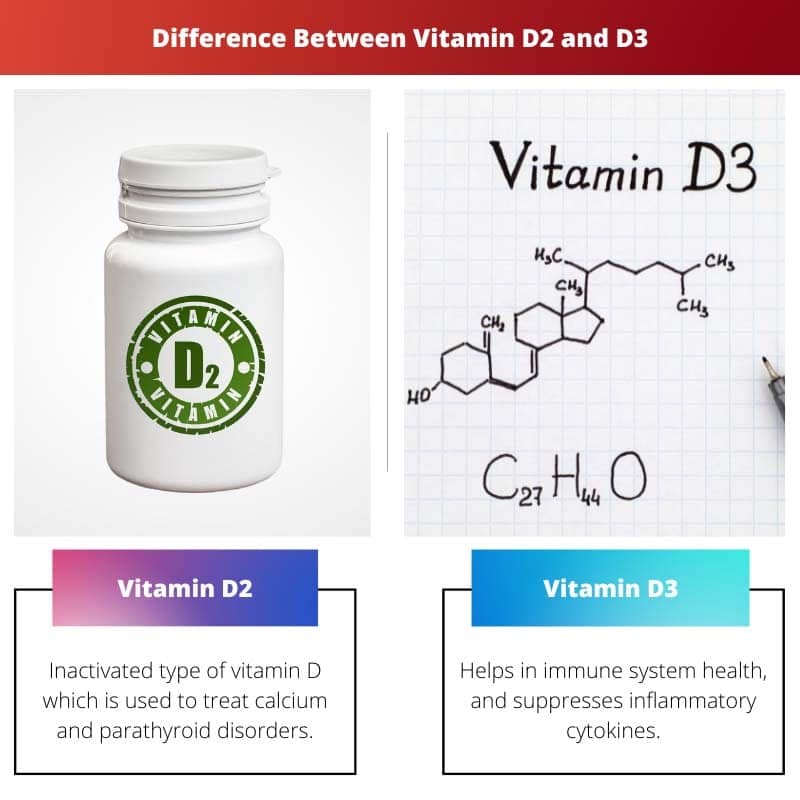
Vitamin D2 (ergocalciferol) and Vitamin D3 (cholecalciferol) differ in their chemical ancestry. D2 typically derives from plant or fungal sources, while D3 is often linked to animal or microbial sources and is also the form humans generate through skin exposure to sunlight.
This provenance is not merely trivia. The body’s handling of D2 versus D3 can influence how efficiently vitamin D levels rise and how steadily they are maintained. Think of it as two keys cut for similar locks. They may open the door, but one may turn more smoothly in the same cylinder—or hold the mechanism in place longer.
In practical terms, many people experience D3 as the more consistent performer in terms of raising serum 25-hydroxyvitamin D, though individual responses vary due to absorption, baseline deficiency severity, body composition, and adherence.
Cost in the US: Why Prices Don’t Follow a Simple Rule
When consumers ask about cost, they’re usually asking two questions at once: “What is the sticker price?” and “What is the cost per effective unit?” Unfortunately, the US market often answers only the first question clearly.
D3 is frequently available in an array of formats—softgels, tablets, gummies, drops, and even fortified blends. That variety creates competitive pricing, especially for common strengths like 1,000 IU, 2,000 IU, or 5,000 IU. Because so many manufacturers produce D3, bulk supply chains can reduce per-unit cost.
D2 appears less frequently on mainstream shelves, though it’s still encountered—particularly in prescription contexts, certain generics, or specific supplement channels. When D2 is more scarce in everyday retail, the market dynamics can make it appear comparatively “less affordable” even if the raw price per pill looks similar. Supply, distribution reach, and formulation complexity all tug the final price.
Still, bargain pricing can emerge in niche situations: promotions, store-brand formulations, or bulk pharmacy purchasing. The important nuance is that “cheaper” isn’t always “more economical” if dosing intervals differ or if serum response is less robust for a given regimen.
Availability: Finding D3 Everywhere vs Hunting for D2
Availability shapes behavior. In the US, Vitamin D3 tends to be omnipresent—big-box retailers, pharmacies, online marketplaces, and health specialty shops all carry it. This convenience reduces friction. When a product is easy to find, people begin treating supplementation as a routine rather than a one-off experiment.
Vitamin D2 may be easier to locate in certain pharmacy settings or through specific brands, but it typically doesn’t dominate casual browsing the way D3 does. That difference can quietly influence outcomes. If people don’t consistently take the same product, or if they switch brands due to price or access, their vitamin D levels may fluctuate. Consistency is not glamorous, but it is powerful.
For shoppers comparing options, the most useful availability metric is not “Can I find it today?” but “Can I restock it reliably over months?” Vitamin D management often requires sustained dosing, not a single sprint.
Effectiveness: How D3 Commonly Performs in Real Life
In practice, the question of effectiveness is usually answered through laboratory measurements—particularly serum 25-hydroxyvitamin D. Many clinicians and researchers observe that D3 often produces a stronger increase in circulating levels compared with D2 at comparable doses. This doesn’t mean D2 is ineffective. It means that, in aggregate, D3 frequently appears to be the more efficient option for raising and sustaining vitamin D status.
But “more effective” is not a universal law. Baseline deficiency matters. A person with profound deficiency might respond differently than someone hovering near insufficiency. Absorption can vary with fat intake, gut health, and medication interactions. Even the form factor—gummies versus softgels—can influence absorption kinetics.
Another nuance: the body’s conversion pathways are influenced by genetic factors and metabolic conditions. Two people can take the same supplement and produce different lab curves. This is why the most persuasive plan usually includes testing and follow-up rather than blind optimism.
Dosage and Scheduling: Daily, Weekly, and the “Compliance Multiplier”
Cost and effectiveness converge when dosing schedules become realistic. Supplements that fit daily routines tend to improve adherence. However, some people struggle with daily intake, and weekly dosing can be easier to maintain.
In the US, D3 is commonly offered in multiple strengths, allowing people to tailor dosing. D2 is often associated with higher-dose regimens in certain medical contexts. If a patient’s schedule makes frequent adherence difficult, the “compliance multiplier” can outweigh theoretical differences between forms.
In other words, a less-perfect regimen taken consistently can outperform an ideal regimen that gets skipped. The vitamin D story is not only chemistry; it’s also human behavior.
Safety Considerations: The Same Caution, Different Paths
Both D2 and D3 can be safe when used appropriately. The larger issue is avoiding excessive dosing over time. Vitamin D is fat-soluble; it can accumulate. That’s why dose ceilings and monitoring matter—especially for people who already supplement with multivitamins, fortified foods, or additional D products.
Symptoms of vitamin D excess can be subtle at first, and the consequences of chronic over-supplementation can be serious. Kidney health, for instance, changes the risk profile. Calcium metabolism intertwines with vitamin D status, adding another layer of complexity.
Most consumers benefit from a practical approach: start with a sensible dose, verify with labs when appropriate, and adjust with professional guidance if levels are markedly abnormal.
Fortified Foods and Labeling Confusion: A Hidden Variable
In the US, fortified milk alternatives, yogurts, breakfast cereals, and juices may contribute vitamin D. The average person might think they’re only taking a supplement, but fortified food quietly adds to total intake.
Then there’s labeling style. Some products list only IU amounts; others include micrograms. Some indicate D3; others use blended vitamin D. This can create a “label maze” where cost comparisons are less meaningful than they appear.
For shoppers focused on value, a useful step is calculating total daily or weekly vitamin D from all sources. That turns the debate from brand preference into a clear arithmetic problem—one that aligns with effectiveness goals.
So, Which One Wins for Cost, Availability, and Effectiveness?
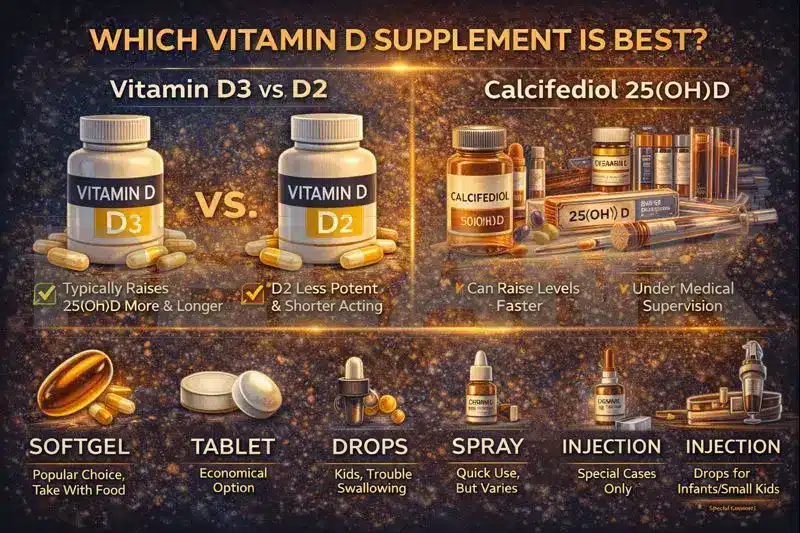
For many US consumers, Vitamin D3 tends to win the “availability contest” simply because it’s everywhere and easy to restock. It also often wins the “effectiveness contest” because it commonly raises and maintains vitamin D levels more efficiently in lab-based comparisons. The “cost contest” is more context-dependent. D3 frequently offers competitive pricing due to mass production and variety, but individual promotions and dosing plans can flip the perceived value.
In the background, the deeper truth remains: the best vitamin D choice is the one that fits your life long enough for your body to respond. That means picking a form you’ll take consistently, at a dose that makes biological sense, and verifying progress with testing when needed.
The fascination isn’t just about D2 versus D3. It’s about how a small label line can influence a multi-step process—until your bloodwork tells the final story.