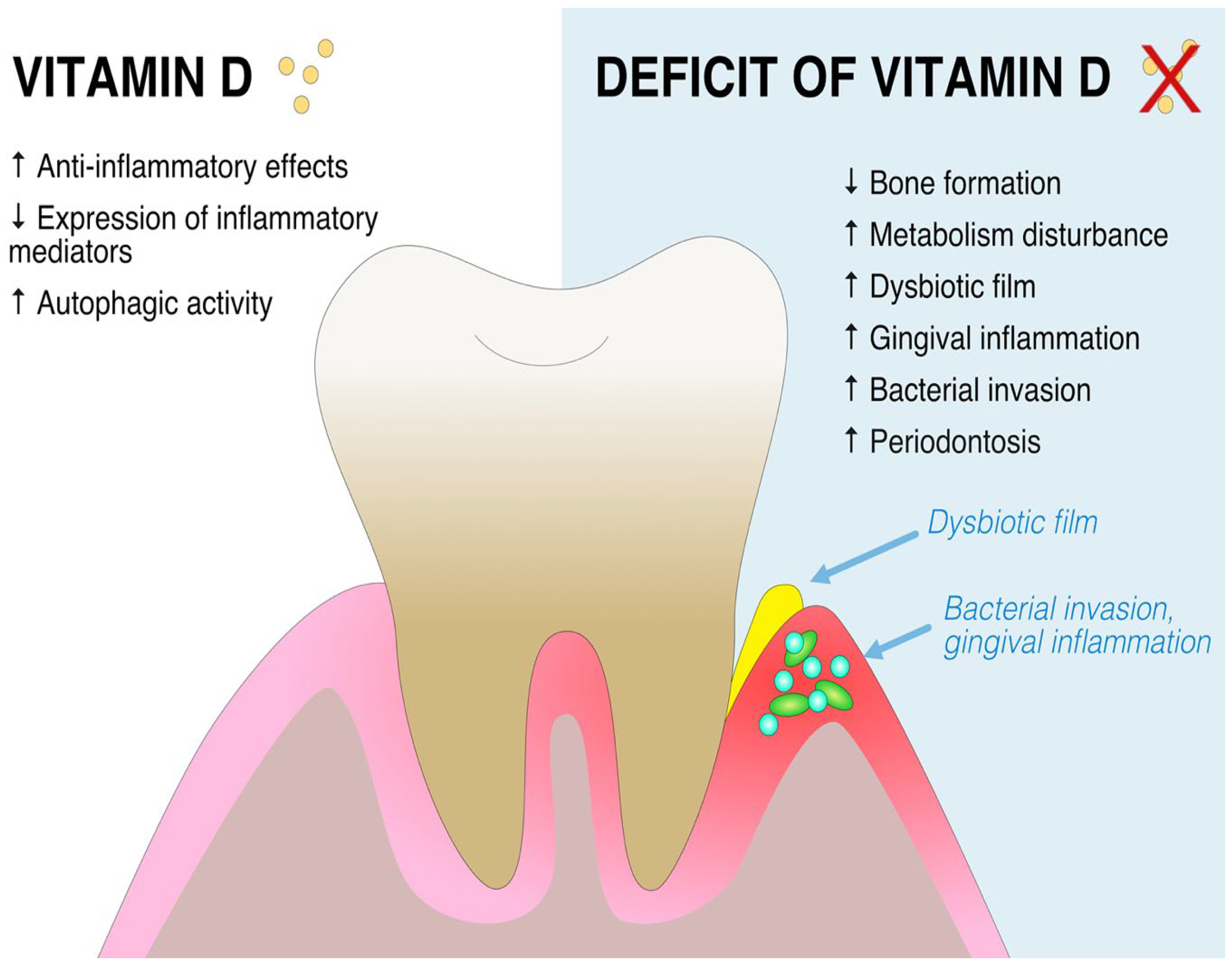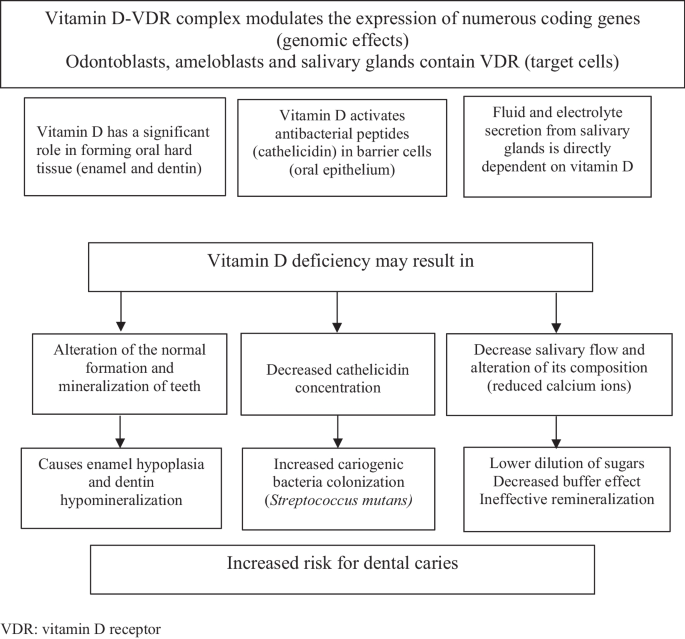
It’s a strangely familiar sight: a child’s tiny grin, and then—somewhere along the molar’s edge—a faint shadow that seems to appear as if it were inevitable. Parents often associate cavities with sugar, brushing habits, and timing. Yet in pediatric dentistry, another factor keeps surfacing in quiet, persistent ways: vitamin D. The connection between vitamin D and dental caries (cavities) in kids is not merely a matter of “more nutrients, fewer problems.” It’s a tale about calcium choreography, immune temperament, and enamel’s remarkable resilience—an intricate system that can be nudged off balance by sunlight, diet, and biology.
Why vitamin D feels like an unlikely suspect in cavities
The common observation is almost instinctive: cavities follow sugar, and sugar is everywhere. So why would vitamin D, best known for bone health, also enter the conversation? The answer begins with an idea that sounds deceptively simple: vitamin D helps the body handle calcium and phosphate. Enamel is not a soft substance. It is a highly mineralized structure—built like a fortress. If the building materials or the construction signals are disturbed, enamel may form less robustly, or it may become more vulnerable after it has erupted.
In children, this vulnerability can be amplified by rapid tooth development and changing oral conditions. Teeth emerge, remodel, and mature under the influence of nutrients. If vitamin D status is low during key windows, the mineralization process may be less efficient. That may translate into enamel that is more porous at the microscopic level—small enough for bacteria to exploit, large enough to matter clinically.
Calcium and phosphate: the mineral “symphony” behind strong enamel
Vitamin D acts like a conductor for calcium and phosphate absorption in the gut. Without it, calcium absorption can drop, and phosphate balance may be altered. Even a slight shift in mineral availability can matter when a child’s teeth are still developing or when the newly erupted enamel is finishing maturation.
Here is where fascination deepens: cavities often begin not with a dramatic hole, but with an early demineralization event. Plaque acids can temporarily lower the pH in the mouth, pulling minerals out of enamel. Normally, saliva and ongoing mineral supply help reverse this process. But if the enamel’s mineral reserve is weaker—or if replenishment is less effective—the “repair cycle” becomes less certain.
Imagine enamel as a smart scaffold. Vitamin D helps reinforce it during construction and may support recovery afterward. That is why vitamin D insufficiency can plausibly correlate with higher caries risk, even when brushing seems “good enough.”
Vitamin D and saliva: the overlooked mediator
Saliva is more than a comfort factor. It is an active chemical environment—buffering acids, delivering minerals, and helping clear food debris. While vitamin D is not commonly discussed in everyday parenting conversations about saliva, it intersects with salivary physiology and oral immunity.
If vitamin D status influences salivary composition or the body’s ability to regulate calcium transport, saliva may become less effective at neutralizing acids or less supportive of remineralization. This is especially relevant in children, whose diets and oral habits can create frequent acid challenges. They may snack more often, or their brushing routines may be inconsistent. In such a context, any reduction in saliva’s protective performance can make caries progression more likely.
Short bursts of acidity are normal. The risk rises when those bursts become frequent, and when the “counterbalance” is diminished. Vitamin D can be one of the quiet variables shaping that counterbalance.
Immune modulation: vitamin D’s role in the oral battleground
The mouth is an ecosystem. Bacteria form biofilms, but the host’s immune system determines whether the situation stays contained or becomes destructive. Vitamin D is widely recognized as an immune modulator, and that concept extends into oral health.
In practical terms, adequate vitamin D may support the production of antimicrobial peptides and influence immune signaling pathways. These defenses can help manage the bacterial population and limit inflammatory escalation around developing lesions. When vitamin D levels are low, the immune response may be less coordinated, allowing cariogenic bacteria and their metabolic strategies to gain a foothold.
This adds a deeper layer to the relationship: cavities are not simply “holes in teeth.” They are an outcome of microbial behavior interacting with host responses over time. Vitamin D sits at that intersection—less visible than a toothbrush, but still influential.
Enamel development windows: why timing can be everything
Children don’t acquire teeth in a single moment. Teeth develop gradually, and enamel maturity continues after eruption. Vitamin D status during pregnancy, early childhood, and later pre-adolescent phases may all matter differently, depending on individual biology and environmental exposures.
What makes this especially intriguing is the concept of developmental programming. Nutritional sufficiency at the right time can help establish structural durability. Nutritional inadequacy during key windows may not be immediately obvious in the mirror, but it can manifest later as a higher susceptibility to demineralization.
Thus, vitamin D may function like an invisible timeline: it influences how teeth are “set up” before caries even becomes visible.
Sunlight, seasons, and the geography of risk
Vitamin D is famously connected to sunlight exposure. In many regions, seasonal variation affects vitamin D synthesis. In winter months—when daylight is scarce and indoor routines expand—vitamin D levels can decline. At the same time, dietary patterns may change: more indoor snacking, different food choices, altered activity levels. It’s easy to see how a family might observe more cavities without realizing that vitamin D status could be part of the background story.
Yet the relationship is rarely deterministic. Vitamin D deficiency can coexist with excellent oral hygiene, and adequate vitamin D can coexist with frequent sugar intake. That’s why the link is best understood as risk modulation rather than a single cause. Think of it as a dimmer switch, not a light switch.
Still, when multiple risk factors stack—limited sunlight, low dietary vitamin D, inconsistent brushing, and frequent acid exposure—the stage becomes set for caries progression.
Dietary patterns: vitamin D rarely travels alone
Vitamin D status is often related to broader dietary and lifestyle realities. Children who consume fewer nutrient-dense foods may be more likely to have vitamin D insufficiency. Meanwhile, diets high in added sugars can intensify caries risk regardless of vitamin D. This is part of why research on vitamin D can seem complicated: the nutrient often correlates with other variables.
But that complication doesn’t erase the plausibility. It highlights a truth: health factors cluster. Vitamin D insufficiency may not be the only issue, but it may be one that meaningfully worsens the body’s capacity to resist early enamel damage.
When vitamin D and calcium-related pathways are under-supported, even “ordinary” plaque challenges can have greater consequences.
Beyond labs: signs clinicians consider and parents can notice
Not all vitamin D deficiency reveals itself through obvious symptoms. Some children may appear healthy while still having suboptimal vitamin D status. Therefore, prevention should not depend solely on visible cues.
Clinicians may consider risk profiles that include limited sun exposure, darker skin pigmentation, dietary restrictions, obesity, and certain medical conditions that affect nutrient absorption. Parents can also observe oral patterns: how frequently a child snacks, whether brushing occurs twice daily with fluoride toothpaste, and how quickly plaque seems to accumulate.
Those details help connect the dots between nutrition, oral environment, and caries activity.
Practical prevention: how vitamin D fits into a cavity-defense plan
Vitamin D should not replace fluoride, brushing, and diet strategy. Instead, it should complement them. Fluoride strengthens enamel and makes it more resistant to acid attack. Brushing disrupts plaque biofilms. Dietary timing reduces the number of acid exposures.
Vitamin D supports the internal infrastructure: mineral availability, immune modulation, and possibly salivary functions that favor remineralization. Together, these forces can shift the mouth from a continuous “loss mode” into a more balanced “repair mode.”
Because vitamin D supplementation should be individualized, the safest approach involves professional guidance, especially for children. Dosage decisions depend on age, baseline levels, and overall health. In other words: the goal is precision, not guesswork.
When the link becomes a story of deeper fascination
The most fascinating part of the vitamin D–cavity relationship is how it turns a seemingly external problem into an internal narrative. Cavities feel like a surface event—something happening on the tooth’s outer layer. Vitamin D invites a different perspective: that the story begins earlier, in development, in calcium handling, in immune readiness, and in the chemistry of saliva.
It also reframes parental control. While parents can’t command the sun or rewrite biology, they can build a consistent routine: adequate nutrition, appropriate supplementation when needed, fluoride use, and thoughtful snack timing. Small, repeated actions accumulate—like enamel, which strengthens through gradual reinforcement.
So when a child’s cavities appear, consider not only what happened today, but what conditions have been shaping the teeth over time. Vitamin D is one of those conditions—subtle, systemic, and surprisingly central to the strength of a child’s smile.