Ever felt oddly sluggish on a perfectly sunny day? Or noticed your mood dip in ways that don’t quite match the rest of your life? Here’s a playful thought: what if your “energy battery” is running on a different fuel than you assumed—and the culprit is low vitamin D, quietly staging a coup in places that have nothing to do with bones?
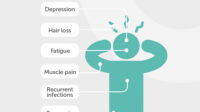
Let’s take on a small challenge: as you read, spot the signs you’ve been brushing off as “just stress,” “just winter,” or “just getting older.” Vitamin D’s influence is surprisingly wide, and its shortage can masquerade as a variety of everyday problems. Below are 11 signs of low vitamin D—most of them unrelated to bones, and all of them worth noticing.
1) Fatigue that feels… oddly personal
Not the cheerful tiredness of a long walk. More like a low-grade, persistent weariness that shows up regardless of sleep duration. Vitamin D deficiency has been linked to reduced muscle performance and altered energy metabolism, so fatigue can feel “in the system” rather than in a single activity.
Ask yourself: do you feel drained even after a solid night’s rest? If yes, this may be your first clue.
2) Low mood, irritability, or mental fog
Sometimes the mind doesn’t announce itself with dramatic symptoms. It becomes slightly foggier, slightly heavier. Low vitamin D may contribute to mood instability, irritability, and cognitive sluggishness. The brain uses vitamin D-related pathways that influence neurotransmitter activity and stress responsiveness.
That “Can’t focus, can’t snap out of it” feeling? It might not be a character flaw. It could be biochemical subtlety.
3) More frequent infections (and stubborn recovery)
Do colds seem to arrive on schedule, like unwanted tenants? Vitamin D plays an immunomodulatory role, helping the body calibrate its defense. When it’s low, the immune system may respond less efficiently—meaning you could catch infections more often or take longer to bounce back.
Pay attention to patterns rather than one-off illnesses. Recurrence is often more informative than severity.
4) Muscle weakness that doesn’t explain itself
Even when bones are not the obvious issue, vitamin D deficiency can show up as muscular unease. You might feel less coordinated, notice difficulty climbing stairs, or sense that “my strength isn’t what it used to be.” This can be subtle at first—like the body’s internal volume knob slowly turning down.
It’s not always dramatic. Sometimes it’s simply that daily tasks feel harder than they should.
5) Chronic aches and general “off” sensations
There’s a difference between an occasional twinge and a persistent sense of discomfort. Low vitamin D may be associated with generalized aches, including discomfort in muscles and other tissues. The experience can be diffuse—like your body is narrating tension in a monotone.
When aches pair with fatigue and mood changes, vitamin D becomes a more plausible thread to pull.
6) Increased sweating, unusual heat tolerance issues
This one surprises people: vitamin D deficiency may be linked with altered thermoregulation in some cases. Some individuals report feeling hotter than usual, sweating more, or experiencing inconsistent comfort with temperature changes. The body’s internal signaling can become a little less predictable.
If “feeling temperature-strange” is recurring, consider it a signal rather than background noise.
7) Hair shedding or changes in hair texture
Hair is often treated as purely cosmetic, but it’s biologically responsive. Low vitamin D has been associated with hair growth cycle disruption in some people. You might notice increased shedding, thinning in certain areas, or a shift in hair texture that feels unfamiliar.
Hair changes are rarely caused by one factor, but if multiple symptoms are stacking up, vitamin D could be part of the mosaic.
8) Skin problems that won’t fully behave
Vitamin D is tied to skin homeostasis. When levels are low, some people experience persistent dryness, flare-ups, or stubborn skin conditions that don’t respond neatly to routine care. Sun exposure can improve vitamin D status—but it also brings variability, so “hot weather relief” isn’t always a stable clue.
Observe whether skin symptoms correlate with seasons, reduced outdoor time, or lifestyle changes.
9) Poor sleep quality—even if you get enough hours
Sleep isn’t only about duration. It’s about architecture. Low vitamin D may influence sleep quality, contributing to lighter, less restorative rest or irregular sleep patterns. You might fall asleep but feel unrefreshed, or notice frequent awakenings.
Try a simple experiment: track your sleep for 7–10 days and compare it to outdoor time and overall wellbeing. Patterns can be revealing.
10) Weight changes and metabolic sluggishness
Vitamin D deficiency has been associated with metabolic dysregulation in some individuals. That can translate into a sense of sluggish metabolism, difficulty maintaining weight, or cravings that feel unexpectedly strong. It doesn’t mean vitamin D is the only player, but it can be a background moderator.
If your body composition and energy levels have shifted without a clear explanation, this is worth investigating.
11) Exercise feels harder than it should
You might be consistent with workouts, yet recovery feels off. Low vitamin D can be linked with reduced muscle function and altered inflammatory responses, making exercise feel like climbing stairs in slow motion. Recovery might be slower, and performance might plateau sooner.
When effort rises and results lag, it’s worth checking the underlying variables—including nutrient status.
When to consider testing (and how to think about it)
Because vitamin D deficiency can look like “ordinary life”—stress, seasonal shifts, busy schedules—testing is often the cleanest way to separate guesswork from clarity. A clinician can evaluate your risk factors and recommend an appropriate blood test (commonly a 25-hydroxy vitamin D level).
Consider testing sooner if you have limited sun exposure, darker skin, higher body fat, malabsorption conditions, or you take medications that interfere with vitamin D metabolism. Even without those risks, persistent clusters—fatigue plus mood changes plus frequent illness—make a strong case for evaluation.
Small next steps: playful but practical
Now for a gentle challenge: spend one week noticing your “signal stack.” Track energy, sleep quality, mood steadiness, infection frequency, skin and hair changes, and exercise recovery. Then ask: do these symptoms cluster around lifestyle constraints like indoor time, winter months, or reduced outdoor exposure?
Vitamin D is not a magic wand. It’s more like a coordinator—directing multiple systems to work smoothly. When it’s low, the body may respond in unexpected ways. And when you identify the pattern, you can respond with precision.
If you’d like, share your age range, typical sun exposure, and whether these signs match your experience. A tailored discussion can help you decide what to prioritize next.