Imagine choosing a single supplement and deciding, quite deliberately, that you’ll give it the entire calendar year to work. Ten thousand IU of vitamin D daily is a decision with gravity—not because it’s automatically dangerous, but because vitamin D is a hormone-like nutrient with downstream effects that ripple through muscle, immunity, bone metabolism, and even mood. Now picture this: you start to feel “different,” not in a dramatic, movie-scene way, but in subtle physiological whispers. Your body begins to renegotiate the way it stores, circulates, and utilizes calcium. And as weeks pass, the question stops being “Does vitamin D matter?” and becomes “What did it change, exactly—and what should you watch for?”
Setting the Stage: Why Vitamin D Is Not Just a Vitamin
Vitamin D is often dismissed as a simple micronutrient, yet its behavior is closer to an endocrine system participant. After ingestion, it undergoes conversion—first in the liver, then in the kidneys—into its active forms that can influence gene expression. The result is a kind of biochemical choreography: vitamin D helps regulate calcium absorption, modulates immune signaling, and supports skeletal remodeling. When you take 10,000 IU every day, you’re not merely topping off a pantry item. You are pushing the body toward a higher vitamin D status, and the body responds with adjustments.
At this dosage, the timeline matters. Early days may bring little sensation. The body doesn’t usually broadcast changes like a status notification. Instead, it recalibrates quietly: vitamin D metabolites rise, calcium handling improves, and parathyroid hormone patterns can shift.
The First Month: Blood Levels Rise, and the Body Starts Recalibrating
In the opening weeks, vitamin D levels tend to climb steadily. This isn’t magic; it’s pharmacokinetics. Vitamin D is fat-soluble, so it accumulates gradually. Rather than spiking and vanishing, it stacks in tissue compartments and then re-enters circulation as needed.
Some people experience no subjective changes at all. Others notice a faint shift—more stable energy, less “flatness,” or a sense of improved resilience. Those feelings can be real, but they’re not guaranteed, and they’re rarely specific. The body is also conducting internal negotiations: parathyroid hormone may decrease when vitamin D availability improves, a sign that calcium homeostasis is gaining a more favorable balance.

Months Two to Four: Bone Chemistry, Calcium Flow, and Parathyroid Signals
If vitamin D status moves upward into a healthier range, the most consistent downstream effect is improved calcium absorption in the gut. Calcium absorption isn’t the only story, though. Bone is a living tissue with constant remodeling—osteoblasts building, osteoclasts resorbing. Vitamin D supports the building phase and helps coordinate mineral deposition.
During months two to four, you may find that markers related to bone metabolism become more favorable. For some, this feels like less discomfort during movement, improved post-exertion recovery, or a subtle strengthening sensation. For others, the benefits are purely lab-based and never become “felt.” This is a key perspective shift: health transformations are not always theatrical.
Just as important: the body also monitors calcium. When vitamin D drives absorption upward, the risk profile changes. That’s why this scenario always comes with a quiet caveat—monitoring matters. Without blood tests, it’s like navigating a coastal route in fog.
Immune Modulation: The Quiet Theater of Inflammation
Vitamin D’s immunological role is often described in broad strokes, but the lived reality is more nuanced. Vitamin D can influence immune cell differentiation and signaling pathways. The result may be a more balanced inflammatory tone—sometimes translating into fewer lingering colds, improved seasonal tolerance, or a steadier “baseline” during periods when many people feel run down.
Yet the immune system is not a thermostat you simply turn down. It’s more like a sophisticated orchestra: too little vitamin D may leave certain pathways under-regulated; too much can theoretically disrupt balance. Most individuals won’t experience dramatic immune swings from a year-long regimen at 10,000 IU/day, but the possibility of altered inflammatory dynamics is real enough to justify attention to symptoms and biomarkers.
Mood, Energy, and the “Nonlinear” Feeling of Better Living
Some people associate vitamin D with mood and fatigue improvement, especially when deficiency is present. The pathway is not one single switch. It may involve neurotransmitter-related effects, mitochondrial energy processes, and immune signaling. That combination can create a sense of clarity: less cognitive fog, improved motivation, and a more consistent daily rhythm.
Here’s the part that makes the topic intriguing: higher isn’t always better in a linear way. A dose that rescues a deficiency can be transformative. A dose that overshoots may not add further benefit—and can, in rare circumstances, contribute to unwanted biochemical consequences. In other words, vitamin D can feel like a “key” when you’re locked out, but it can become excess when your doors are already open.
Muscle Function and Recovery: Strength, Tone, and Subtle Performance Changes
Vitamin D interacts with muscle cells and helps maintain muscle function. When vitamin D levels rise from deficiency, strength and endurance can improve. Some people notice that their workouts feel smoother—less soreness, better warm-up tolerance, and improved ability to maintain form.
However, muscle physiology is influenced by sleep, protein intake, training load, hydration, and nervous system recovery. Vitamin D doesn’t replace these. Instead, it may remove a bottleneck. Think of it as removing friction from a system that was already trying to run efficiently.
With 10,000 IU/day, the question becomes: does your vitamin D status improve enough to unlock muscle potential? If baseline levels were low, the answer may be yes. If baseline levels were already sufficient, the benefit curve could flatten quickly.
The Safety Corner: Hypercalcemia, Kidney Considerations, and Red Flags
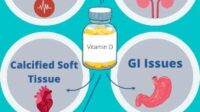
The most important “what happens” question is not what vitamin D might do—it’s what it could do if it overshoots. Extremely high vitamin D intake can raise calcium levels in the blood, a condition known as hypercalcemia. The symptoms are not subtle for everyone: nausea, constipation, excessive thirst, frequent urination, weakness, confusion, and in severe cases, cardiac rhythm disturbances.
Kidneys are also relevant because calcium handling is tightly linked to renal filtration. In susceptible individuals, excess calcium can strain renal function. This is where diligence becomes an act of respect for your own physiology.
If you’re considering or already taking 10,000 IU daily for a year, blood testing is the compass: 25(OH)D levels, serum calcium, and sometimes kidney-related markers. A year-long plan should include check-ins, not just perseverance.
Why Baseline Matters: Deficiency Versus “Already Enough”
The body’s starting point is the storyline’s turning point. If your vitamin D level is genuinely low, 10,000 IU/day may act like a correction protocol. The improvement could be noticeable in energy, musculoskeletal comfort, and lab patterns. If your baseline is already adequate, that same dosage may be more like overfilling a reservoir.
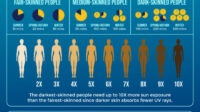
Genetic variation also plays a role. Vitamin D metabolism differs across individuals, influenced by body composition, liver function, kidney function, sun exposure history, and certain genetic polymorphisms affecting vitamin D binding and receptor sensitivity.
This is why the same regimen can produce different narratives in different bodies. The “year effect” is not uniform; it’s personalized.
The One-Year Outcome: Benefits, Trade-offs, and the Need for a Plan
After a full year, the outcomes fall into categories. Some people experience meaningful improvements—bone-related comfort, fewer seasonal setbacks, stronger muscle performance, and a calmer internal inflammatory baseline. Others see minimal subjective change but improved biomarkers. Still others encounter elevated calcium-related concerns that require dose reduction or discontinuation.
That range of outcomes is the reason curiosity is justified. Vitamin D can be both helpful and complicated. The year-long dosage might reveal whether you were correcting deficiency or pushing into excess. The real success isn’t simply “taking it.” It’s creating a sustainable metabolic balance—one that supports skeletal integrity without compromising calcium regulation.
Practical Curiosity: How to Make the Year Smarter
If you’re aiming for a year-long experiment with 10,000 IU vitamin D daily, consider building an evidence-minded structure. Track your baseline, re-check vitamin D and calcium after an initial period, and adjust based on results rather than hope. Pay attention to symptoms that could signal calcium imbalance. Maintain consistent dietary calcium intake—both too little and too much can distort the picture. And consider whether magnesium status is adequate, since magnesium is involved in vitamin D-related metabolism.
A year is long enough for changes to become visible. It’s also long enough for risks to compound if monitoring is neglected. The best approach feels less like gambling and more like steering.
Shifting Perspective: From “How Much” to “How You Respond”
The most valuable reframing is this: the dosage number is only one variable. The body’s response—the pattern of lab values, symptoms, and functional changes—tells the truth. A year of 10,000 IU/day may become a story of restoration, or it may become a lesson in moderation.
Either way, the real transformation is perspective. You stop treating vitamin D as a commodity and start treating it as a dynamic participant in complex biology. And once you see it that way, the question becomes less “What happens to your body?” and more “What does your body teach you?”