Walking into a clinic appointment as a vegan can feel like arriving with a map in your pocket and still wondering whether the road will match it. You may already know what you eat—or avoid. But when it comes to vitamin D, the conversation can become strangely philosophical: not just “Do I need a test?” but “How do I keep my body’s biochemistry in harmony with my values?” The good news is that a vegan-friendly doctor can be an ally who turns uncertainty into clarity. The trick is learning how to ask with curiosity, specificity, and a gentle confidence that invites collaboration.
Begin with a shift in perspective: testing as self-authorship, not suspicion
Instead of approaching the appointment as a courtroom where your diet must defend itself, treat vitamin D testing as a form of self-authorship. Testing is not an accusation; it’s an instrument that measures what your routine might not reveal. Vitamin D is often described like a simple nutrient, yet it behaves more like an endocrine messenger—implicated in immune signaling, bone metabolism, and cellular regulation. Your doctor doesn’t need you to “prove” anything. They need you to articulate your context so they can interpret results wisely.
Try reframing your first statement: “I’d like to understand my vitamin D status proactively. I follow a plant-based diet, and I want to make sure I’m supporting my physiology with the right level of care.” This signals openness. It also piques curiosity by placing the focus on outcomes rather than guilt.

Bring context your doctor can use: sunlight, geography, skin, and season
Vitamin D is not only “about supplements.” It’s also about your environment. Your doctor can’t read your life from your lab values. They need the variables that shape vitamin D synthesis in the skin: latitude, seasonality, time spent outdoors, clothing coverage, and even how your skin responds to UV exposure.
Consider sharing details in a compact narrative. Short sentences work well here. “I live in a northern region.” “I’m often indoors during daylight hours.” “My skin tends to burn before it tans.” Then add longer context where it matters. “In winter, my routine changes—less outdoor time, more indoor activity.”
These specifics prevent generic advice. They also help your doctor decide whether testing should be routine, seasonal, or targeted. When you provide context, you’re not only informing—you’re steering the conversation toward precision.
Ask the right questions: what test, what target, and what timing?
Vitamin D testing sounds simple until you see the menu of options. Most clinicians use 25-hydroxyvitamin D (25(OH)D) as the standard marker, because it reflects vitamin D stores more reliably than short-term fluctuations. You can ask directly, without sounding alarmed.
Use questions that create forward momentum. “Can we check my 25(OH)D level?” “If it’s borderline, what’s your approach—repeat testing, supplementation adjustment, or additional evaluation?”
Timing is another lever. Vitamin D can shift with seasons, sun exposure, and adherence to supplementation. Ask: “Would you recommend testing now, and then again after a defined period—say, 8–12 weeks—so we can evaluate the response?” This invites a thoughtful plan rather than an isolated snapshot.
Finally, request interpretation guidance: “What range do you consider optimal for a vegan adult in my age group?” Your doctor may discuss general thresholds, but you’re also seeking their clinical reasoning. Good clinicians appreciate when patients want the “why,” not only the “what.”
Align on supplementation realities: dosing, forms, and absorption considerations
A vegan doctor will likely be comfortable discussing nutrition through a plant-based lens. Still, you should come prepared with practical questions. Vitamin D comes in different forms—commonly vitamin D2 (ergocalciferol) and vitamin D3 (cholecalciferol). Some vegan patients prefer vegan-sourced D3; others rely on D2. Your doctor can help you choose based on evidence, availability, and your individual response.
Ask questions that sound like collaboration, not prescription seeking. “If my level is low, what starting dose would you consider?” “How do you monitor safety—should we check calcium, or anything else depending on results?”
Also discuss adherence. Long sentences can capture the nuance: “I take supplements most consistently on weekdays, and I’m not always consistent with meals that contain fat.” Then ask a crisp follow-up: “Does my intake pattern affect how I should schedule vitamin D?”
This is where your conversation becomes unusually effective. You’re not only asking for a test—you’re planning a feedback loop.
Discuss dietary intake without turning it into a debate
Even with meticulous planning, vegan diets can vary widely in vitamin D intake. Fortified foods can help, but the amount and regularity may differ based on brand availability, geography, and personal preferences. Your goal isn’t to convince your doctor of the “purity” of your choices. Your goal is to produce a clear nutrition profile they can interpret.
Consider sharing a simple inventory. “I eat fortified foods, but not every day.” “I use fortified plant milks.” “I avoid all animal-derived products.” Then pause. Let your doctor ask what they need.
To avoid debate, ask for mapping rather than justification: “Could we review my current intake and decide whether it’s sufficient given my lifestyle and season?” This posture is calm and adult. It implies you’re already thinking in systems, not slogans.
Bring up additional labs thoughtfully: calcium, PTH, and bone health
Vitamin D rarely exists in isolation. When levels are low, clinicians often consider downstream markers. Parathyroid hormone (PTH) can rise when calcium homeostasis is stressed. Calcium levels and markers of bone turnover may come into play depending on symptoms, risk factors, and baseline health history.
You can ask in a way that signals sophistication. “If my vitamin D is low, how do you decide whether we should check PTH or calcium?” “Would you recommend a discussion about bone density screening based on my age or risk profile?”
If you have a personal history—fractures, chronic fatigue, muscle aches, autoimmune conditions, or a family history—mention it. Short sentences are enough. “I’ve had recurrent muscle cramps.” “I have a family history of osteoporosis.” Then let your doctor interpret whether those details change the testing strategy.
This section of the conversation helps you move from “vitamin deficiency anxiety” to “risk-aware health stewardship.”
Use communication techniques that lower friction and invite honesty
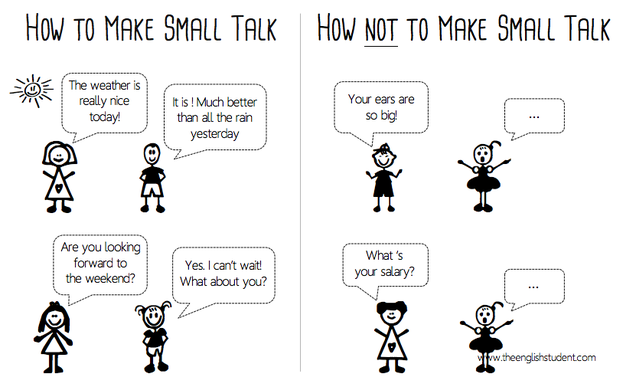
Some appointments stall because questions feel too cautious or too urgent. You can reduce friction with specific phrasing. Try a three-part opener: purpose, context, request.
Example: “My purpose is to prevent deficiency. My context is that my sun exposure is limited. My request is a 25(OH)D test with a plan for follow-up.”
This structure is elegant. It reduces the cognitive load on the clinician. It also encourages them to respond with a concrete pathway.
If you’re worried about being dismissed, acknowledge the intent without dramatizing. “I’m not feeling unwell right now, but I want to be proactive.” This sentence often opens doors. It communicates maturity. It signals that you’re not chasing fear—you’re chasing clarity.
Turn results into a collaborative plan: interpret, adjust, and re-test
Once you receive results, the most important step begins. Many people treat lab values as conclusions. Instead, treat them as prompts. Ask your doctor to interpret what your number means in your life, not just in a reference range. “Based on my level, what would you change first?” Then ask about the timeline. “When should we re-test, and what would success look like?”
Discuss next steps as if you’re designing an experiment. If supplementation increases, you may adjust dose. If sun exposure is improved, you might change seasonally. If diet fortification is inconsistent, you may set a habit system. Your doctor can help you choose the least complicated path that still works.
When your doctor proposes a plan, listen for the words that imply follow-through: “recheck,” “titrate,” “monitor,” “review.” If those words aren’t present, you can gently ask for them.
Keep the curiosity alive: wellness literacy as a long-term practice
Talking about vitamin D testing can be the first chapter of a broader wellness literacy journey. Curiosity is contagious—in both directions. You can continue the conversation by asking how vitamin D interacts with your overall nutrition, exercise routine, sleep patterns, and immune resilience.
End with a forward-looking question. “Are there other nutrients or markers you routinely consider for vegan patients in my age group?” This invites personalization. It also prevents the appointment from feeling like a one-off transaction.
Then, leave the office with a plan that feels almost tangible. Follow-up timing. Supplement guidance. Interpretation strategy. You don’t need perfect certainty. You need a coherent narrative—one where your values and your physiology are handled with equal respect.