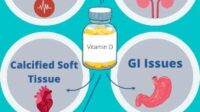
Vitamin D is often portrayed as a quiet guardian—an understated ally that helps calcium march in step with bone health and immune resilience. Yet even guardians can become unruly when the dosage tips into excess. The question “Can vitamin D toxicity cause constipation or diarrhea?” is less about a single symptom and more about the body’s delicate choreography: when vitamin D overshoots, the gut can respond with either sluggishness or sudden urgency. Think of vitamin D as a volume knob. Turn it too far, and the soundtrack of digestion may distort—sometimes into silence (constipation), sometimes into a chaotic crescendo (diarrhea).
Vitamin D Toxicity: When the Body’s Chemistry Becomes Overamplified
Vitamin D toxicity typically arises from prolonged high intake of supplemental vitamin D, not from sunlight exposure. The body normally regulates vitamin D by converting it into usable forms. However, in overdose scenarios, blood calcium may climb—an effect that can indirectly steer the gastrointestinal system.
High calcium levels can influence smooth muscle behavior, nerve signaling, and gut motility. Instead of digestion proceeding like a well-trained metronome, it may become irregular—slow in one person, hyperactive in another. This variability is the body’s way of expressing imbalance through different “dial settings.”
Why Calcium Matters: The Hidden Link Between Vitamin D and Bowel Habits
Vitamin D helps the gut absorb calcium. When vitamin D is excessive, calcium absorption can accelerate beyond what the body can buffer. Elevated calcium (hypercalcemia) can cause dehydration, alter electrolyte gradients, and affect the autonomic nervous system. These factors can ripple into bowel function.
Constipation and diarrhea may seem like opposites, yet both can emerge from electrolyte disruption. Electrolytes are the orchestra’s tuning forks; when they’re off-key, the performance wobbles. In some cases, slowed intestinal transit dominates. In others, irritation and fluid shifts prevail.
Constipation as a Possible Symptom: The “Slow River” Effect
Constipation is often described as the slow river of the digestive tract—contents moving sluggishly, accumulating, and growing firmer. In vitamin D toxicity, constipation may appear when high calcium contributes to decreased motility and altered gut signaling. The colon may become less responsive, and bowel movements can become infrequent or difficult.
Additional clues can accompany constipation: abdominal discomfort, bloating, and a sensation of incomplete evacuation. Long sentences sometimes feel right here because constipation can be a gradual erosion of normal routine—day after day the body’s rhythm softens.
It’s important to note that constipation can also result from many unrelated causes (dietary fiber changes, dehydration, medication effects). Still, when constipation appears alongside signs of vitamin D excess, the pattern becomes more suspicious.
Diarrhea as a Possible Symptom: The “Pressure Release” Response
Diarrhea in vitamin D toxicity may occur through mechanisms involving hypercalcemia, fluid balance, and gastrointestinal irritability. Elevated calcium can disrupt normal absorption and secretion dynamics within the intestines. The result may be stool that is looser, more urgent, and harder to control.
Some people experience diarrhea after large supplement doses. Others might notice alternating patterns—constipation one day, looseness the next—like waves hitting an uneven shore. That oscillation can reflect fluctuating electrolyte conditions and the body’s attempt to compensate.
Diarrhea with vitamin D toxicity can also raise dehydration risk. Dehydration can then feed back into constipation, making the overall picture feel paradoxical. The gut, like a compass, points toward imbalance even when the direction keeps changing.
How Much Is Too Much? Dosing, Duration, and Individual Sensitivity
Vitamin D toxicity depends on both dose and duration. A one-time high intake is less likely than weeks to months of repeated excessive supplementation. Individual factors—body weight, baseline vitamin D status, kidney function, and concurrent medications—can shift susceptibility.
Some medications or conditions can predispose someone to hypercalcemia. For example, certain thiazide diuretics can increase calcium reabsorption, and diseases affecting calcium metabolism can complicate the picture. This is why “safe” can be personal. One person’s acceptable dose may be another person’s excess.
When dosing becomes precarious, symptoms can emerge gradually. Or they can arrive abruptly, particularly if the blood calcium climbs quickly enough to trigger systemic effects.
More Than Bowel Changes: Other Clues That Suggest Toxicity
Constipation or diarrhea might be the headline symptom, but toxicity is typically a broader story. Elevated calcium can cause nausea, loss of appetite, excessive thirst, frequent urination, weakness, confusion, and fatigue. People may also notice muscle aches or a metallic taste. The nervous system can feel “fogged,” as if the brain is running on low-quality signal.
If both gastrointestinal symptoms and systemic symptoms cluster together—especially thirst, urination changes, and unusual lethargy—the likelihood of metabolic involvement grows.
In severe cases, hypercalcemia can become dangerous. That’s when symptoms can escalate beyond comfort into urgency.
When to Seek Urgent Care: Red Flags Not to Ignore
Seek urgent medical attention if diarrhea is severe or persistent, if constipation is accompanied by severe abdominal pain, vomiting, fever, blood in stool, or inability to pass gas. Urgent evaluation is especially important if there’s significant dehydration or symptoms like confusion and marked weakness.
If vitamin D toxicity is suspected—particularly after high-dose supplementation—prompt lab evaluation can clarify what’s happening. Waiting can allow calcium-related complications to progress.
Even short sentences matter here. Sometimes the body’s warning system doesn’t negotiate.
Diagnosis: How Clinicians Connect the Dots
Diagnosis often involves checking serum calcium, vitamin D levels, kidney function, and sometimes parathyroid hormone status. Clinicians may also review supplement history with meticulous attention: dose, timing, brand, and any combination products. This step is crucial because vitamin D can be hidden across multiple supplements.
Once the biochemical story is visible, symptoms like constipation or diarrhea can be understood not as isolated events but as downstream echoes of altered calcium physiology.
What Helps: Resetting the Balance Safely
Management depends on severity. In many cases, clinicians recommend stopping high-dose vitamin D and addressing hydration. If hypercalcemia is significant, additional interventions may be used under medical supervision. Diet guidance may be provided to avoid further calcium escalation while the body stabilizes.
Hydration is often central because dehydration can worsen both diarrhea-related fluid loss and constipation by reducing stool moisture. Still, hydration strategies should be tailored, particularly if kidney function is impaired or if calcium is very high.
Long-term improvement also depends on resuming supplementation only at medically appropriate doses—if supplementation is needed at all.
Prevention: Avoiding the “Volume Knob” Turn Too Far
Prevention is where the narrative becomes quietly empowering. Read labels. Track total vitamin D intake from all sources. Be cautious with stacking supplements, especially those marketed for “immune support,” “bone strength,” or “energy.”
When vitamin D is taken, it helps to do so with a clear plan and, ideally, with periodic bloodwork for people at risk of deficiency or those using higher doses. Think of vitamin D not as a daily trophy, but as a nutrient that requires calibration.
In preventive care, the most effective intervention is often the least dramatic: consistency, clarity, and restraint.
A Final Metaphor: The Gut as a Compass, Not a Clock
Constipation and diarrhea are not merely passing discomforts in the context of vitamin D toxicity—they can be signals that internal conditions have shifted. The gut behaves like a compass, reacting to metabolic north rather than simply ticking along at the expected pace. When calcium and fluid balance tilt, digestion may choose either route: slow the river or open the floodgates.
Ultimately, the key is pattern recognition. When bowel changes emerge alongside systemic symptoms—thirst, fatigue, weakness, or unusual urination—consider the possibility of vitamin D excess. Then act with informed urgency, because the body’s chemistry can turn dramatic faster than most people realize.