There is a particular kind of dimness that arrives when the days shorten—less a lighting issue than a mood architecture problem. Some people shrug it off as “winter blues,” while others feel a heavier, longer-lasting shadow that seems to seep into sleep, appetite, and motivation. The common observation is simple: winter makes people sluggish. Yet the deeper intrigue lies in why the body, so adept at survival, suddenly begins to behave as if it has misplaced a crucial instruction manual. Often, the answer circles back to a familiar molecule we cannot synthesize from thin air: vitamin D—alongside a more complex pattern of brain-and-season interaction known as Seasonal Affective Disorder (SAD).
Winter Slumps and the Myth of “Just Be Lazy”
It’s tempting to interpret seasonal mood shifts as mere temperament. In reality, the winter slump is a choreography. Light wanes. Indoor living stretches. Movement decreases. The mind begins to anticipate fewer rewards, not because it wants to, but because biology adjusts its expectations. Shorter daylight can also make evenings feel prolonged and mornings feel delayed—like the internal clock is running a little behind.
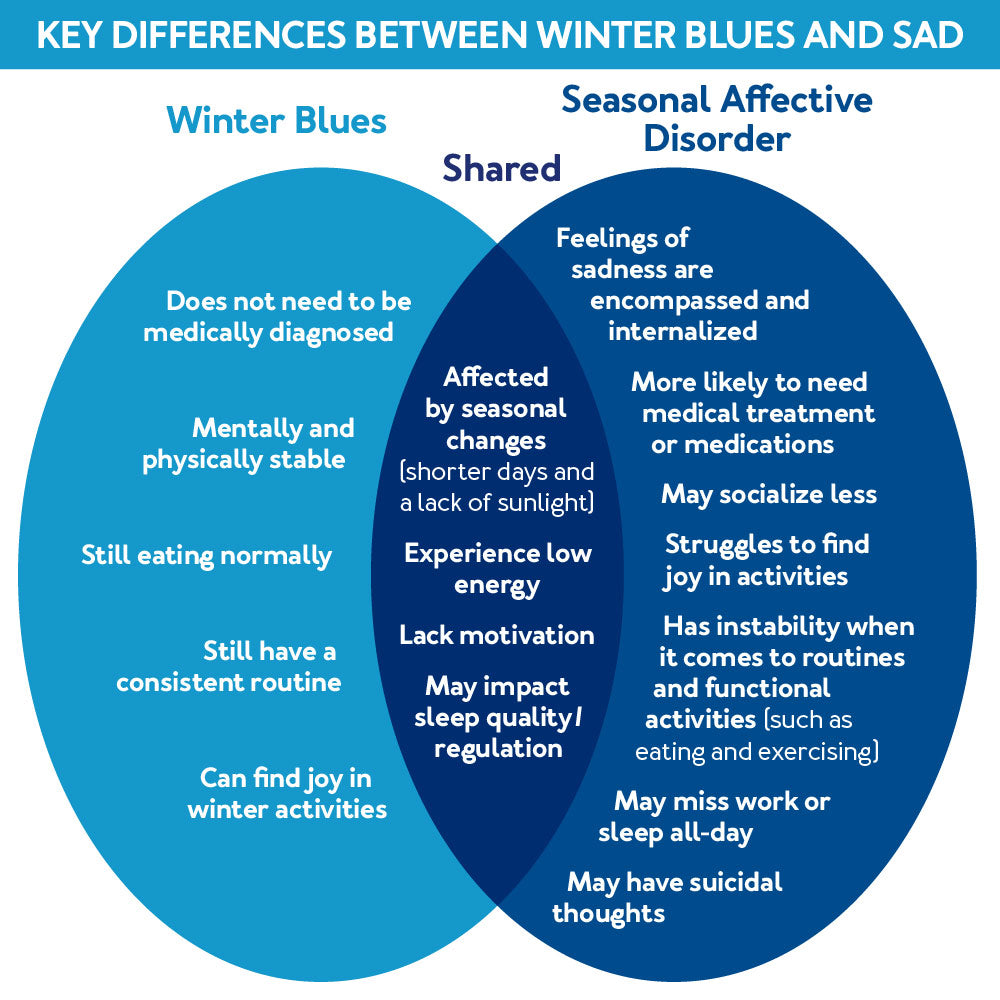
Winter Blues and SAD can look similar on the surface, but they don’t always share the same intensity or duration. Many people experience a mild dip—an atmospheric discomfort, a craving for warmth and sweetness, a tendency to withdraw. SAD, however, tends to be more protracted and consequential. It can bring pronounced low mood, changes in sleep, reduced energy, and persistent loss of interest. These are not character flaws. They are adaptations gone awry.
And here’s the fascination: why would the brain, designed for adaptation, overshoot in winter? The body is not simply “sad.” It is responding to a systemic signal—especially light—then improvising with the chemical resources it has available.
Vitamin D: The Sunshine Nutrient You Can’t Fully Replace
Vitamin D is often described as a “sunshine vitamin,” but that phrasing understates its influence. It participates in immune regulation, muscle function, and cell signaling. Most importantly for mood, vitamin D receptors are present in multiple brain regions, suggesting a role in neurotransmitter behavior and neuroplasticity—the brain’s ability to remodel itself based on experience.
During winter, sunlight exposure typically drops. Skin produces less vitamin D, and dietary intake may not compensate. Even when food contributes, it can be difficult to reach adequate levels consistently—especially with dietary patterns that don’t include vitamin D–rich foods or fortified alternatives.
Low vitamin D can correlate with depressive symptoms, particularly during darker months. The relationship isn’t always one-to-one, and it isn’t a single-cause storyline. Still, vitamin D deficiency can act like a background condition: it nudges the nervous system toward vulnerability when seasonal triggers arrive.
Think of vitamin D as a kind of cellular “quiet power.” When it is scarce, the body may struggle to maintain the same emotional steadiness it once relied on in sunnier seasons.
The Deeper Mechanism: Light, Circadian Rhythm, and Brain Signaling
Light is not merely visual input. It is timing information. Photoreceptors detect daylight and relay cues to the brain, helping synchronize circadian rhythms—those internal cycles that regulate sleep, hormone release, appetite, and cognitive alertness. In winter, the timing cues arrive differently: delayed morning brightness, earlier evening darkness, and reduced overall intensity.
When circadian rhythm alignment wobbles, downstream systems can become less coordinated. Sleep can become either too long or too fragmented. Cravings may intensify, particularly for carbohydrates. Concentration may dull. Even social energy can sag, not because the person doesn’t care, but because the brain begins to interpret the world as low-reward and high-effort.
Seasonal affective changes therefore reflect more than mood. They represent a rhythmic mismatch—a temporary form of biological “miscalibration.” That’s why some people notice an almost predictable pattern each year. Their bodies are repeating a seasonal algorithm, and it’s not always optimized for comfort.
Seasonal Affective Disorder vs. “Winter Blues”: Where the Line Really Lies
Both experiences often cluster around winter, but SAD tends to be more structured and clinically persistent. Winter Blues may include irritability, reduced energy, or a general heaviness that improves with spring. SAD often involves more severe symptoms and can last throughout the season.
Common SAD features include hypersomnia (sleeping more than usual), low mood most days, fatigue, decreased interest in activities, and changes in appetite—sometimes with a strong preference for carbohydrate-rich foods. The emotional experience can feel like a dense curtain drawn across ordinary life.
There is also a subtle but important difference in how people interpret their own limitations. Winter Blues may be framed as “I just need more rest.” SAD can feel like rest doesn’t unlock the normal internal doors. The distinction matters because it influences what kinds of support are most effective—both medically and practically.
Why So Many People Become “Fascinated” With Winter Mood Changes
It’s not unusual for winter mood topics to attract attention—graphs, infographics, personal stories, and wellness debates circulate every year. The fascination isn’t random. It comes from recognition. People sense that something is happening that is bigger than willpower. They watch friends and relatives dim in a recurring pattern, and they begin to wonder whether the seasons have a deeper influence than common sense allows.
That curiosity hints at an important truth: seasonal affective phenomena are compelling because they reveal the body as an intelligent instrument, responsive to environmental cues. When winter shifts the signal, the mind and body respond with an entire cascade of changes. Understanding that cascade feels like decoding a riddle inside the everyday.
There is also hope in the fascination. The more measurable the mechanism—light exposure, circadian rhythm, nutrient status—the more plausible it becomes to intervene with targeted strategies rather than generic encouragement.
Signs to Watch For: When Winter Becomes More Than Seasonal
Not every low-energy period is SAD. But paying attention to trends can help. Consider monitoring how long symptoms last, whether they interfere with work or relationships, and whether they follow a seasonal rhythm. If low mood and functional impairment are recurring and persistent—especially in winter—professional evaluation can be valuable.
Other clues include significant sleep changes, persistent loss of interest, pronounced fatigue, increased appetite with weight gain, or feelings of hopelessness. Some people also notice cognitive slowing, irritability, or social withdrawal that feels out of character.
Importantly, early acknowledgment reduces suffering. Waiting for winter to end can feel like enduring a long fog. Yet support—behavioral, nutritional, and sometimes clinical—can lighten the load before spring arrives.
Practical Interventions: Light, Movement, and Environmental Design
When light is part of the problem, light becomes part of the solution. Many people find relief through light-based strategies, such as light therapy under appropriate guidance. The goal is not to “force happiness.” It’s to recalibrate circadian signals and reduce the seasonal drag on mood and sleep.
Alongside light, movement matters. Winter discourages activity, but physical motion improves circulation, supports sleep quality, and can reduce rumination. A brisk walk can be a form of sensory advocacy—proof that the body can still gather momentum even when the air feels still.
Environmental design also plays a role. Open curtains during the brightest hours. Sit near windows. Replace harsh, dim lighting with warmer, higher-visibility illumination indoors. Even small changes—like shifting morning routine earlier—can help the internal clock “find its reference points.”

Nutrition and Vitamin D: Building a Nutrient Safety Net
Vitamin D doesn’t only come from sunlight. Diet can contribute, especially through fortified foods and naturally rich sources such as fatty fish. Still, many people struggle to achieve adequate levels through food alone during winter months.
That’s where supplementation may come into the conversation. The key is individualization: dosage depends on baseline levels, overall health, and sometimes concurrent nutrient patterns. Medical guidance helps avoid unnecessary excess and ensures the approach is grounded in reality rather than wishful thinking.
Nutrition is not a single lever. It is a system. Adequate protein supports neurotransmitter precursors; balanced carbohydrates can prevent energy crashes that worsen mood volatility; hydration influences cognition and fatigue. Vitamin D may be a notable piece, but it works alongside broader dietary stability.

Therapeutic Options: Beyond Self-Help and Toward Structured Support
For those whose symptoms are persistent or severe, structured care can be transformative. Light therapy is a common evidence-based intervention for SAD. Cognitive-behavioral approaches may help reframe seasonal thought loops and reduce withdrawal. In some cases, clinicians may consider medications, particularly when symptoms are debilitating.
Importantly, the goal of treatment is function and relief—not a forced cheerfulness. The target is restoring the person’s ability to initiate activities, maintain sleep stability, and feel agency again.
Therapy and medical support also provide an opportunity to rule out other causes of winter depression-like symptoms, such as thyroid disorders, medication side effects, or underlying anxiety and depressive disorders that fluctuate seasonally.
When to Seek Help: A Clear Threshold for Action
If winter mood changes are more than annoying and begin to interfere with daily living, it’s reasonable to seek help. Consider professional consultation if symptoms persist for weeks, worsen each year, or include dangerous levels of hopelessness. Support doesn’t erase seasonal biology; it equips you to navigate it.
If you suspect vitamin D deficiency, asking for relevant lab testing can clarify whether nutrient support is genuinely needed. And if sleep and mood are being disrupted in a consistent seasonal pattern, evaluation for SAD can provide a roadmap rather than leaving you to guess year after year.
A Spring-Forward Conclusion: Turning the Season Into an Ally
Winter mood changes can feel like an environmental ambush, but they are also an invitation to pay attention—to light, rhythm, nutrient status, and inner patterns of coping. Vitamin D deficiency can add vulnerability. Seasonal Affective Disorder can magnify it through circadian disruption and neurochemical shifts. Yet even that complexity does not have to mean helplessness.
Small, consistent interventions—more daylight exposure, thoughtful movement, a nutritionally supported baseline, and professional support when needed—can gradually re-tune the system. The season will still be winter. But the experience doesn’t have to be a permanent dimming. With the right adjustments, spring doesn’t just arrive; it becomes reachable.