There’s a moment many people miss when they think about “high-dose” vitamin D: the body is not a single-lane highway. It’s a crowded system of signals, checkpoints, and choreography—where vitamin K2 and magnesium quietly act like the backstage crew that makes the show possible. When vitamin D rises, something else must rise with it: the ability to use calcium safely, steer it to the right places, and prevent it from wandering where it doesn’t belong.
Vitamin D Safety Isn’t Just About D—It’s About Coordination
High-dose vitamin D can feel like a clean, confident intervention: more sunshine chemistry, stronger bones, calmer immunity. Yet safety is rarely a solo performance. Vitamin D increases intestinal calcium absorption. That sounds beneficial—until the system that “routes” calcium becomes the bottleneck. Calcium needs instructions.
Enter vitamin K2 and magnesium. Think of K2 as a molecular courier that helps activate proteins involved in calcium handling. Without those proteins working efficiently, calcium may accumulate in tissues rather than being deposited where it belongs. Magnesium, meanwhile, supports a multitude of enzymatic processes and helps keep cellular signaling tuned. It’s not glamorous, but it’s undeniably foundational.

What Vitamin K2 Actually Does: The “Calcium Routing” Hypothesis
Vitamin K2 is best understood through its role in activating vitamin K–dependent proteins. These proteins help regulate where calcium travels and how it’s utilized. In other words, K2 influences the architecture of mineralization.
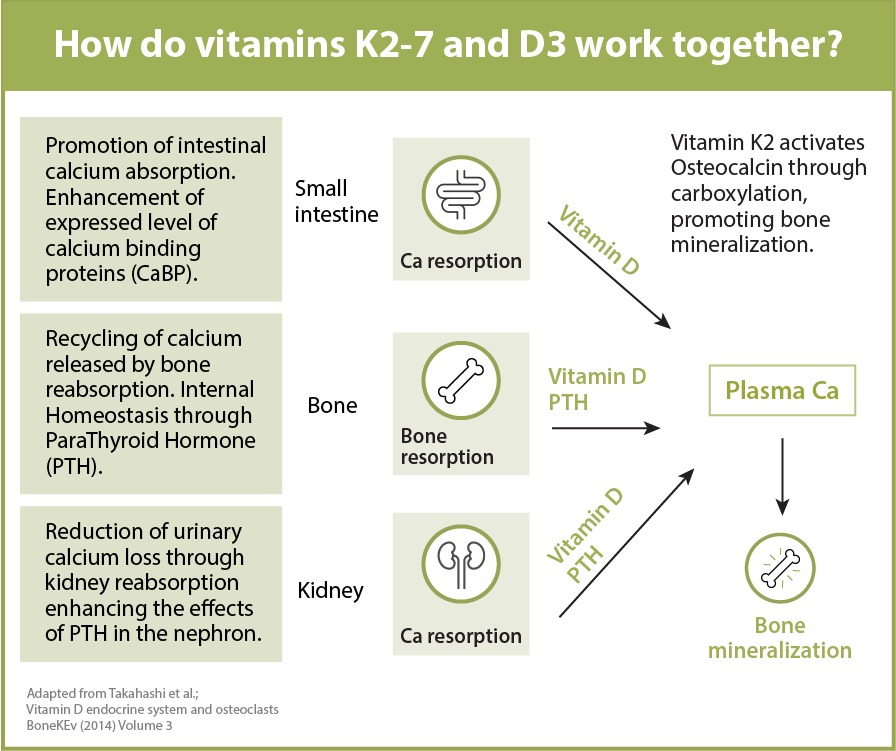
One of the most intriguing aspects of K2 is its effect on balance. When vitamin D drives calcium absorption upward, K2 helps ensure calcium is incorporated into bone matrix rather than accumulating in places that can become problematic over time. This creates a shift in perspective: vitamin D is not merely “building bone.” Vitamin D is recruiting materials; K2 is the supervisor that tells the materials where to go.
There are different forms of K2, and MK-7 is commonly discussed because it’s frequently used in supplementation. The narrative should not be “take K2 because it sounds smart,” but “take K2 to complement calcium dynamics when D is elevated.”
Magnesium: The Understated Catalyst Behind Metabolic Harmony
Magnesium is the kind of nutrient that rarely gets a spotlight, yet it sits at the crossroads of thousands of biochemical reactions. When magnesium is insufficient, the body’s ability to process vitamin D–related processes can become less efficient. Some people don’t realize they’re operating in a state of partial friction—like a watch with one gear slightly misaligned.
Magnesium also influences nerve and muscle function, energy metabolism, and regulation of parathyroid hormone signaling. That matters because vitamin D does not exist in a vacuum; it interacts with the hormonal environment that governs calcium homeostasis. When the hormonal “steering wheel” is supported, the entire system becomes more stable.
In a high-dose D scenario, magnesium can be the difference between smooth coordination and scattered outcomes. Not dramatic, not theatrical—just steadier. Steady often beats extreme.
High-Dose Vitamin D: Why the Risk Conversation Needs Nuance
The most productive way to think about high-dose vitamin D safety is to stop treating risk as a singular event. Safety is a spectrum influenced by baseline vitamin D status, dietary intake, sun exposure patterns, kidney function, calcium intake, and individual absorption dynamics.
Common concerns include elevated calcium levels and potential calcification in inappropriate tissues. While these outcomes are not inevitable, they’re often linked to imbalance—especially when calcium absorption increases faster than the body can properly manage it. This is where the “think in systems” approach becomes essential.
When D is high, the body’s calcium pathway becomes busy. If K2 and magnesium are under-supported, the routing may be less precise. The goal isn’t to fear vitamin D. The goal is to create the conditions under which vitamin D can be used beneficially.
The Synergy Loop: How D, K2, and Magnesium Reinforce Each Other
Picture a loop of interdependence. Vitamin D increases calcium availability. K2 helps activate proteins that direct calcium and support healthy mineralization. Magnesium underwrites cellular processes involved in regulation and transport. The result is a more coherent cycle.
When this synergy works, you may notice an overall sense of physiological coherence: bones that respond as expected, muscles that behave with less twitchy unpredictability, and a steadier metabolic rhythm. Even if you don’t “feel” mineralization, the body’s quiet bookkeeping is still happening.
A useful shift in perspective is to treat supplements like a constellation rather than a single star. One bright molecule may be impressive, but constellations explain direction.
Practical Considerations: Timing, Form, and Daily Consistency
Supplements behave differently depending on how they’re taken. Vitamin D is fat-soluble, so pairing it with a meal containing dietary fat can support absorption. Magnesium absorption can vary by form; some forms are gentler on the digestive system while others may be more likely to cause laxative effects at higher doses.
Vitamin K2 is also often taken alongside meals for improved absorption. Many people find that taking D and K2 together helps keep the “calcium management” conversation synchronized throughout the day. Magnesium can be scheduled at a different time if it improves tolerance or supports evening relaxation.
Consistency matters. Short bursts rarely create the same effect as sustained, well-supported patterns. The body is not a vending machine; it’s a control network.
Signs of Imbalance: When Curiosity Should Become Investigation
Not everyone will experience obvious symptoms of imbalance, which is precisely why thoughtful monitoring is valuable. Still, certain patterns can act like faint alarms. Some people notice constipation, unusual muscle sensations, or changes in overall comfort—while others experience none of these and remain unaware.
That’s why a lab-informed mindset often beats a purely anecdotal one. If vitamin D intake is elevated, it’s wise to consider measuring relevant biomarkers under professional guidance. The point is not to turn self-care into an audit. It’s to transform uncertainty into clarity.
Safety should feel calm, not obsessive. Curiosity is good when it leads to better questions, not spirals.
Who Should Be Especially Careful: Context Matters
Some individuals require extra vigilance—particularly those with kidney disorders, disorders of calcium metabolism, or those taking medications that affect calcium or vitamin K pathways. People on anticoagulants (especially vitamin K antagonists) may face special considerations regarding vitamin K intake.
This isn’t meant to frighten. It’s a reminder that biology is highly contextual. The same regimen can look different in different bodies.
If you’ve got a complex medical history, the most responsible path is to coordinate supplementation with qualified care. That turns safety from a guess into a plan.
A More Confident Future: Reframing “High-D Dose” as “Well-Routed Dose”
Here’s the shift worth keeping: high-dose vitamin D safety is not only about how much you take. It’s about whether the body’s calcium management system is supported. Vitamin K2 contributes the routing logic. Magnesium contributes regulatory stability and enzymatic support. Together, they help vitamin D act like a builder instead of a loose supplier of raw materials.
If vitamin D is the spark, K2 and magnesium are the ignition system and the timing mechanism. Without them, the spark may not ignite properly. With them, the fire can burn where it’s meant to.
Curiosity is a compass here. When you approach supplementation as a coordinated ecosystem—rather than isolated dosing—you move from speculation to intention. And intention, more than dosage, is what tends to create outcomes you can trust.