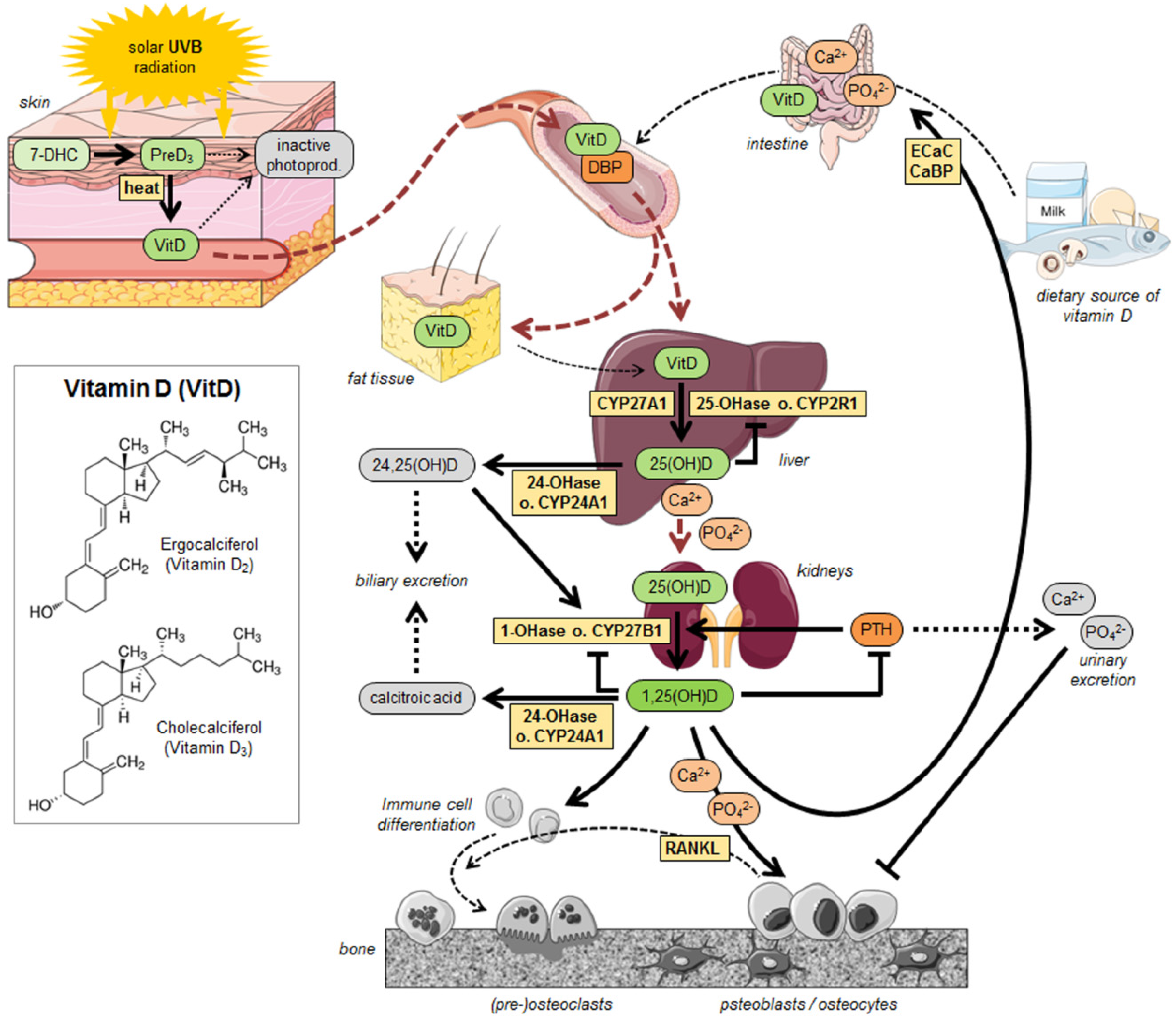
Imagine the brain as a vast conservatory of chemistry—glass panes catching light, hidden pathways humming, and tiny couriers carrying signals across distance. Now picture vitamin D as a quiet stagehand who doesn’t steal the spotlight, yet ensures every prop appears exactly when the script demands it. When vitamin D is sufficient, neurotransmitter synthesis feels less like guesswork and more like choreography. When it’s scarce, the performance can falter: not always dramatically, but often enough to be noticed in mood, cognition, and resilience.
Vitamin D as a Molecular Lantern for Neural Signaling
Vitamin D is frequently introduced through bones and sunlight, but its influence reaches far beyond calcium homeostasis. In the nervous system, vitamin D behaves like a molecular lantern. It doesn’t merely illuminate; it also regulates the expression of genes that govern neuronal behavior.
Neurons communicate using neurotransmitters—chemical messengers that translate electrical impulses into meaningful information. Vitamin D supports this translation by influencing cellular machinery, including receptors and transcriptional pathways. Think of it as tuning the brain’s internal radio: the signal doesn’t travel better because the towers are louder, but because the receiver is calibrated correctly.
What makes this role intriguing is the subtlety of its timing. Vitamin D’s effects are not always immediate. Instead, they accumulate through gene expression changes, shaping the environment in which neurotransmitters are produced and regulated.
From Light to Brain Chemistry: The Journey That Matters
Vitamin D begins with exposure to sunlight and proceeds through a series of transformations in the body. The active forms of vitamin D reach tissues that include the brain and influence cellular activity through specific receptors.
Neurotransmitter synthesis depends on enzymes, precursors, and cofactors. Vitamin D helps define the availability and responsiveness of these components. It can be likened to a conductor adjusting not only the tempo, but the acoustics of the hall—so that the orchestra sounds coherent.
Consider how frequently neurotransmitters are described as “chemicals.” In reality, their synthesis is a logistics network. Vitamin D contributes to the logistical clarity: ensuring neurons have the cellular conditions required for consistent production, proper turnover, and appropriate receptor interactions.
Serotonin: The Mood Messenger and Vitamin D’s Quiet Influence
Serotonin is often associated with mood, but its function extends into sleep regulation, appetite modulation, and the brain’s ability to recover after stress. The synthesis of serotonin requires precursor availability and enzymatic activity—processes that can be influenced by vitamin D–dependent regulation.
Vitamin D can support the expression of genes involved in neurotransmission and may indirectly affect serotonin pathways by shaping the neural milieu. When serotonin systems are stable, emotional tone tends to be smoother, and cognitive flexibility may improve.
Yet it is rarely “one cause, one cure.” Instead, vitamin D’s role resembles a keystone arch in architecture. Remove it slightly, and the structure does not collapse at once; rather, it begins to strain under everyday loads.
Glutamate and GABA: Balancing Excitation with Inhibition
Neurotransmission is not simply about creating more signals—it’s about achieving the correct balance. Glutamate is the primary excitatory neurotransmitter, while GABA acts as the chief inhibitory counterweight. When balance breaks, neural circuits can become either underactive or hyperexcitable.
Vitamin D may influence this excitation–inhibition equilibrium through regulation of neurotrophic factors and inflammatory signaling. Chronic low-grade inflammation can disturb neuronal function, shifting neurotransmitter dynamics toward imbalance.
Picture a high-wire performance. Excitation is the forward momentum; inhibition is the safety net. Vitamin D helps the net hold its shape—less dramatically than a spotlight, but crucially enough to prevent destabilization over time.
Dopamine: Reward Pathways and the Brain’s Response to Life
Dopamine underlies motivation, reward processing, and certain aspects of movement coordination. Its synthesis and regulation depend on cellular health, enzymatic function, and signaling environment.
Vitamin D’s neurobiological influence may intersect with dopamine-related circuits through effects on neuronal survival pathways and receptor responsiveness. This matters because dopamine systems are highly sensitive to oxidative stress and inflammatory pressures.
When vitamin D status is adequate, neuronal resilience can improve, potentially supporting more stable dopaminergic signaling. In metaphorical terms, vitamin D helps keep the reward “thermostat” from drifting into erratic swings.
Neurotrophins and Plasticity: How Vitamin D Shapes Learning Capacity
Neurotransmitter synthesis does not operate in isolation. It exists inside a living ecosystem that includes neuroplasticity—the brain’s ability to reorganize and learn. Neurotrophins are key players in this ecosystem, supporting neuron growth, synaptic stability, and adaptive remodeling.
Vitamin D can support processes tied to neuroplasticity, indirectly affecting neurotransmitter release patterns and synaptic efficiency. If neurotransmitters are the brain’s language, neuroplasticity is the grammar lesson that determines whether the language can evolve.
Low vitamin D may correlate with reduced adaptability in neural circuits. Even mild shifts in plasticity can have downstream effects: attention may feel harder to sustain, learning can become more effortful, and emotional recovery might take longer.
Oxidative Stress and Inflammation: The Background Noise That Alters Synthesis
Neurotransmitter production is exquisitely sensitive to cellular stress. Inflammation can influence enzyme activity and disturb mitochondrial function. Oxidative stress can damage membranes and disrupt the delicate recycling systems that maintain neurotransmitter availability.
Vitamin D contributes to immune modulation and may help dampen inflammatory signals. This creates a quieter workplace for neurotransmitter synthesis. Imagine a factory where the machines are capable, but dust storms keep clogging the gears. Vitamin D doesn’t replace the machines; it reduces the chaos around them.
By improving the inflammatory landscape, vitamin D may support more consistent neurotransmitter turnover, which is essential for both mood stability and cognitive clarity.
Blood–Brain Interface and Receptor Signaling: The Means of Control
How does vitamin D exert its influence inside the brain? Through receptor-mediated signaling pathways. Vitamin D receptors are expressed in various brain regions and can influence transcriptional activity, altering how neurons respond to stimuli and how they manage molecular pathways.
This receptor engagement acts like an internal governance system: it decides which genes are expressed, which pathways are amplified, and which are restrained. Over time, these decisions reshape the neural environment where neurotransmitter synthesis occurs.
Importantly, this governance is context-dependent. The brain is not a static organ; it responds to stress, hormones, and lifestyle factors. Vitamin D status can tip the balance of responsiveness—either supporting steadiness or amplifying vulnerability.
Clinical Realities: Deficiency, Symptoms, and the Search for Precision
Vitamin D deficiency is common, shaped by factors such as limited sun exposure, skin pigmentation, geographic latitude, aging, and dietary patterns. When deficiency persists, it can contribute to neuropsychiatric concerns, including depressive symptoms and cognitive challenges.
However, biology does not behave like a simple calculator. Some individuals with low vitamin D experience pronounced effects; others show subtler changes. Genetics, baseline health, sleep quality, stress burden, and co-nutrient status all influence outcomes.
That is why a thoughtful approach matters. Testing vitamin D levels and addressing deficiency can be meaningful, particularly when symptoms align with plausible biological pathways. Yet supplementation should be tailored rather than improvised—because the brain benefits from balance, not excess.
A Practical Lens: Supporting Neurotransmitter Pathways Through Habits
Neurotransmitter synthesis is influenced by more than one nutrient. Still, vitamin D plays a distinctive role as a regulator of signaling and gene expression. Supporting vitamin D status may offer a foundation for healthier neural function.
Sunlight exposure, when appropriate, can help. Food sources—such as fatty fish, fortified dairy, and egg yolks—provide dietary support. In some cases, supplementation may be warranted under professional guidance, especially for individuals with consistently low levels.
Sleep and stress management remain essential. Even abundant vitamin D cannot compensate for chronic sleep deprivation or prolonged stress, which can destabilize neurotransmitter turnover. Think of vitamin D as a stabilizing influence, not a standalone solution.
Conclusion: Vitamin D as a Maestro in the Symphony of the Brain
Vitamin D’s role in neurotransmitter synthesis is best understood as a form of orchestral leadership. It influences receptor signaling, gene expression, inflammation, oxidative balance, and neuroplastic potential. These influences converge on the molecular conditions needed for neurons to produce, regulate, and reuse neurotransmitters effectively.
The brain thrives on precision. Vitamin D helps create that precision—like a well-tuned instrument in a cathedral of signal exchange. When vitamin D is adequate, neurotransmission may feel smoother, emotional tone steadier, and cognitive processes more resilient. When it is lacking, the brain may still perform, but with a persistent background rumble—subtle, persistent, and worth taking seriously.