Walk into any gym conversation and you’ll hear a familiar refrain: “Muscle is built from protein.” It’s true—yet somehow the story never ends there. People keep asking whether vitamin D, often treated like a distant nutrient for bones and sunshine, has a say in muscle performance. The observation is common: someone increases protein intake, training progresses, and yet gains feel uneven. Then vitamin D enters the room like an uninvited plot twist. Not loudly. Not predictably. But persistently enough that curiosity becomes almost unavoidable.
Vitamin D’s Quiet Role Inside Muscle Biology
Vitamin D doesn’t simply “support” muscles in a general sense. It behaves more like a backstage regulator—less a spotlight, more a series of carefully tuned levers. When vitamin D becomes active in the body, it can influence cells involved in muscle maintenance, including satellite cells (the tissue’s repair workforce) and signaling pathways that govern protein metabolism. In other words, muscle growth isn’t only about the availability of amino acids; it’s also about whether the intracellular machinery is listening.
There’s fascination here because the hormone-like actions of vitamin D intersect with processes that resemble construction work: turning signals into building plans, and plans into structural change. A person can supply protein “materials,” but if the regulation that directs muscle adaptation is under-responsive, results may feel diluted or delayed.
Protein Intake: The Obvious Fuel, Not the Whole Engine
Protein intake is the most intuitive lever. Muscle is protein-rich tissue, and the breakdown-and-rebuild cycle turns dietary amino acids into structural and functional components. After resistance training, muscle becomes particularly responsive. That responsiveness creates a brief window where amino acids can stimulate synthesis and help recover damaged fibers.
Yet “fuel” is only one part of an engine. Protein provides substrates, but it does not guarantee that synthesis pathways are optimally engaged. This is where nutrient sufficiency—especially vitamin D—can act as a modifier. Imagine a ship carrying cargo toward a port. The cargo (protein) matters, but so do the docks, the cranes, and the traffic signals. Vitamin D is often one of those systems.
How Vitamin D May Modulate Protein Metabolism
Muscle protein metabolism is regulated through a network of signals that respond to training stimuli, energy status, and hormonal cues. Vitamin D can potentially influence these signals, shaping the balance between synthesis and breakdown. When vitamin D status is low, the body may show a kind of metabolic “miscalibration”—not necessarily dramatic, but sufficiently subtle to affect the efficiency of adaptation.
This is one reason the interaction is so intriguing. People tend to expect linear progress: more protein, more muscle. But biology rarely behaves linearly. Instead, it behaves like a system of gears: if one gear is slightly off, the entire mechanism runs less smoothly, even when other components are strong.
Resistance Training as the Stage Where Both Nutrients Converge
Protein and vitamin D don’t operate in separate ecosystems. Resistance training supplies the signals that activate muscle remodeling. Protein provides the amino acids needed for repair and growth. Vitamin D can influence how strongly muscle cells respond to those signals.
Consider timing. Protein is typically discussed in relation to post-workout windows, total daily distribution, and leucine thresholds. Vitamin D, by contrast, is often thought of as a baseline nutrient—slow to adjust, quietly influential. But in muscle adaptation, baseline sufficiency can determine whether training signals translate into meaningful structural outcomes.
Short version: training is the spark; protein is the building material; vitamin D is one of the regulators deciding how confidently the building process begins.
Mechanistic Threads: Satellite Cells, Inflammation, and Cellular Signaling
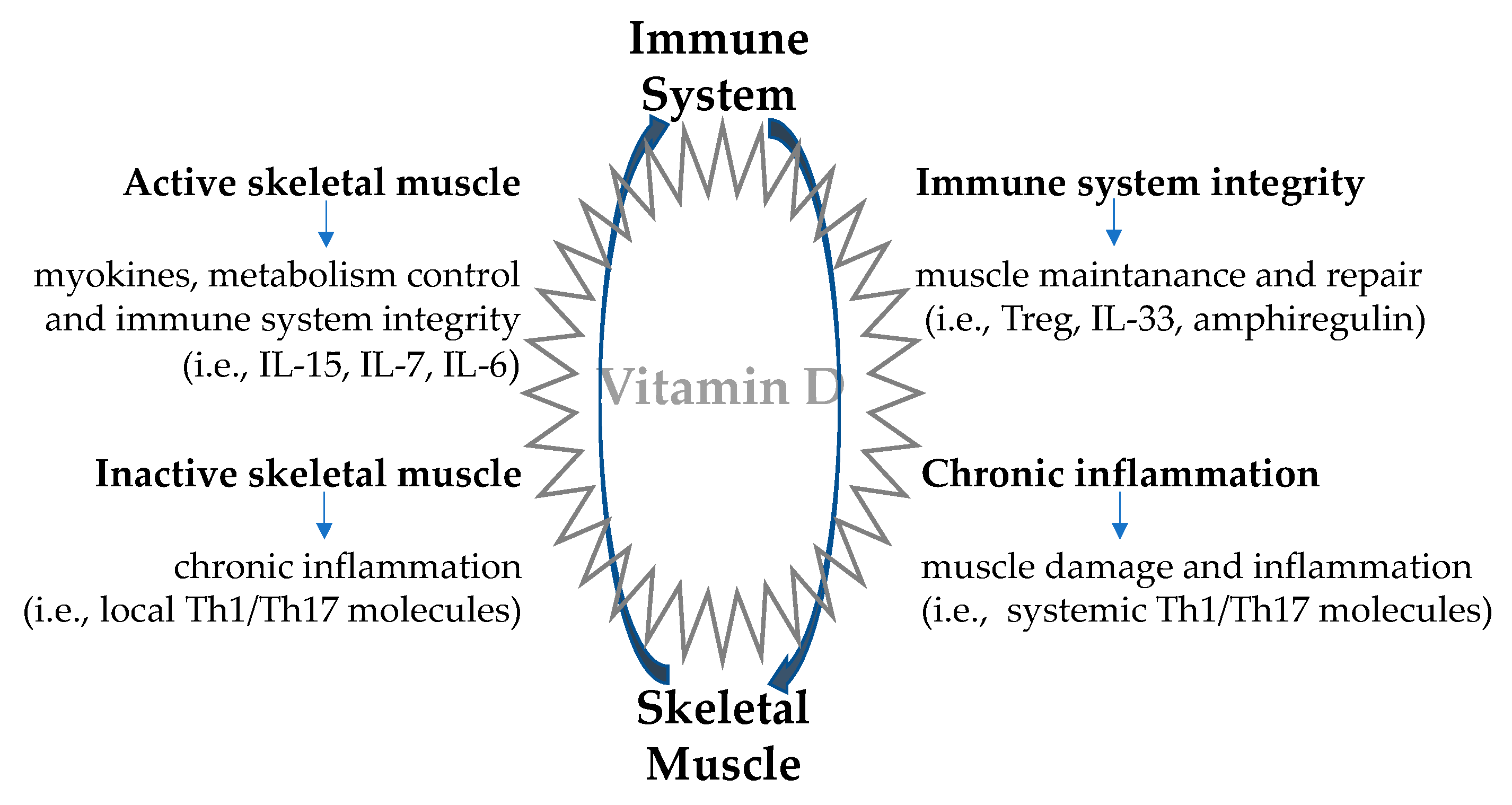
Muscle repair depends on satellite cells, which contribute to regeneration after training stress. Vitamin D may influence satellite cell function, affecting how effectively the muscle rebuilds. Another thread involves inflammation and immune signaling. Training creates transient inflammation that is part of adaptation, but chronic or dysregulated inflammation can interfere with recovery. Vitamin D’s wider immune interactions can indirectly matter here—creating a recovery environment that either supports or compromises rebuilding.
That combination—direct cellular regulation plus indirect modulation of the recovery landscape—is where the “deeper reasons for fascination” become clearer. The body is not only constructing muscle; it is also managing the conditions under which construction is permitted. Vitamin D may shift those conditions.

Common Observation: “I Eat Enough Protein, But Gains Feel Stalled”
Stalled progress is one of the most recognizable moments in fitness. Someone hits consistent training, reaches a reasonable protein target, sleeps better, and still watches their scale refuse to cooperate. The frustration can be emotional, and the answer rarely fits neatly into one variable.
Vitamin D insufficiency is one plausible piece of the puzzle, especially in individuals with limited sun exposure, darker skin tones, winter climates, or indoor-heavy routines. When vitamin D is low, muscle function and recovery quality may suffer. Even if protein intake is adequate, muscle may respond with less enthusiasm—less efficient synthesis, weaker functional improvements, and slower recovery between sessions.
Importantly, this doesn’t mean vitamin D replaces protein. It means vitamin D can determine whether protein intake turns into visible muscle change.
Practical Considerations: Pairing Vitamin D Sufficiency with Adequate Protein
If vitamin D status is suboptimal, the body may underutilize the opportunities provided by protein. A sensible approach is to treat vitamin D as a foundational layer rather than a performance gimmick. Protein can be treated as the daily construction supply; vitamin D as the background signal that helps the construction program run correctly.
Practically, people often benefit from ensuring sufficient protein across the day and then checking vitamin D status through appropriate testing. If levels are low, clinicians may recommend supplementation and then reassessment. The aim is not excess—it’s adequacy. Over time, adequacy can make muscle responses feel less erratic.
Think of it like tuning an instrument. You can have a capable musician and a well-designed song, but if the instrument is out of tune, everything sounds off. Vitamin D can be one of those tuning mechanisms.
Safety, Dosing Mindset, and the “More Is Not Better” Principle
Vitamin D is fat-soluble, which means it can accumulate. That’s why dosing should be deliberate. Too little can leave muscle response under-supported; too much can create risk. The goal is balance, not bravado.
Side effects become relevant when supplementation is excessive. This doesn’t mean vitamin D is dangerous—it means it behaves like a powerful regulator that deserves respect. Testing and professional guidance are useful guardrails, particularly for people taking higher doses or those with conditions that affect calcium balance.
In muscle-focused nutrition, the most sustainable strategy is precision: hit protein targets, ensure vitamin D sufficiency, and let adaptation unfold under the right conditions.
The Fascination Continues: Why This Interaction Feels Like a Hidden Lever
Some nutrients reveal themselves immediately. Vitamin D doesn’t. It works through a web of signaling and cellular preparedness. That slow influence is precisely why the interaction with protein is compelling: it hints that muscle gain is not merely consumption—it’s communication.
When vitamin D status is adequate, protein intake may translate more faithfully into recovery and remodeling. Training becomes more consistent in its outcomes. Function improves. Effort feels rewarded. And that “reward” sensation is hard to explain without acknowledging that the body operates as a system.
Muscle building, at its core, is both architecture and orchestration. Protein provides the raw materials. Vitamin D may help conduct the performance—so the materials are used with greater efficiency, not merely consumed.