Walk past a garden rock or a weathered wall and you’ll notice lichen—quiet, patient organisms that paint the world in muted greens, grays, and russets. Then you might hear the claim: some lichen is “organic,” while other lichen is “non-organic.” At first, it sounds like a simple label. But the more closely you look, the more that label becomes a doorway into ecology, chemistry, and even the strange artistry of symbiosis. “Organic vs non-organic lichen” isn’t just a matter of wording; it’s a way of interpreting what’s growing, what’s being offered to it, and what the environment is silently teaching it to become.
1) The Common Observation: “They Look the Same, So What’s Different?”
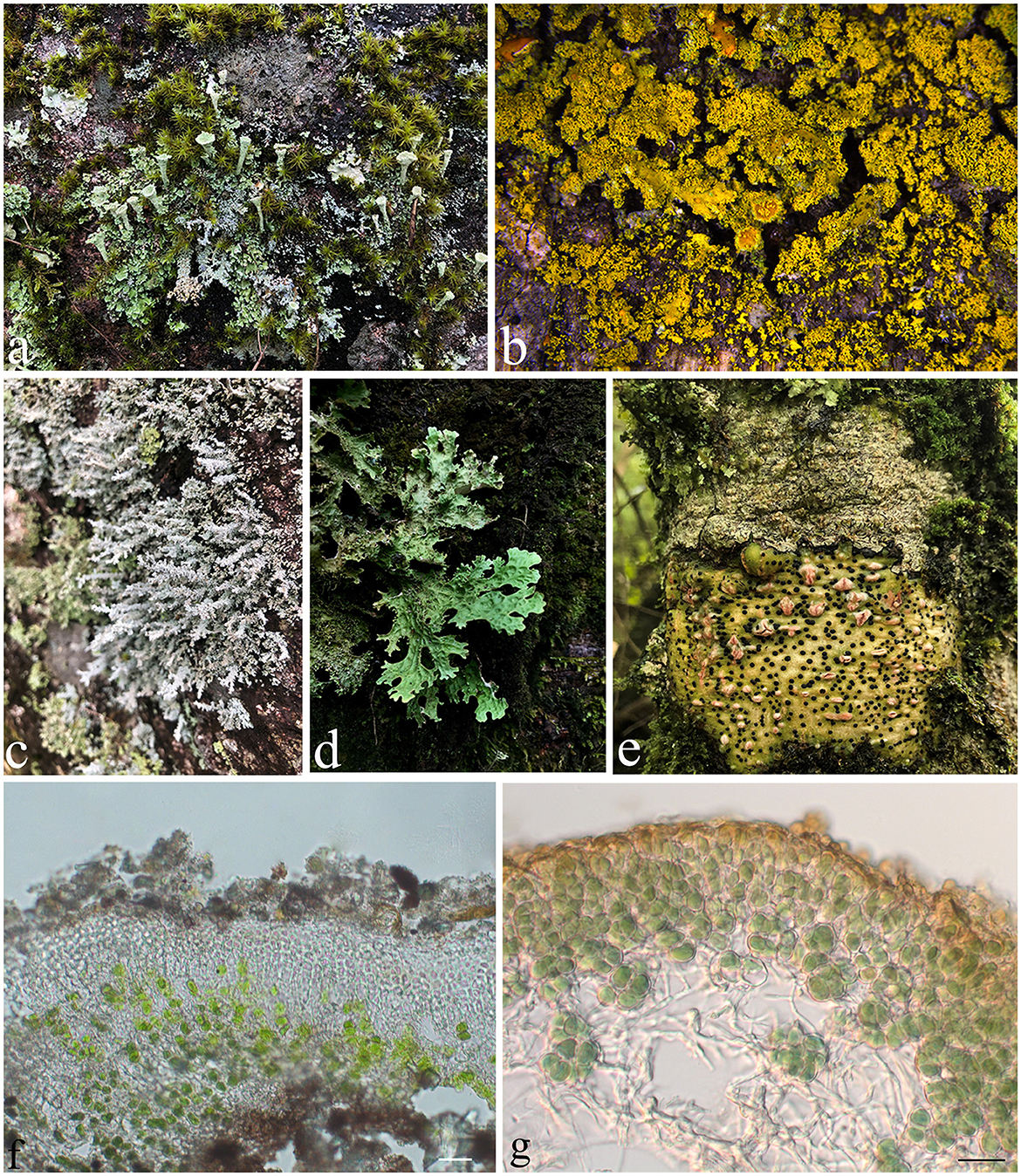
Many people begin with a surprisingly honest question: if two patches of lichen share a similar color or crusty texture, how can one be “organic” and the other “non-organic”? From a distance, the eye is fooled by convergent appearance. Lichen can form crusts, foliose rosettes, or fruticose branching tufts—shapes that arise from adaptation rather than from any single chemical or regulatory category. A lichen’s external grammar is often similar across contexts.
Yet the difference typically emerges when you shift from surface aesthetics to underlying conditions. The “organic” label usually suggests growth in environments that avoid certain industrial inputs, including persistent synthetic residues. The “non-organic” label often implies exposure to environments shaped by fertilizers, pollutants, or materials that introduce atypical chemicals into the microhabitat. In both cases, the lichen remains a living system. The real contrast lies in what the system is allowed to assimilate.
Still, it’s not merely about human categories. Lichen responds to atmospheric chemistry, mineral availability, and moisture chemistry. Two patches can appear identical while living in subtly divergent biochemical climates.

2) What Lichen Really Is: A Living Consortium, Not a Single Organism
To understand the “organic versus non-organic” distinction, it helps to remember that lichen is rarely a solo performer. Most lichen are a composite: a fungal partner provides structure and protective architecture, while a photosynthetic partner—often algae or cyanobacteria—handles the energy budget through photosynthesis.
That consortium behaves like a small, responsive ecosystem. The fungal layer modulates water retention. The photosynthetic partner determines how efficiently light becomes usable energy. Between them lies a biochemical negotiation: nutrients, metabolites, and protective compounds are exchanged in a rhythm that changes with humidity and exposure.
When the surrounding environment is “organic,” the consortium often encounters a different spectrum of nutrients and pollutants than it would under “non-organic” influence. The outcome is not just faster or slower growth. It can reshape the chemical profile of the lichen—its aromatic compounds, protective secondary metabolites, and even its ability to tolerate stress.
3) The Word “Organic” vs “Non-Organic”: Labels With Environmental Implications
“Organic” can mean different things depending on whether the label is applied to farming products, soil amendments, or broader environmental practices. In the context of lichen, it generally signals fewer synthetic contaminants and a lower likelihood of persistent chemical residue settling onto the substrate. “Non-organic,” conversely, often points toward higher exposure to industrial byproducts, nutrient runoff, or synthetic treatment residues.
But here’s the catch: lichen doesn’t rely solely on what grows beneath it. Many lichen absorb a meaningful portion of their inputs directly from the air. Dust particles, aerosolized compounds, and airborne nitrogen compounds can settle onto the thallus. Over time, these inputs can shift the internal balance of the fungal-algal partnership.
So while the terms “organic” and “non-organic” are human shorthand, their ecological consequences can be profoundly non-shorthand.
4) Chemistry on the Surface: How Environment Shapes Lichen Compounds
One of the most enchanting aspects of lichen is that it produces an array of secondary metabolites—molecules that aren’t directly required for basic survival, yet help the consortium endure harsh conditions. These compounds can act as sunscreens, antifouling agents, antimicrobial shields, and deterrents against herbivory.
When lichen experiences a “non-organic” environment—especially one with higher levels of synthetic pollutants—its chemical expression may shift. The lichen may produce different protective compounds, alter pigment ratios, or change how it manages oxidative stress. In an “organic” setting, the baseline chemical pressures might be lower, and the lichen could invest differently in defense versus growth.
The fascination is in the plasticity. Lichen often responds as if it were a living chemical barometer, translating ambient conditions into measurable biochemical signatures.
5) Nitrogen, Moisture, and the Hidden Drivers of “Organic” Growth
A common misconception is that “organic” lichen is simply “healthier.” Often, the difference is more nuanced: the availability and form of nitrogen, the pattern of moisture retention, and the presence of airborne particulates can all influence lichen performance.
Excess nitrogen—commonly linked to runoff or atmospheric deposition—can disrupt lichen metabolism. The photosynthetic partner may experience altered nutrient ratios, changing growth dynamics and potentially reducing the consortium’s long-term resilience. Some lichen species tolerate nitrogen-rich settings better than others, leading to differences in which species dominate.
In contrast, “organic” environments may provide more stable, lower-nitrogen atmospheric deposition. That can favor slow-growing species that rely on efficient nutrient acquisition rather than nutrient abundance. The result is often a different community composition, not just a different color.
Moisture matters, too. Lichen functions like a sponge with molecular valves. Its ability to rehydrate influences photosynthesis and stress recovery. Environmental coatings, pollutants, and substrate chemistry can all affect that water choreography.
6) Biofilms, Microcolonies, and the Unseen Complexity
The thallus of lichen isn’t a sterile slab. It can host microbial communities, including bacteria and additional fungal associates. These microcolonies may form biofilm-like structures, creating microenvironments where nutrients, gases, and signaling molecules circulate.
In settings more influenced by “non-organic” inputs, the microbial assembly can shift. Some microbes thrive on different chemical substrates, and they can compete, cooperate, or alter local pH conditions. In “organic” conditions, different microbial partners may become more prevalent, potentially affecting nutrient cycling and the lichen’s defensive chemistry.
This is where the fascination deepens: lichen is not merely “alive.” It is a negotiated meeting place for microscopic actors, each responding to the ambient chemical weather.
7) Species Selection: Why “Organic vs Non-Organic” Often Means “Different Lichens”
Another common observation is the puzzle of resemblance. Two locations can have lichen that looks similar, yet the underlying species may differ. Lichen species vary widely in their sensitivity to pollution, nitrogen deposition, and moisture patterns. So an “organic” habitat might be dominated by species that are efficient in low-nutrient, less contaminated atmospheres. A “non-organic” habitat may favor hardy species that can withstand higher chemical stress.
Thus, the organic/non-organic distinction often acts indirectly, steering the selection pressures that determine which lichen species survive and reproduce. A label can be a proxy for an ecological filter.
8) Human Perception vs Ecological Reality: The Real Meaning of “Difference”
Humans tend to interpret lichen difference as a visual contrast: hue, texture, and density. But ecological reality is mostly invisible. The difference can be chemical, microbial, and physiological. It can show up as altered metabolite production, shifted community assembly, or different tolerance to desiccation and oxidative stress.
That’s why the story becomes compelling. A lichen patch is like a historical record of the atmosphere it has endured. Small changes—one factory’s emissions here, one agricultural practice there—can echo through years of growth. Lichen is slow, and slowness can be a kind of memory.
9) The Fascination Beyond the Label: Bioactive Potential and Wonder
Lichen has long captured scientific imagination because of its bioactive potential. Compounds derived from lichen have been explored for antimicrobial, anti-inflammatory, and antioxidant properties. The organic/non-organic distinction matters here because environmental inputs can influence which compounds a lichen produces and in what proportions.
In other words, “organic versus non-organic lichen” can hint at different chemical toolkits. The lichen may tailor its defenses—sometimes more elaborate, sometimes differently configured—depending on the stress landscape.

10) What to Look For: Practical Clues Without Over-Simplifying
If you want to explore this topic with curiosity rather than certainty, you can look for patterns. Observe whether lichen appears in sheltered, low-splash microhabitats or in exposed, pollution-prone areas. Note whether the lichen looks uniform across a surface or patchy and selective—community selection is often a clue.
You might also consider context: nearby traffic density, the presence of fertilizer runoff, industrial activity, or chemical cleaning practices. Lichen is an ecosystem listener, not just an organism on a wall.
Most importantly, resist the urge to treat the organic/non-organic distinction as a binary verdict on health. It’s better understood as an environmental fingerprint. The fascination lies in how a humble crust can reveal a whole chemical story—layer by layer.